Showing posts sorted by date for query apologia. Sort by relevance Show all posts

Wednesday, July 24, 2019

Transition Students from Elementary to High School Science with Apologia {A Review}


Some links which follow may be affiliate ones.


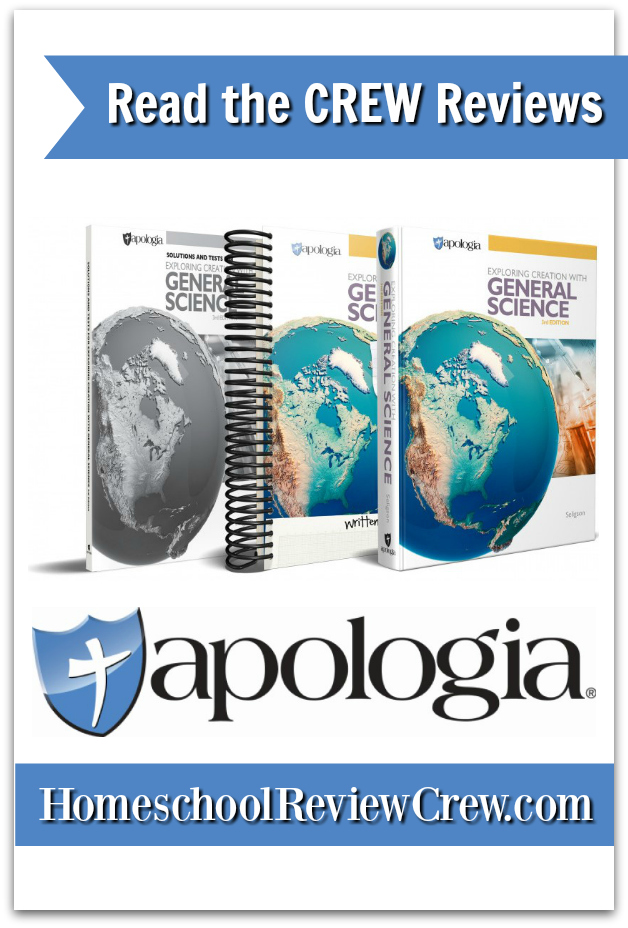
If you are looking for a General Science curriculum with a Biblical Worldview to help you middle schoolers bridge the gap between elementary science explorations and high school studies, the updated and revised Exploring Creation with General Science, 3rd Edition by Apologia could be just what you seek. 


Apologia generously sent me the Textbook, Student Notebook, and Solutions and Test Manual for review, and, I have to say, this homeschool science for middle school program is one I am glad to have on hand

A Well-Designed Textbook 


The Exploring Creation with General Science, 3rd Edition Textbook goes both broad and deep


 It is a 400+ page hardcover book written in a conversational style that goes broad in that it covers a wide range of topics over 14 modules, including Astronomy, Geology and Paleontology, Meteorology and Oceanography, Chemistry, Physics, Life Science, Biology, Marine Science, and Environmental Science.

It goes deep in that it covers the History of Science, Scientific Inquiry, the Scientific Method, Documenting and Interpreting Experimental Results, Scientific Analysis, and Science and Creation, all while encouraging independent study, mastery of knowledge of contemporary scientific concepts, and the grounding necessary to transition to high school science and continue on with a lifelong passion for exploring God’s creation.

The author of the course has this to say about its design and big ideas:


Within each of the 14 modules in the Textbook, there are several related topics covered, experiments and activities, study guide questions, and more.

Modules are designed to take about 2 1/2 weeks with a 4 day schedule of 45 minute class periods, which adds up to a 33 week course with plenty of wiggle room for those busy weeks when you might need to flex. 


Each module is easy to locate with color coded tabs and top margins in the text. 


Each module starts out with a “Quaestio” (or question in Latin), which gives you something to think about as you enter into the new module.

Text words in blue boldface offer definitions to memorize and those in black boldface signal important terms to comprehend.

 Right from the beginning of the Textbook, there are also several “What To Do” instructions that guide you with notetaking, experiments, and to filling out your lab reports. 


“On Your Own” questions help you to see if you are understanding and retaining the information. Answers for these can be checked at the end of modules, so you can easily see what you might want to go back to study again. 


Activities come in two types: “Experiments” and “Explore More”.  These are clearly marked and explained.


Experiments are concise and described in an easy-to-follow way. They can be completed with things that you likely already have or you can obtain at your local grocery, pharmacy, or hardware store without trouble. (A complete list of supplies is broken down by module and experiment in the back of the book.) 


The “Explore More” are quick, appealing, hands-on activities help you better understand concepts you’re learning. 


The entire book is visually appealing with helpful color coding, a decent amount of white space, short paragraphs, plenty of photos and graphics, etc.


A Lay-Flat and Super Helpful Student Notebook

The 
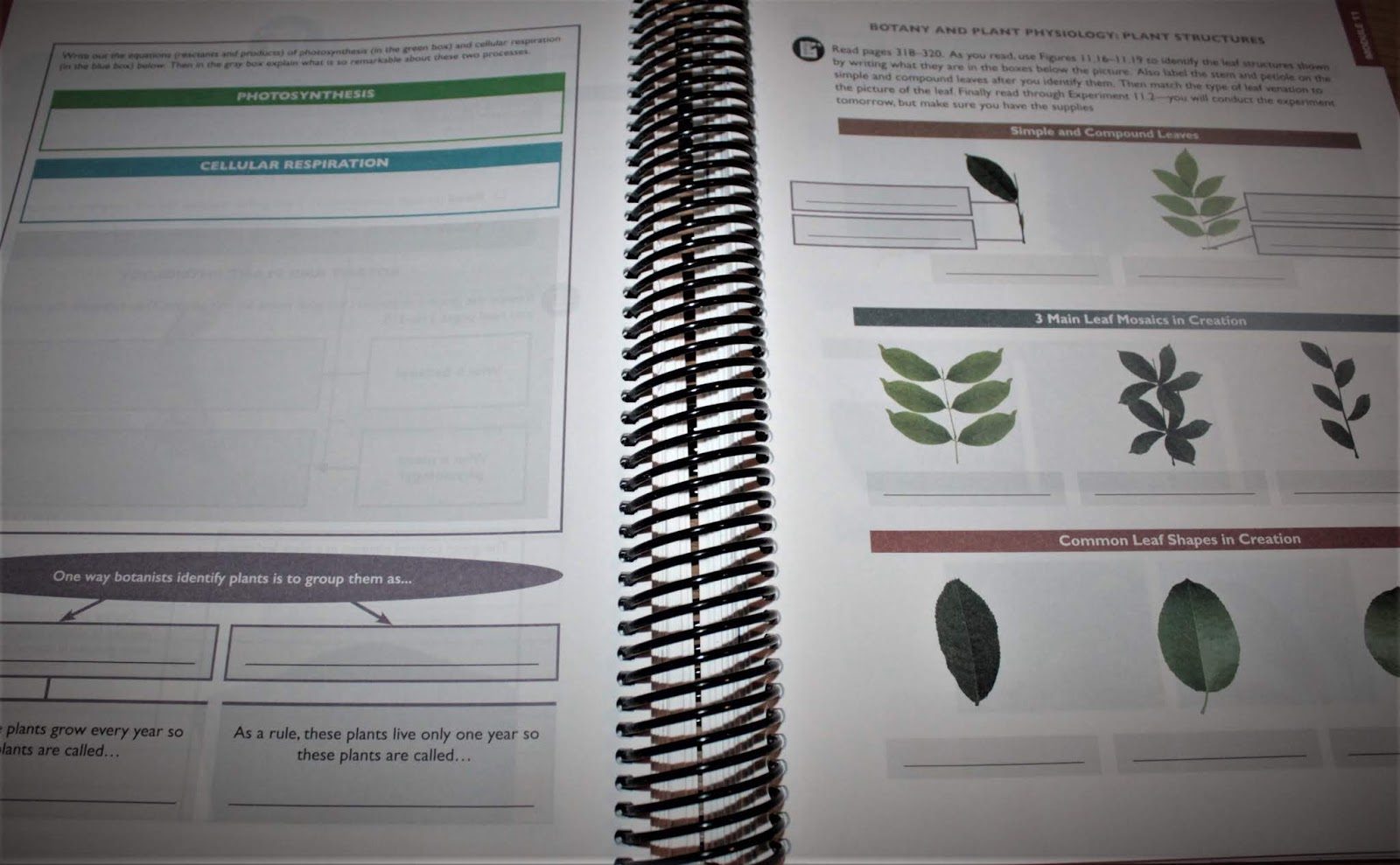
Student Notebook is a 540+ page, full-color, spiral-bound, consumable resource that helps you truly get the most out of the course.


It begins with information on notetaking, experiments, and grading for parents and teachers and has a handy lesson plan/checklist and grading rubrics.


Then, there are sections for each module, where you will find: 
  • a colored box called “What To Do” at the beginning of each lesson which tells you all the information needed to complete that day’s lesson. 
  • areas for notetaking.


  • prompts.
  • tables and infographics.


  • “Creation Connections” sections which encourage you to freely express your thoughts on how you view the world in relation to what you are learning and how what you are learning applies to their everyday life.


  • material lists for experiments.

and more.


At the end of Student Notebook, there is also a lab report checklist and grading rubric.

Easy-to-Use Testing Materials


The Solutions and Test Manual contain blank copies of tests and copies with solutions on them for all modules except the Science and Creation one. 


These are separately bound so there is no temptation for students with a test booklet to look ahead at answers (not that any would 😉) and the first two module tests suggest that you take them in an open-book test method with access to the Textbook and Student Notebook.

Tests are fairly brief and include fill-in, multiple choice, matching, and short answer questions. 


In my opinion, an additional notebook for writing out your answers is necessary for the short answer portions, but, otherwise, the tests are open-and-go.


Final Thoughts


In addition to the materials I have already described, there is also an MP3 Audio CD and/or the Video Instruction Thumb Drive available to go with Exploring Creation with General Science, 3rd Edition Textbook, which, unfortunately for me and mine, we were not able to get yet. 
However, I have used the CD’s with past 
Apologia curriculum and can attest they are usually very well done and hugely helpful for my family which is often on the road and includes one child with reading challenges.  In fact, for me and mine, the audio book is typically an essential part of the program that makes it flexible, accessible, and just what we can use.

That said, truly each of the program components is well-designed and can help get you working independently, diving into science, doing experiments, etc. with proficiency, passion, and a Christian worldview. For these reasons, I recommend A
 Exploring Creation with General Science, 3rd Edition Textbook to anyone with a middle school level student that is ready to take the next steps in science learning and discovery!

Learn More


If you'd like a larger taste of what the program has to offer, click to view a 
SAMPLE.


You can also view all our prior Apologia reviews.

Crew Disclaimer

Wednesday, April 18, 2018

Learn Human Anatomy and Physiology with Apologia {A Review}


{This post contains affiliate links to Apologia, whose products we've come to know, enjoy, and recommend.}


If you are looking for a faith-connected science curriculum that works for multiple learning and homeschool styles, take a peak at Exploring Creation with Human Anatomy and Physiology by Apologia!  It's a wonderful curriculum we've been blessed to review and are looking forward to continuing to use.


What Comes with Exploring Creation with Human Anatomy and Physiology and How Did We Use it?


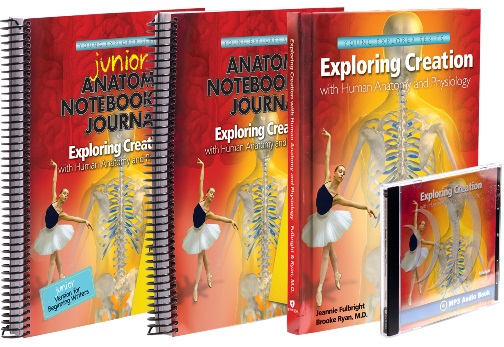
We received one copy of:


Together, these make a complete science curriculum package which makes learning easy, engaging, and multi-sensory for children at a K-6 grade level.  The curriculum also makes things adaptable for homeschool parents.  Seriously, not only do I like the actual science presented in 
Exploring Creation with Human Anatomy and Physiology, but I also appreciate that we can tap into learning in our minivan, at home, individually, or as a family group, using the different components of the curriculum.

In fact, since we have been out of the house so much this spring, my children's first introduction to Exploring Creation with Human Anatomy and Physiology  was with the audio CD.  One morning, before leaving for co-op, I simply grabbed the CD, and after praying our morning prayers in our minivan, we began science lessons for the day.


As soon as my children heard the beginning of the CD, they became excited.  They remembered the Astronomy curriculum we'd reviewed before - the very same one they've referred to materials from multiple times since - and knew immediately that this  Human Anatomy and Physiology 
one would be good.


We were not disappointed!  The narrator's voice was clear and pleasant; the materials presented was easy to understand; and, each time we paused the CD to share what we'd been learning, we all had something to say.  So, we all were quite satisfied with our introduction to Exploring Creation with Human Anatomy and Physiology !


(I will add as an aside here, however, that Apologia does not suggest using the CD without the Student Text, but rather, to use the two resources together, so that developing readers and auditory learners can benefit from the visual images in the text in the fluency of the CD.  We adapted their advice by listening to the CD first and, then, at home, reviewing the text and diving into the journals.) 


As happened when we reviewed the Astronomy set, my oldest claimed our Exploring Creation with Human Anatomy and Physiology Notebooking Journal as his own and was given free reign to do whichever activities in it he wished.  


He started with a science-terms crossword puzzle, but, then, quickly took a break and went onto the faith-based copywork pages.  These captured his attention - praise God! - he took off with them.


Oddly, my oldest does not typically like writing by hand - much less writing neatly by hand - but there is something about the copywork in Apologia Notebooking Journals that makes him choose to write.  In fact, he's already finished almost every one of copywork pages in the Human Anatomy and Physiology Notebooking Journal even though we have yet to complete the rest of all 14 corresponding lessons!  I'll happily take that!

I will also delight in the fact that the 
Notebooking Journal offers more:


  • a suggested lesson schedule (which we obviously do not adhere to, but which could come in handy for homeschoolers who are not as relaxed and eclectic as we are)
  • notebooking pages (that invite students to enjoy graphics and fill in boxes, ellipses, lines, etc.)
  • lapbook-style activities (which are ideal for hands-on learners)
  • places to record project notes (thereby helping students synthesize learning from experiments and activities)
  • puzzles (for kids who love crosswords and such)
  • and more (including Book and DVD suggestions, which I love having on hand)


I had planned to let my youngest son enjoy our Junior Notebooking Journal, because my middle child has been needing more time and focus for other lessons.  However, when my daughter saw the journal, she asked if she could use it.  So, it became hers.


The Junior Notebooking Journal is much like its counterpart Notebooking Journalbut it is designed for use by children at K-2 skill level.  It entices learners with:

  • coloring pages (which connect anatomy, physiology, and God's word)
  • primary writing lines (which make writing easier)
  • easy vocabulary activities (to help solidify understanding of new words in fun ways)
  • lapbook-like activities (which my daughter enjoys!)
  • room to take notes and draw pictures  (on well-designed and inviting pages)
  • and more!

The Student Text that goes along with the CD and journals is filled with:


  • a full-color layout (which captures my children's attention, but, which one child, wished had wider margins or narrower blocks of texts)
  • 14 lessons updated with current scientific data (but written from a faith-connected angle)
  • Biblical wisdom (with Scripture woven right into lessons without being overbearing)
  • diagrams and photogpaphs (which draw my children)
  • callout boxes (which invite children to "try this", getting hands-on with learning)
  • a list of all materials needed to complete lessons (things for "Try This" sections - all f which we found pretty standard supplies we had at home or could easily attain)
  • and more!

Our Thoughts on the Program


Anything we have explored with Apologia in the past has impressed us, including another of their science programs, and   Exploring Creation with Human Anatomy and Physiology   has followed suit. We've been enjoying learning with the Student TextNotebooking Journal,  Junior Notebooking Journal, and - our favorite part  - the Audio CD, and love that we did not have work hard to find ways to fit these review materials into our busy schedule, since the variety and design of components made learning natural and relaxed for us.

Pop a CD in, pick up a journal, open a book, enjoy experiential learning...  Do as little or as much as a day allows.  That's how we roll, and Apologia makes it easy for us to embrace such a style. (They also make it easy for families that prefer structured lessons and/or hands-on experiments to feel 100% at home with the curriculum.)


I can happily recommend  Exploring Creation with Human Anatomy and Physiology  as a faith-connected, easy-to-use approach filled with learning that elementary-aged children (and their parents!) can enjoy.

My children have all told me they'd recommend it, too.


Specifically, my seven-year-old had this to say:


I like the CD.  It makes it easy to learn in the car.  I also like how it tells you about things in the body - like the trashman in the cells.  It makes it easier to imagine.  I also like how it tells you what things look like. 

Sometimes, I go back to the book and look at what we heard on the CD. So, I like the book, too.

My twelve-year-old said:


I used the Anatomy Notebooking Journal and I like the copywork.  It comes in both cursive and printing, so depending on the day I can choose one or the other, or do both.


I also like the CD.  It is easy to listen to and learn from.  I've been learning new things.
My ten-year-old had this to say:
I really like Exploring Creation because I am not great at reading textbooks and it comes with a CD!  So, it is really handy when we go on car rides.  So, I can listen to the CD's and, at home, we can do the journal and experiments.

I have never really been into cells and stuff like that, but now I am really into cells! 

I have drawn some on my own and done hands on projects from the journal. 


The ones of the human body are really cool.  I want to do the rest of them!

I've had fun listening to theories that people made before we had the technology we have now.  It sounds so funny.  It also talked about how God told people how to deal with certain sicknesses and we still use some of the methods today.  I like how the book uses science and faith together, because most books like these don't incorporate God, but God is the most detailed artist in the world.  I couldn't make a cell like He did!

I cannot wait to do all of the rest of the experiments and I hope I learn a lot more.


Mot certainly, Exploring Creation with Human Anatomy and Physiology has captured each of my children's attention, and I am truly grateful for the way the curriculum makes learning so accessible and adaptable - reaching each individual child's learning style.


Learn More

Like FREE SAMPLES?


You can find samples from each of the 
Exploring Creation with Human Anatomy and Physiology  components on the 
Apologia  website.


Curious about other Apologia products?


Apologia offers a full line of faith-centered materials for students and parents, several of which we have been  blessed to review.  Click through the images below to see what we thought of some of the ones we have tried out.


http://traininghappyhearts.blogspot.com/2015/06/scrapbook-your-field-trips-exploring.html


http://traininghappyhearts.blogspot.com/2014/10/discover-archeological-evidence-and.html


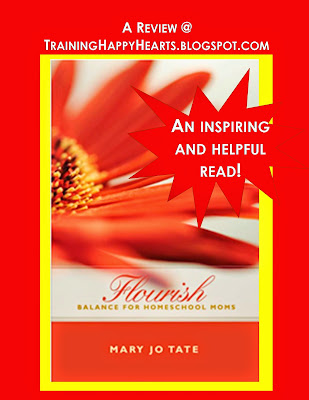
http://traininghappyhearts.blogspot.com/2014/07/are-you-ready-to-flourish-review.html


http://traininghappyhearts.blogspot.com/2014/05/what-on-earth-can-i-do-review.html


http://traininghappyhearts.blogspot.com/2016/04/writers-in-residence.html

Want to get social?


Find Apologia on Social Media at:


What do others think?


Seventy-five Homeschool Review Crew families were generously given Exploring Creation with Human Anatomy and Physiology for review.  Click through the banner above to see how each used the program.


Have you been looking for an engaging, faith-connected science program that you an use at home and on the go? Apologia Exploring Creation is just that!

Crew Disclaimer

Thursday, September 8, 2016

We Finally Get - First Hand- Why Apologia Science Is So Fabulous!

{This post contains affiliate links to a vendor we have come to appreciate for quality and ease of materials: Apologia Educational Ministries.}


traininghappyhearts.blogspot.com/2016/09/apologia-astronomy.html

Astronomy was not on my radar as a topic of study for the summer until we were offered a chance to review
Exploring Creation with Astronomy, 2nd Edition by Apologia Educational Ministries.   I could not be happier that this opportunity came along, because, in all honesty, our summer did NOT turn our to be the summer we had planned, and, while most of the reasons why are not "good" ones, our change of plans to add Exploring Creation with Astronomy, 2nd Edition to our summer learning and adventures proved to be positive one.

What Comes with Exploring  Creation with Astronomy, 2nd Edition?


Why was our experience so positive? 

I think because
Exploring Creation with Astronomy, 2nd Edition is presented in a multi-sensory way that is easy to use and engages children.

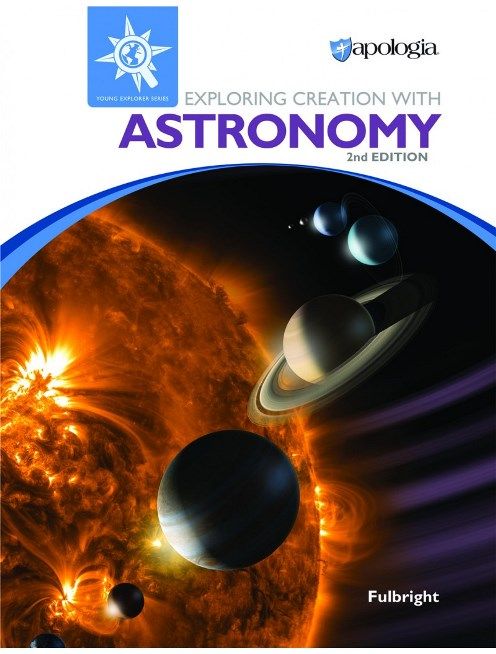
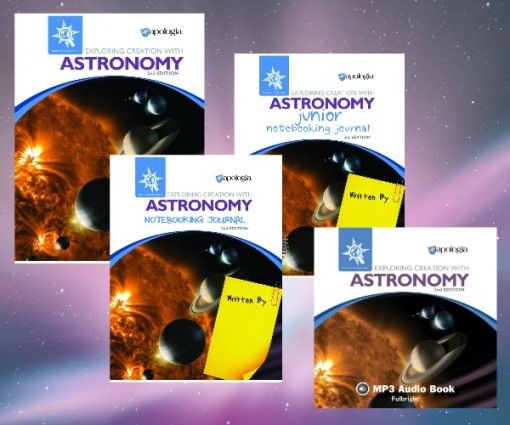
For our review, we received a Student Text, a
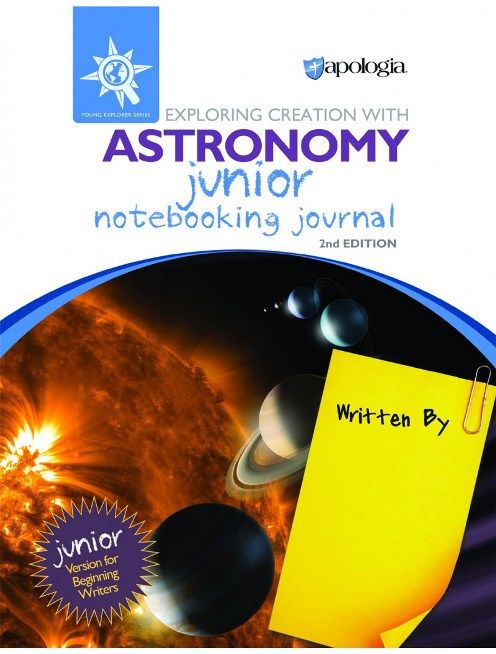
Notebooking Journal, a Jr. Notebooking Journal, and an Audio CD. With these, we were able to easily and naturally fit Astronomy lessons in around the sickness, household issues, and car problems that struck our family this summer, and, while doing so, each of us - even me - learned new things.

In July, despite one child being diagnosed with Lyme's, we were still able to be out and about quite a lot, taking another child to camp daily for a week and participating in a number of other events, classes, workshops, etc. that required our family to pack into our minivan quite often.  Thus, our Astronomy lessons began by simply popping the
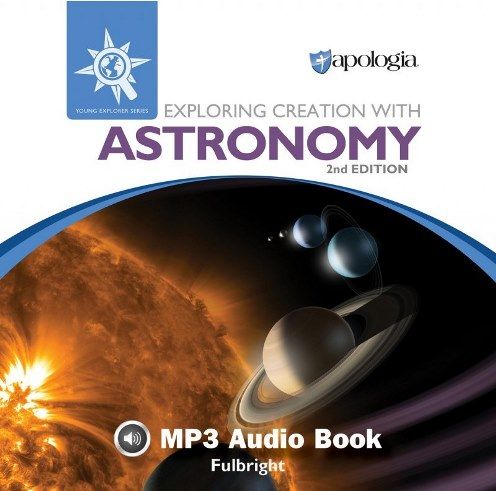
Audio CD into our minivan CD player and, then, pausing it occasionally to chat about what we were listening to

(For the record,
Apologia does not suggest using the Audio CD without the Student Text, but rather, to use the two resources together, so that developing readers and auditory learners can benefit from the visual images in the text in the fluency of the CDHowever, for our family, using the CD alone is what worked at first.)


Apologia: Exploring Creation with Astronomy Review


After the first time we put the 
Astronomy Audio CD in on a ride, almost every time we rode in our minivan, one child or another asked, "Can we listen to Apologia?"  So, we ended up covering the entire Astronomy course (through audio) in just a few weeks while we were blessed to be still out and about going to camps, classes, stores, and whatnot.

Then, when sickness and other challenges struck our family, requiring us to stay home more often, the children dove into the other course materials.


Apologia: Exploring Creation with Astronomy Review

My oldest claimed our Notebooking Journal as his own and was given free reign to do whichever activities in it he wished.  He surprised me by choosing to do print and cursive copywork. 

My oldest typically groans when asked to write anything, and I do not know what it was about the way the copywork in the journal was laid out that prompted him to do page after page of it, but I sure am delighted that he did so. 


One day, after completing some and showing it to me, he said, "Mom, I don't mind this copywork, and I know when I choose it, it makes you happy."  It sure does!  Thank you,
Apologia and thank you, Son.


My oldest has never really cared for crosswords, either, yet, I found him at our kitchen table one day happily intent on completing one, and, in the future, he says he wants to enjoy more of the activities in the Notebooking Journal at his own pace.  I am all for that. 

The
Notebooking Journal is truly a wonderful resource that invites children at a grades 3-6 level in and welcomes them to use:
  • a suggested lesson schedule
  • notebooking pages
  • lapbook-style activities
  • places to record date from experiments
  • places to display work
  • puzzles
  • and more!

Apologia: Exploring Creation with Astronomy Review

My daughter and youngest son debated about who would get to claim our Jr. Notebooking Journal, which is much like the Notebooking Journal but designed for use by children at K-2 grade levels.  They were both enticed by its full-color pages, which include:

  • coloring pages
  • wide writing lines
  • easy vocabulary activities
  • lapbook-like activities
  • room to take notes and draw pictures
  • and more!

In the end, we decided it was best suited for my daughter, who was kind enough to let her little brother help her with a number of pages.


It was so sweet to see them coloring together without quarreling.  For, as every homeschool mama knows, sometimes the greatest lessons have nothing to do with the subject at hand and everything to do with virtues!  I appreciate how
Apologia weaves faith and virtue into their materials and how, when using Apologia materials, I witness virtues being lived by my kiddoes.

Apologia: Exploring Creation with Astronomy Review

And, that left our Exploring Creation with Astronomy, 2nd Edition Student Text , which my youngest (in fairness since his older siblings had claimed the journals) said was "his".  


After paging through it, "wow"ing at its pictures, he had his older brother read him parts and his sister browse the text, too.  In fact, we have all enjoyed reading and looking at parts of this well-designed text which includes:


  • an easy-on-the-eye full-color layout: This captured my children's attention!
  • 14 lessons updated with current scientific data: I have never seen the old edition of Apologia Astronomy, but hear that while it is wonderful, this one takes a great thing and makes it even better! 
  • Biblical wisdom: I just love how Scripture is woven into the lessons without being overbearing.
  • infographics:  These help children see information in an understandable format.
  • callout boxes:  Many of these give special attention to God as Creator.
  • a color-coordinated schedule for the textbook, notebooking journals, and lab kit:  This would be super handy for those that are less go-with-the-flow than us and prefer traditionally scheduled curriculum.
  • fresh layouts for activities:  Again, I have never used the prior version of this curriculum, but understand that in this second edition there are more activities woven throughout the text.
  • many full-color illustrations: My children enjoyed feasting on the illustrations after listening to the CD, and I enjoyed hearing them chat abut what they had learned and retained as they did so.


Our Thoughts on the Program
 
Anything we have explored with 
Apologia in the past has impressed us and, now that we have had a chance to dive into one of their famous their science programs, we are even more impressed!  Truly, Exploring Creation with Astronomy, 2nd Edition has been a blessing to us.  The children (and I!) learned so much already using the Student Text, Notebooking JournalJr. Notebooking Journal, and - our favorite part  - the Audio CD.  Better still, we did not have to work hard to find ways to fit this review into our already full life, since the variety and design of materials made learning so natural and easy for us. 


Slip a CD in, pick up a journal, cuddle up with a book, enjoy experiential learning...  That's our style and Apologia makes it easy for us to embrace that style. (They also make it easy for families that prefer structured lessons and/or hands-on experiments to feel 100% at home with the curriculum.)


I can happily recommend Exploring Creation with Astronomy, 2nd Edition as a well-written, faith-connected, interesting, and easy-to-use approach to learning about Astronomy at an elementary level.

My children have all told me they'd recommend it, too. 


Specifically, my six-year-old had this to say:

I liked it.  I liked everything.  I liked the music on the CDand the information.  I learned about the sun - that it is the colors of the rainbow.  I learned that there are black holes.  I also learned that shooting stars are actually not stars.  They are meteors.

The was big... I liked the pictures.

In the journal, I liked to color the pictures.


My nine-year-old (who loved he colors on the page of the Student Text pictures above) said:


I liked the whole CD.  I liked how they taught you.  I've always thought of space things as not the most fun topic, but I like how they put funny facts in, so it made it interesting. 

I also like the book.  The book itself has activities and I like the pictures.

The journals... I liked the coloring and the crafts.

I'd like to do more of the journal and, then, keep the program to review every few years.


My ten-year-old had this to say:


When we got Apologia, I asked to listen to it every day.  I really liked it.  I liked learning about the sun, the space rocks, and Mars. 

Did you know the sun is rainbow colored?  Did you know space rocks are not as close as movies make them look? There is a distance between them in the asteroid belt. And, did you know that if you stood on the equator of Mars, your feet would be warm and your head would be freezing?  I learned all this on the CD.

I really liked the workbook, too.  I don't always like copywork, but I liked this copywork, the crosswords, and drawing a cartoon of Neptune.  I like being able to do parts of the journal as I like.


I also like the pictures in the book, although I used the CD more than I did the book.

I want to keep using Apologia and to do the activities we have not done yet.

Yep, Exploring Creation with Astronomy, 2nd Edition proved to be a shining beacon of success during a summer of challenges.  We truly are grateful for the learning and fun the program has offered us.

Learn More


Like FREE SAMPLES?

 
Apologia: Exploring Creation with Astronomy Review

You can find samples from the
Exploring Creation with Astronomy, 2nd Edition Student Text, Notebooking Journal, Jr. Notebooking Journal, and Audio CD at the Apologia Educational Ministries website.

Want Everything Labeled, Organized, and Ready-to-Go?

If you do not like collecting materials from here and there to do experiments and activities, you can also purchase a Science Kit which includes (almost) everything you need to enjoy
42 activities found in the textbook, plus 21 bonus activities noted in the textbook and found only in the Apologia Astronomy Science Kit (Food items are not included.)

Want to Get Out and About?


Listen to the
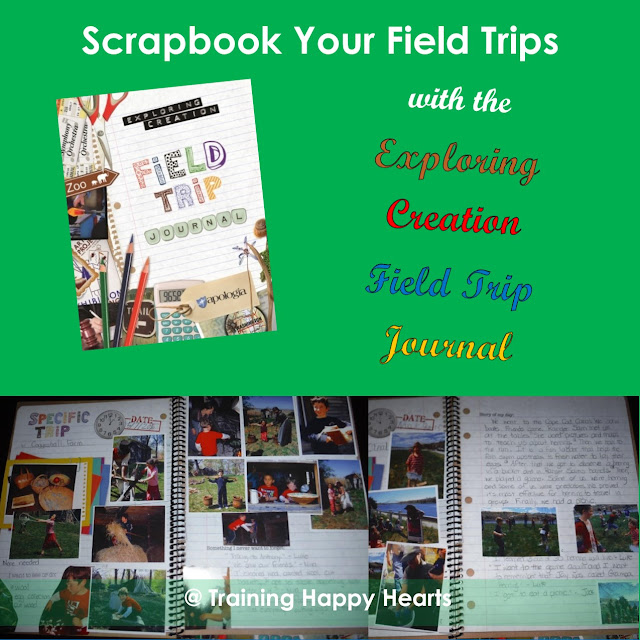
Audio CD while on the way to field trips, then, journal about your experience with the Field Trip Journal, which I reviewed previously.  (Just click through the image to see the review.)
http://traininghappyhearts.blogspot.com/2015/06/scrapbook-your-field-trips-exploring.html


Curious about other Apologia Educational Ministries products?
Apologia Educational Ministries offers a full line of faith-centered materials for students and parents, several of which we have been  blessed to review.  Click through the images below to see what we thought if you want to learn more.

http://traininghappyhearts.blogspot.com/2014/10/discover-archeological-evidence-and.html


http://traininghappyhearts.blogspot.com/2014/07/are-you-ready-to-flourish-review.html


http://traininghappyhearts.blogspot.com/2014/05/what-on-earth-can-i-do-review.html


http://traininghappyhearts.blogspot.com/2016/04/writers-in-residence.html

Want to get social?

Apologia: Exploring Creation with Astronomy Review

Find
Apologia Educational Ministries at:


What do others think?
Exploring Creation with Astronomy, 2nd Edition Review

Ninety-nine Schoolhouse Review Crew families
were generously given Exploring Creation with Astronomy, 2nd Edition for review.  Click through the banner above to see how each used the program.


Have you checked out what the buzz about Apologia science curricula is about? I am glad we finally know, first-hand, how fabulous Exploring Creation Astronomy is!
Crew Disclaimer

LinkWithin

Related Posts with Thumbnails