Showing posts with label Curriculums. Show all posts

Saturday, April 18, 2015

One Resource that Will Help You Enjoy Art Anywhere {A Review}

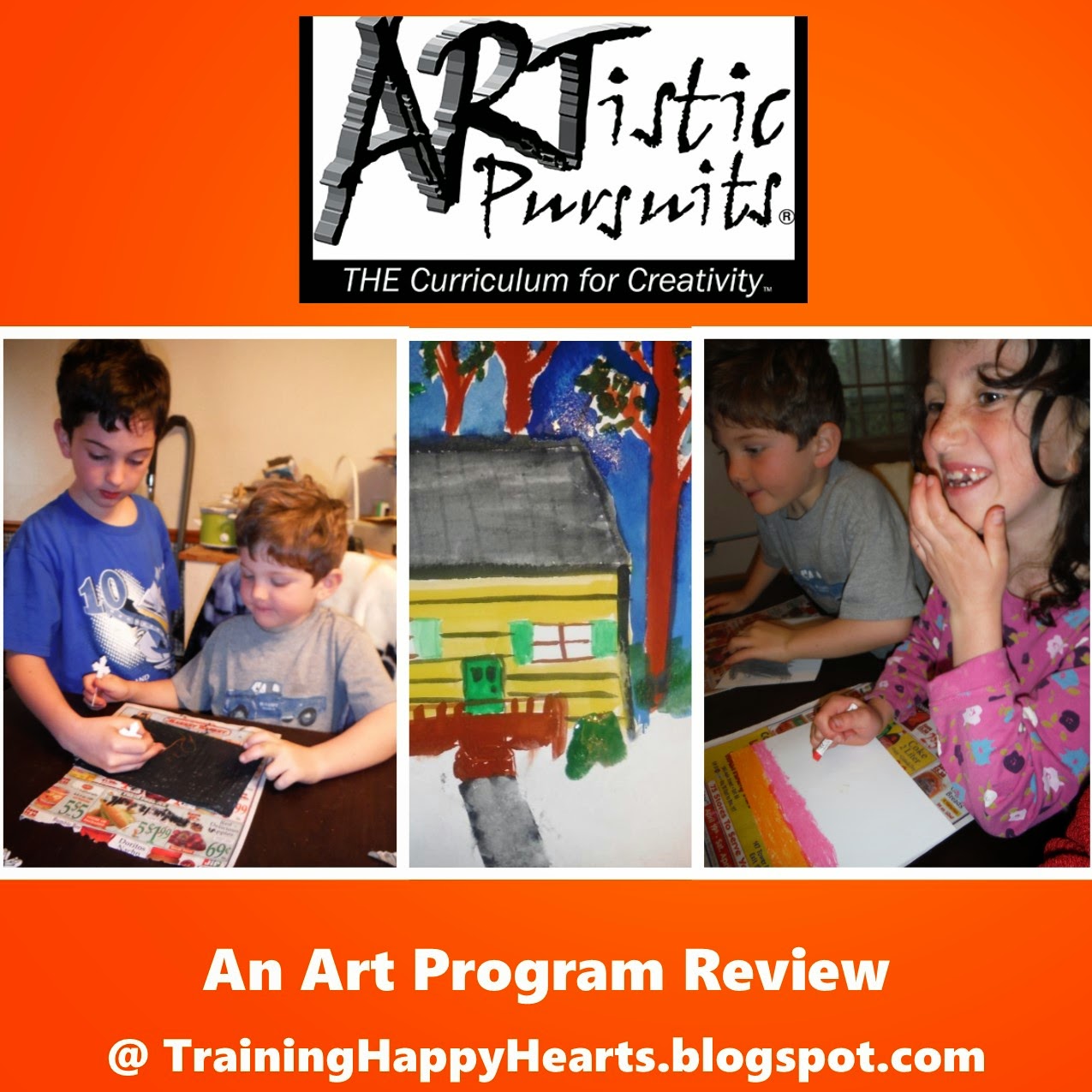
Do you want an easy-to-implement art program that you can pick up and go almost anywhere with?  We've found just such a resource with Early Elementary K-3, Book 2: Stories of Artists and Their Art by ARTistic Pursuits!


Last year, we fell in love with ARTistic Pursuits' open-and-go resource: Book 1: Introduction to the Visual Arts.    In fact, I was so impressed by ARTistic Pursuits' fun, easy-to-implement approach that I have since found myself recommending it to homeschooler after homeschooler, and even some traditionally schooled friends.  

Last Year
Last Year

Why I Love ARTistic Pursuits

Image Credit: ARTistic Pursuits

ARTistic Pursuits comprehensive books blend art appreciation, history, and techniques together into one all-in-one art curriculum.  Each book on the ARTistic Pursuits Book List is targeted to a different age range and, together, provide an art program that spans from preschool through high school and beyond.  For in our family's experience, even the books meant for young children can be enjoyed by adults, too!


Each book in the collection encourage students to observe and explore through experimenting with such things as:

  • drawing 
  • mixed media
  • painting
  • pastels
  • printmaking
  • sculpting

...and more.  They also, as I have already mentioned, include art appreciation and art history.  What more could anyone want?


Stories of Artists and Their Art in a Nutshell

:
ARTistic Pursuits Review

Stories of Artists and Their Art has been around since 2003 and is in its third, expanded and revised printing. Its opening pages contain parent/teaching information in the form of a materials list and tips on teaching observational skills.

Then, the 36 lessons in the book start with Cimabue, an artist from the Gothic period and progress through Millet, an artist from the Realist Period.  Units of work include:


  • stories about specific artists that can be enjoyed as read togethers
  • art appreciation pages with full color reproductions of famous artworks
  • project ideas that use a variety of media and connect to artist biographies and reproductions
  • full color examples of art works created by other children
  • special projects, such as creating a color wheel
  • technique tips

The book concludes with a complete bibliography for further research, study and exploration.
  
How We Used Stories of Artists and Their Art

When our review copy of
Stories of Artists and Their Art came in, I immediately turned to the handy materials list page to see what supplies we already had on hand and what I needed to use discount coupons at our local art supply store to pick up.  


Shortly thereafter, the children began selecting which readings and projects we wanted to experience first.  For while the book is organized into 36 consecutive lessons to take students through an entire year's worth of art curriculum, our family prefers to pick and choose which lessons interest us on a given day.

Typically, we began the lessons we chose by gathering supplies and then reading (or re-reading) the corresponding artist biography together.  


I loved the way these biographies were preceded by introductions written to draw children in and connect them immediately to the artist to be studied.  For example, one introduction said:

What kind of job do you dream of having when you grew up?  Anguissola may have dreamed that she would travel to another county to work for a queen.  That is just what she did all because of her love for painting.

From there, we went on to read the clear project information and instructions and began creating our own works.


Some of our favorite experiences were:
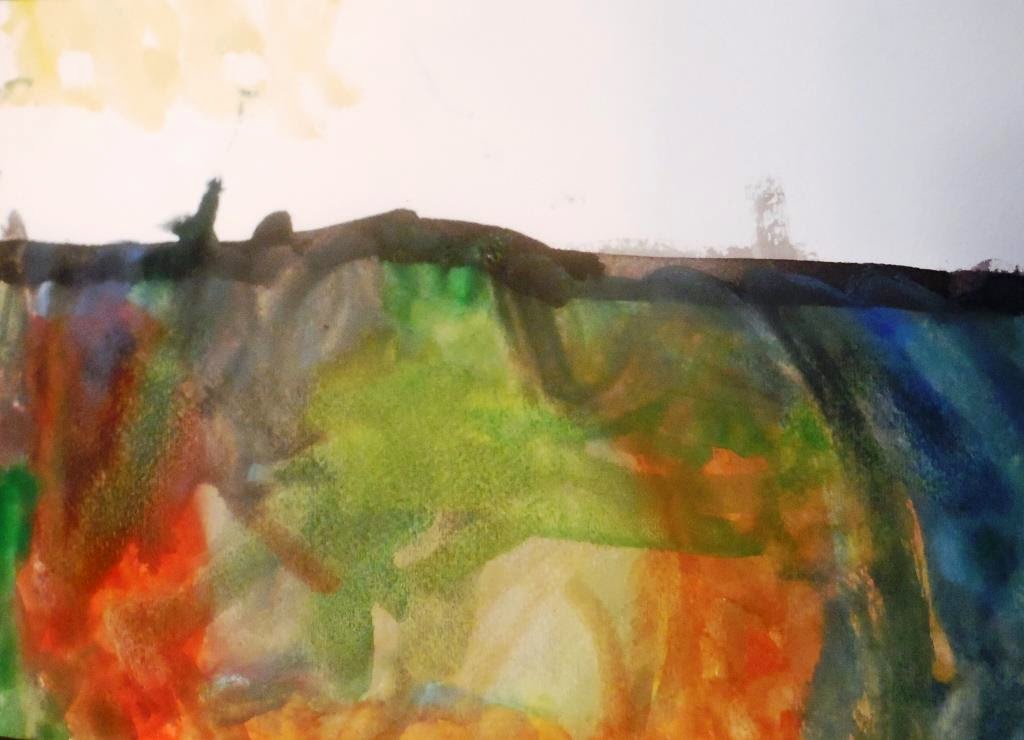


... having "girl time" when, upon the suggestions included in project 1, my daughter and I went for a walk to look for inspiration and then experimented with watercolor paints.


...when we brought some simple supplies and the book to a friend's house to share a project together.  The mixed media collages from Project 13 ended up taking new directions as toddlers to preteens enjoyed art together.


...when we gathered as a family around the kitchen table to read about Giotti, play with expressions (since Giotti was "well known for his skill panting people with expressions and emotions") and, then, enjoy creating scratch art together as described in Project 3.


Often, we found ourselves inside or outside learning about art history, appreciating great works and experimenting with specific techniques!


Final Thoughts

Obviously, I love ARTistic Pursuits and am thrilled to have added Early Elementary K-3, Book 2: Stories of Artists and Their Art to our homeschool endeavors this year!  Among the things I most appreciate about the curriculum are:
  • how thorough it is!  As I move through it with my children, we all learn more about artists, art history and art technique!
  • how open-ended the projects are.  The children learn and experiment with techniques but never come out with "cookie cutter" art.
  • how portable it is.  More than once, I have simply grabbed the book and a few supplies and been able to take art outside or to a friend's home.
  • how easy connect to other learning it is.  The book focuses on Gothic, Renaissance and 18th Century Academic Art, making it easy to tie into history studies.  It also includes open-ended projects which can be adapted to connect to almost anything you are studying.

As for the kids, when I asked them for their thoughts about the book, my seven-year-old immediately shouted with delight, "I LOVED the scratch art!" 

My nine-year-old added, "I like learning about the artists."

My four-year-old concluded with, "I like doing all the art and artists."


And, then, my seven- and four-year-olds went and grabbed supplies to do a scratch art reprise.  

I would say their enthusiasm to revisit a lesson sums it up: Early Elementary K-3, Book 2: Stories of Artists and Their Art by ARTistic Pursuits is a complete art program with high appeal that inspires kids and can be used almost anywhere as long as you have a few materials handy!

Find Out More

ARTistic Pursuits Review


See how 100 Schoolhouse Review Crew families implemented pre-k through high school art lessons with ARTistic pursuits.

You can also be found on Facebook.

 
Crew Disclaimer

Thursday, September 1, 2011

Seeking Simplicity in Turning Curriculum Plans to Practice

Okay, Jack’s infant-toddler "curriculum", ideas for actually implementing it and thoughts about how I intend to assess it have been easy to lay out.  Listing possibilities for Luke and Nina's Pre-K and K curriculum was not difficult either.  But, now that I am thinking about how to actually house, present  and assess Luke and Nina's curriculum, I realize that I must not be praying enough.

Why?

Because every time I begin to feel settled about a definite direction to take for turning my plans into practice something disrupts my peace. 

A thought had.  A resource browsed.  A blog post read.  A cluttered room entered.  All these cause my mind to begin to reel anew.

The problem?

TOO MUCH INFORMATION! (...and, too much "stuff".)

Good information (and "stuff"), albeit, but too much all the same. 

Chaos and complication crowd my mind, my home and even my computer.  I slog through it all seeking something that my past few years of over-zealously collecting thoughts, digital resources and piles of materials impedes: Simplicity!

Ah, simplicity.

Just the word brings a smile to both my lips and my heart.  It speaks of an obvious truth:  Learning is not, and should not, be complicated. 

So why do I keep complicating it?

I don’t know.  But, I do know that it’s time I stop.  It's time to breathe.  It's time to rest in one of my personal home education mantras, "Learning happens anyway."  Moreover, it's very much time to PRAY!   

I guess it also time to take stock of the confines of our family’s time, budget and physical space (as opposed to the aforementioned dizzying plethora of thoughts, resources and materials).  Then, I can better embrace freedom within those limits!  Freedom with simplicity.  Simplicity that comes with peace born out of prayer.

Check back within a week and - God-willing- I should have a simple, freeing action-plan laid out.

In the meantime, I wonder:  Do other parents get lost in physical or mental clutter?  Do they fall into the trap of over-complicating ideas and systems at this time of year?  How can we help ourselves stop this?  Might we just plan a little less and pray a little more?  Makes sense to do so, but sometimes it's hard to let go and let God, huh?  I am trying.


And, one more thing:  Have you heard of  That Resource Site?  If not, you might want to click on over.  For, even though I have expressed my need to STOP collecting resources today, this is one site I will definitely keep combing for fantastic, simple, straightforward and helpful ideas.  Check it out.  And, if you go today, note their giveaway, where they are offering a set of 95 printed weekly activity sheets -- great for keeping kids organized (and mamas!)  Now, that's what I am talking about!

Thursday, August 18, 2011

Pre-K and K Curriculum Plans , 2011-2012

This week, after I planned Jack's Infant-Toddler Curriculum, I set about trying to synthesize thoughts, resources and ideals in order to lay out Luke and Nina's Kindergarten and Pre-K plan.  Wow!  That was a task.

However, I think I have come up with something I am content with... for now.  Undoubtedly, the outline below will be honed and tweaked as the year unfolds.

Taken all together, the curriculum as written looks a bit overwhelming and demanding.  Hopefully, though, when paper is translated to practice, it will not be. My intent is to try to get to our "Core Four"  of Faith, Reading, Writing and Arithmetic in daily, one way or another, and, then, to sprinkle the "Plus" on as each day allows, always bearing in mind some key themes for the year:  movement, sensory experiences and outdoor time.

With this in mind, I am still working on a plan for how to actually present lessons and materials in a way that will appease my Type A Teacher-side while considering our home's current physical condition and our children's play-centered learning style, which requires ample movement and sensory input as well.  One step at a time...

Today's step is simply to have laid out our:

2011-2012 
Pre-K and K Curriculum

Core Four:

Faith and Character:  Mass, Monthly First Friday Celebrations, Monthly Adoration, Home Catechesis Manual by Moira Farrell for Catechesis of the Good Shepherd, Mass, Bible Stories & Songs, Scripture Memory, Music & Study, Catechism. Character Trait/Value Studies, Liturgical Table, Saints Teas and perhaps some Sacred Music Appreciation and Sacred Art Appreciation, Story Books about Saints, Catholic Children’s Treasure Box, Devotionals, Bible Felts, Faith Story Toys/Baskets/Manipulatives

Reading:  Worldwide Montessori Online Albums, Read Alouds, Library Story Times, Word Mastery, Funnix, Starfall, Peter Piper’s Practical Principles of Plain and Perfect Pronunciation, A Children’s Garden of Verses, The Harp and the Laurel Wreath, Nursery Rhymes, Beatrix Potter, Aesops Fables, Felt Stories, Magnet Stories, File Folder Games, Word Card Games, Board Games, Etc.

Writing:  Worldwide Montessori Online Albums, Sensory Activities

Math:  Worldwide Montessori Online Albums, Games, Cooking, Shiller Math, a bit of Funnix, Cuisenaire Rods, etc.

Plus:

Practical Life: Worldwide Montessori Online Albums, Chores, Morning Lotto, Habits, etc.

Science, Technology and Engineering (Physical Science, Astronomy, Ecology, Botony, Zoology, Nature Study, Geology): Worldwide Montessori Online Albums, Nature Walks and Passport Hikes, Magic School Bus Books and Videos, and maybe the Outdoor Hour and One Small Square Books, etc.

History/Social Science/Geography: Worldwide Montessori Online Albums, Evan-Moor Beginning Geography, Continent Boxes, Personal and Family History, etc.

Visual Arts:  CM-style picture study, drawing with Draw Write Now and Drawing with Children and Reggio-inspired explorations using The Language of Art

Music:  Kazoo and Rhythm Instruments, Various Children’s and Cultural CD’s, Composer Studies, etc.

Theater/Dance/Movement: Drama Kids, BSC Spring Class, Puppet Making and Play, etc.

Health/Physical Education: Perceptual Motor Activities, MoveAbout Cards, Walks and Hikes, Outdoor Games, Brushing/Joint Compression, Skating Lessons, Maybe Swimming Lessons, Nutrition Studies, Safety/ First Aid/Fire/Emergency Drill Studies, Yoga, OT (for Luke), MegaSkills, etc.

 Life Skills, Educational Skills  and Interests: Handicrafts, Chores, Manners, Scheduling, Organization, Goal Setting, Life Skills Lists, Library Skills, Research Skills, Critical Thinking, Memorization, Study Skills, Awareness of Learning Styles 

Foreign Language: Signing Time, Spanish Fun, German with Daddy

How is your pre-k and k curriculum shaping up this year and how do you intend to implement it?  Do share in a comment or link.


Quite late, I am sharing this post at Heart of the Matter's Curriculum Week Blog Hop, a place where you can find links to oh-so-may curriculum ideas.

Tuesday, August 16, 2011

Infant-Toddler Curriculum Plans 2011-2012

August’s mid-point is here and, although I know we have a lot of summer left yet, I cannot help but to think about fall. 

Luke is now official kindergarten age, so the Teacher/Planner in me longs to do what she loves doing – to collect resources, synthesize ideas and lay out a plan for his first official year of elementary school.  The Momma in me, however, wants to stay true to a promise I made myself (and our youngest) some time ago – that our last shall sometimes be first.  So, I have decided to let the Teacher/Planner have at it, but to direct her towards the Infant-Toddler age first.

Yep, that means I am geared up to synthesize plans for Jack’s fall “curriculum” using ideas of my own, along with those I have gleaned from many of the books and online resources I have browsed over the years.  Among those online resources, there is one that stands out strongly, which I would like to give thanks to – Brightly Beaming Resources.  I do not use the curriculum it lays out for ages zero on up “as is”, but I do find myself popping over for lots of inspiration.  It really is a great site.

Now, as far as my Fall plan for Jack goes, I use the word “curriculum” lightly.

While the notes below may seem to indicate a do-this-now-and-this-then type of program, the “subjects” I have included in it are for my mental organization only.  I don’t aim to force any “subject” or “lesson”, but, rather, to enrich Jack’s days with purposeful, enjoyable experiences, which include quality mommy-and-me, sibling-and-me and hey-look-at-me times.  In other words, I have delineated ideas to satiate my Type A side, but hope to implement them in a way that is comfortable for my more laissez-faire kiddoes. 

Now, with no further ado:

Jack’s Infant-Toddler Curriculum

Faith Formation: 
  • Be present at daily devotional time.
  • Read Bible and faith-based stories together. 
  • Read Psalms and Proverbs together. 
  • Participate with family in faith-based activities and events, such as Mass, Adoration, Liturgical Year celebrations, etc. 
  • Play with Bible and faith-based story manipulatives, such as figurines, felt stories, etc.
  • Perhaps do some Sacred Music or Sacred Art appreciation activities. 
Poetry
    The Harp and Laurel Wreath: Poetry and Dictation for the Classical Curriculum
  • Listen to nursery rhymes and selections from A.A. Milne’s When We Were Young and Now We are Six, Robert Louis Stevenson’s A Child’s Garden of Verses and Laura Berquist’s The Harp and the Laurel Wreath read aloud, read on CD or set to music.
  • Play with poetry manipulatives using poetry baskets, felt and magnet stories, nursery rhyme blocks, etc.
Book-of-the-Week Read Aloud/Literature: 
  • Read and enjoy age-appropriate literature, with the same books being read multiple times throughout a given week or month.
Sign and Spoken Language:
    Baby Sing and Sign r: Communicate Early with Your Baby: Learning Signs the Fun Way Through Music and Play
  • Introduce and increase use of sign language by refocusing family efforts to use sign. 
  • Watch Signing Times
  • Do activities from Baby Sing and Sign, reviewed here.
  • Increase expressive and receptive language by having more focused times for naming, describing, comparing, explaining and giving directions.
  • Begin using U-Play Mat together.
Family Work/Practical Life:
  • Be present for – and participate as possible – with Family Work Time.
  • Do Montessori-inspired Practical Life activities for care of self and environment.
Classical Music: 
  • Listen to classical music in the background while doing other things. 
  • Listen to classical music in the car and at quiet times, too.
  • Sometimes, look at pictures of classical music artists while their music is playing and hear their names.
Nature Exploration:
  • Spend ample time outside.
  • Play with “loose parts” from nature (sticks, rocks, etc.)
  • Go for nature walks and hikes.
  • Enjoy seasonal activities and traditions.
Slow and Steady Get Me Ready:
Lullaby: 
  • Listen to lullabies sung and on CD at quiet times, bedtime and in the car.
Three “Toys”
  • Play with three “learning toys” a week during sibling’s indoor lesson times – or as interest holds.  Most of these will be Montessori-inspired materials placed out in rotation in an effort to keep the house tidy while allowing for choice and exploration.
Music:
  • Develop appreciation through listening to a variety of types of music on CD and by going to free concerts.
  • Explore through playing with rhythm instruments.
  • Dance freely, sometimes with props, to a variety of music.
  • Listen to and sing classic/traditional children’s songs.
Art and Sensory Experiences: 
  • Play with sensory bin with rotating materials.
  • Explore different age-appropriate art media and techniques.
Art Appreciation:
  • Browse books that contain examples of great classic art.
  • Browse picture books with beautiful illustrations.
  • Share in Charlotte-Mason inspired Picture Study time with siblings.
  • Play simple games with picture cards that contain reproductions of great art.
  • Go to museums and galleries, if possible.
Drama:
  • Enjoy creative dramatics and dramatic play.
  • Attend live performances.
  • Make and use puppets, including hand, sock, paper plate, paper bag and finger puppets.
Exercise/ Baby Games/Massage/Habits:
    MegaSkills© for Babies, Toddlers, and Beyond: Building Your Child's Happiness and Success for Life
  • Play formal and informal games inside and out.
  • Participate in creative movement (with music) times.
  • Begin massage times again.
  • Work on Megaskills, reviewed here.
Beautiful Beginnings
Culture/Geography/My World
  • Browse and read books about culture, geography and the world.
  • Explore local area.
  • Learn about community helpers and locations.
*Math concepts will be naturally included in other activities, particularly in Montessori-inspired ones and reading selections.

Whew!  Seems like a lot doesn’t it? 

Well, the fuller the well of ideas, the easier it may be to dip into as Jack thirsts for more learning and fun. 

That said, let me be the first to say that I’m fully aware that reality of what we do with Jack in the coming academic year might turn out quite differently than what I have outlined here.  Life– and Jack’s reactions to it and explorations of it – might lead us in unforeseen directions.  My hope is, though, that much like what happened with our Summer Bucket List, where I found that just by writing things down, we seemed to write them in our hearts and heads and, thus, ended up accomplishing a lot of the list without even referring to it, that what I have come up with here– in my Teacher/Planner mode – transforms effortlessly into daily reality this fall.  (How is that for a run-on sentence from a former ELA teacher?)  If nothing else, by writing this Infant-Toddler Curriculum out, I believe that I have become more aware of what we might do to “follow Jack” as we also reach towards our mission and goals this fall.  I also recognize that, if we stick to even a part of what I have written,  I will more easily be able to plan, prepare, assess and reflect upon developmentally-appropriate activities for Jack at a moment's notice.  Plus, by sharing all this, I may just hold myself more accountable to making my last first sometimes, and I may also help you to think about how you’d like to guide your own young explorers this fall.

From here on out, then, the plan for the Infant-Toddler Curriculum is: be, do, reflect and tweak… observe and tweak…live, learn and love together.

What are your “curriculum”/enrichment plans for your youngest children?  I’d love for you to share them in a comment or with a link!  And, of course, if you notice a glaring hole in what I have laid out here, please let me know.

Two weeks late, I am sharing this post at Heart of the Matter's Curriculum Week Blog Hop, a place where you can find links to oh-so-may curriculum ideas.

LinkWithin

Related Posts with Thumbnails