Showing posts with label Phonics. Show all posts

Monday, February 26, 2018

My Children Found The Starfall Home Membership Fun


"Mom, can we get it?" my younger two children asked when they heard we might be able to review a one year subscription to The Starfall Home Membership from Starfall Education Foundation.  For ever since they had completed all the fun, free options on Starfall.com, they've been curious what learning games and activities might be discovered with a paid membership. 

Since mid-January, my children's curiosity happily satiated.  As a choice during their lesson times, as well as during their free online times, my younger two have been exploring 
The Starfall Home Membership.  
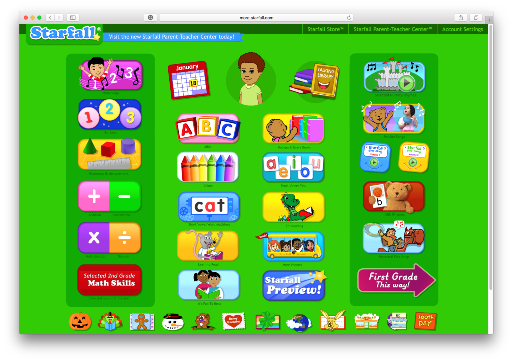

Included in the membership are online and printable activities for:
  • phonics 
  • learning to read 
  • folk tales and fables


  • math 
  • folk songs
  • classical music
  • poetry
  • riddles
  • sign language


    and more!  All of these are super easy for children to navigate, making use of Starfall intuitive, fun, and educational.

    There is also a complete 
    parent-teacher center, which is accessible once a math problem written in words has been solved.  This section of the site  is chick full of helpful information, tips, printables, and more.  There are with worksheet generators.


    The Starfall Home Membership could truly act as a "spine" for learning for pre-k through first grade learners.  It also can engage older children like mine as a supplementary program for fun or to develop lagging skills.  The wide variety of offerings and enjoyable nature of included activities and games makes it especially helpful for reluctant or developing learners, too, I find.  My older child with dyslexia enjoys reading along with portions of the program, reinforcing skills.


    What the Kids Had to Say

    My children are older than the typical pre-k through 1st grade user of The Starfall Home Membership and have no need for the printable portions of it.  Thus, they have been using our membership completely independently several times a week on our laptops or Kindles.  Sometimes, their big brother looked on, too, because the graphics and audio caught his attention.


    My youngest has this to say:
    I wanted to get Starfall, because I had used the free stuff and I wanted to listen to more than one song, read more than a few books, and be able to do all the math stuff, because when you have it free you can only do a few of these.  When we got it, the first thing I did was the folks songs.  They were fun! 

    I like the reading and the math, too.  For the reading, I like the Greek Myths and the stuff about space and firefighters... 


    The math is kind of easy.  It's too easy for me, so I don't use it much except for for fun. 
    I am seven and I think this program is good for ages 2-5, but I still like it.  I would recommend people with little kids to get it.  I will still use it while we have it.  I like it.


    My middle child, who is still developing in some of her literacy skills, said:

    I wanted to get Starfall, because there is a free version and I kept on looking at it.  They had logos on it you could not click through without a membership and I wanted to figure out what they were all about.  I especially wanted to figure out what was in the math section, because there were only one or two things in the free version.  
    When we got our membership, I also realized there were more songs.  They are good.  There are drawings that go along with them, and I like to watch and sing along. 


    I also like the talking library.  It is basically a library shelf in the middle with folk tales and another choice on the two sides of the shelf.  You can click on a book, and it will open.  You can then read along with a voice or read by yourself without the voice.  I did it both ways, because I wanted to see how it is different.  I decided I like it with the voice, because I like how they use expression.  


    I liked all the reading parts of the program, because they are all pretty much like that - you can read along or read by yourself.  That can help kids with reading skills. 


    Of course, I tried the math, too, but it was too easy.  I would like them to make a little harder math. 
    I am ten years old, and I think the math is good for maybe kindergarten through second grade (which Mom later told me is what the program is meant for.)  The reading has different sections for different levels of learners and, I think, is good for anyone still getting stronger in reading.
    The songs are good for anyone.  They are just fun! 


    I am glad we got the program.  I will keep using it to have fun and to have easy breaks between my other lessons.  I would recommend the learning parts for children at least under fifth grade.  For bigger kids, I don't think it's good for main learning - like "this is my curriculum"-  but it's good for a side thing. It could be good for 3-5 year olds for main learning, but I don't think they should be online so much.  The program would work for that, because the lessons are easy and short.  There is math, reading, and other fun parts.

    As you can tell from her narrated review The Starfall Home Membership definitely has appeal and purpose for older children with developing skills.  The audio option and engaging content kept my daughter happy and building her skills.  She did not complain about anything being "babyish", but rather, enjoyed using Starfall, as did her brother.  

    If you have a child who needs some extra practice in developing reading skills and likes short bursts of online learning that can be used independently, I'd recommend a membership to Starfall.  The variety of content, intuitive design, and fun animations and sounds can help your elementary-aged child to gain extra needed practice in order to master skills.  Plus, because the computer website and mobile app are easy to navigate and are free from advertisements and links to pages outside of the Starfall platform, children can use the membership independently while parents enjoy peace of mind.


    Our family will continue to enjoy The Starfall Home Membership in the coming weeks and months.
      
    Learn More


    The Starfall Home Membership is only $35 per year and comes as a single account that can be used by anyone in your immediate family (including grandparents). One email and password for your membership authorizes all your computers and mobile devices, and membership is mobile ready with a download of the Starfall FREE App for Android, Kindle, or iOS.
    .

    Teacher, classroom, and school memberships cost more.


    The Starfall Home Membership {Starfall Education Foundation Reviews}

    Sixty Homeschool Review Crew families tried The Starfall Home Membership out.  Find each family's review by clicking through the banner.

    You can find the Starfall Education Foundation on social media at:
            
    Is your youngster ready for learning fun?  Take a peak at The Starfall Home Membership!

    Crew Disclaimer

    Tuesday, September 27, 2016

    No-Nonsense Phonics Help

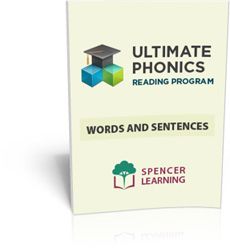
    With a developing reader and a struggling reader in our home, I am always on the look out for strong phonics resources such as the Ultimate Phonics Reading Program from Spencer Learning, which we were given an opportunity to review.


    I like having a number of phonics resources on hand so we can keep moving forward - or at least not slip back - no matter what our day-to-day calendar looks like or what moods the kids may be in.

    Some days resources we can use on the go are most helpful.  Other days, things we can sit down with at home are welcome.  Likewise, some days, I need something that one or two children can work on while Mom focuses 1:1 with another child, and other days I like something I can work on 1:1, 1:2, or  even 1:3 with my children. 

    I also find that having more than one resource for phonics is helpful in keeping frustration levels at bay.  For my developing reader, in particular, focused reading studies can be challenging.  Some days, she simply "hits a wall" and we have to back off.  Then, the next day when we pick up, if I use the same resource, sometimes she remains "mentally blocked", so I find approaching similar content with varied resources helps her stay open to learning.  I also find that the resources that work best for us are ones that we can use for 2 minutes or 20 minutes in a sitting, just picking up wherever we left off the last time.


    The Ultimate Phonics Reading Program, then, became a welcome addition to our phonics resource repertoire.  It offered us an easy, effective, no-nonsense, approach to developing phonics skills that could be utilized for a few minutes on busy or "bad" days or for longer on days when we had more time to sit down with our computer and were blessed with happy, open-to-learning attitudes.  (And, honestly, on days when attitudes plummeted, it helped, too, because I could work on stamina by saying, let's just try to get through this ONE portion and, then, when success was met - which it often was - sometimes my child was good to go for another portion.)

    What is the Ultimate Phonics Reading Program?


    Perhaps the best way to begin describing what the Ultimate Phonics Reading Program is is to describe what it is not (and, therefore, what it is):

    • It is not an online program, but rather one you download to your computer.  That means your children can use it easily while you have the comfort of knowing that they are not online. 

    • It is not something that only works with one child.  Rather, once downloaded, you can use the program with all your children.  In fact, the software comes with a license that allows you to download it onto any device in your home and use it with anyone in your home accessing it from any device it is on.  (Devices must be running Windows 10, 8, 7, Vista, XP; or for Macs, OSX 10.5.8 or higher.)

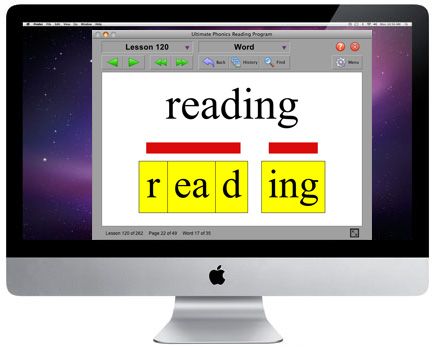
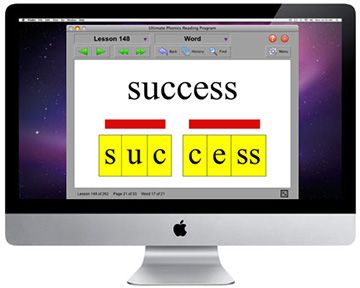
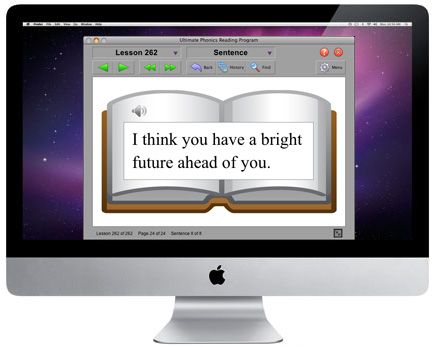
    • It is not a program with bells, whistles, silly sounds, cartoon figures, etc. It is straight-forward without visual clutter. You see words, you hear words, you sound words out, you read them in isolation, and you read them in sentences.  It is no-frills, direct teaching of all phonics patterns.

    • It is not for beginners only.  It contains 262 progressive lessons that can be used for beginning readers through adults.
    • It is not overwhelming. Although 7,000 pages of material divided into 262 lessons (which is what the program has) sounds HUGE, it is not.  Lessons are set up in the same format with an easy to navigate menu.  There are six types of pages (pattern, idea, word list, word, sight word and sentence pages) organized into four parts per lesson (pattern or idea page, a set of word list pages, a set of word pages, and a set of sentence pages) which move forward in a logical progression.
       

    • It is not computer-only.  There is an option to print lesson materials, so children (and adults who need reading help) can Children (and adults who need to) can, therefore learn all of the phonetic sounds and rules onscreen or off.
    • It is not something that will become outdated.  Updates for the program are FREE!

    For more information about the program, watch this video to get a feel for the program and read the easy-to-understand overview on the website. :


    Who is the program for?


    The Ultimate Phonics Reading Program
    for:
    • Beginning Readers
    • Struggling Readers
    • People with Dyslexia 
    • ESL/ELLStudents
    • Those studying Adult Literacy
    • Students in Middle School and High School hat need extra phonics help

    Because the program is designed to be streamlined, clutter-free of distractions, and focused wholly on the task of learning phonics and reading, it can really be used across ages.


    It's no-frills, but are there any extras?


    You can find some helpful resources on the
    Ultimate Phonics Reading Program, such as:
    • Free Word Lists
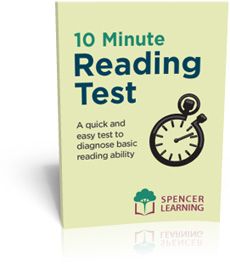
    • an Ultimate Phonics Reading Test

    • Scope and Sequence
    • a Tracking Sheet
    • a User's Guide


    These can be used in conjunction with the actual Ultimate Phonics Reading Program, which includes over 4, 400 words and 2,100 sentences that progress from basic to advanced phonics in a complete systematic way.  This is a huge amount of decodable material that requires no special training to use a a supplement or a main program.  A sound/voice feature is also included so students can use the program independently.

    How did we use the program?


    We've fallen into a pattern with my developing reader and my struggling reader lately, where 5-6 days a week, we sit down 1:1 for 15-30 minutes to work on skills.  Typically, for English Language Arts, one day, we use picture books and phonics materials and, the next, we use a portable phonics book and personal response journal.  So, the
    Ultimate Phonics Reading Program proved easy to slip into our existing approach. 


    After my children read 2-3 familiar easy phonics or picture books to me, we used
    the Ultimate Phonics Reading Program for 5-15 minutes.  Then, we read an unfamiliar picture book.  This approach worked with my children because it fit our existing pattern.  It also helped balance the no-frills (dry) work of the the Ultimate Phonics Reading Program with the high-interest picture books. 

    Because
    the Ultimate Phonics Reading Program is so easy to navigate, we simply brought it up on my computer, set a timer, and started off wherever we had left off the session before.  The children then worked until the timer went off, listening to words read by the program or by me, reading those same words themselves, and reading sentences

    Sometimes, when the timer went off, they wanted to continue and, sometimes, with my struggling reader in particular, we cut short out lessons before the timer went off because I saw fatigue setting in.  (She really needs SHORT lessons.  I appreciate, then, that this program allows us to progress at our own pace, doing as little or as much as we wish in a single sitting.)


    I also sometimes used words from the program to help my oldest child.  When I noticed patterns in his personal spelling dictionary that indicated phonics help with specific sounds or patterns, I found that looking through the
    Ultimate Phonics Reading Program allowed me to easily find other words to work on targeted skills.

    Would we recommend the program?

    I have found
    the Ultimate Phonics Reading Program for my developing and struggling readers, as well as convenient for quick help "filling in holes" in targeted areas with my advanced reader.  Thus, I would recommend it to others who seek an effective no-nonsense phonics resource.

    My struggling reader says:

    It's okay.  I like that the guy reads to you.  I also like that there are arrow buttons t make it easy to control.  It is easy, which is fine.  I like doing part of my lessons with easy things.  I want to keep using it sometimes.  I think it could help other little kids.

    The one thing I do not like about it is that if you were a beginner, it might be hard because it starts with a long list of words.  It does not show you much to help but the vowel.  If you know what the vowel sounds like, but not the consonants, you might not know the word.  I think they should build the program with less words at the beginning.  Maybe teach "a" and "i", then "at" and "it" and move from there.  Starting small is good.

    My developing reader said, "I don't like it.  It's boring," when I asked him about the program, but his sister immediately popped up and commented, "I think he's just in a bad mood."  I saw him silbing and reading with it.  I agree with her.  My son then conceded, "I was able to read things with it."  I concur. 

    Since beginning to use
    the Ultimate Phonics Reading Program I have seen some progress in my children.  They are reading their phonics and picture books with greater confidence and accuracy!

    The
    Ultimate Phonics Reading Program is easy to add to lesson time, progresses systematically, and offers

    Learn More

    Ultimate Phonics Reading Program {Spencer Learning}

    Find Spencer Learning on social media:


    Sixty Schoolhouse Review Crew families used the Ultimate Phonics Reading Program.  See what they thought of it by clicking through the banner to all our reviews.

    Ultimate Phonics Reading Program {Spencer Learning}

    Might Spencer Learning's Ultimate Phonics Reading Program help your developing and struggling readers, too? You can try it for FREE!

    Crew Disclaimer

    Friday, August 26, 2016

    There Is So Much You Can Do with Can Do Cubes


    I love, love, love practical, hands-on tools for literacy and learning and appreciate them even more when they are solidly made with beautiful natural materials. Thus, I was delighted by the opportunity to review Can Do Cubes from jollyliteracy.com (just2ducks LLC).
     
    What Comes in a Can Do Cubes Package?


    I was thrilled when my Can Do Cubes arrived, and I realized how well packaged the cubes are and just how many helpful goodies came with them.  In one sturdy cardboard box, I found:


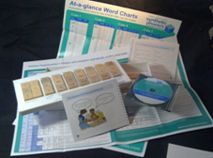
    • 1 Tray of 27 Cubes in Stage 1 which present the simple alphabetic code:  These finely polished, laser-engraved, 1-inch wooden blocks contain one spelling for each of the 44 different sounds that make up the English language.  Six number one cubes include the letters t, p, s, n, i, and a.  Three number two contain c, c, ck, e, h, and r.  Three number three contain m, d, g, o, u, and l.  Three number four contain f, b, ai, j, oa, and ie. Three number five cube contain ee, or, z, w, ng, and nk.  Three number six cubes contain v, oo, y, x, ch, and sh. Three number seven cubes contain th, qu, ou, oi, ue, and er,.  And, three number eight cubes contain ar, ve, se, ce, ge, and y.  As children learn the sounds on each numbered set of cubes, they quickly begin reading and writing a growing number of words using a synthetic phonics approach.  (Synthetic phonics is basically learning to decode and encode words using the smallest sounds a word can be broken into.  So, for example: th-a-t as opposed to t-h-a-t and c-oa-t as opposed to c-o-a-t).


    • 1 Tray of 30 Cubes plus 2 cubes connected with a string to represent split digraph sounds in Stage 2 which present the more complex alphabetic code:  These cubes show variations of the 44 different spelling sounds, capital letters, double letters, punctuation, and split digraph cubes.  Twenty blocks containing spelling variations have one sound per block.  (See the middle block a the beginning of the video above to see how that works.) There are also blocks with double letters (ss, ff, mm, ll, rr, zz, ertc.), blocks with the capital letters, punctuation blocks and blocks connected with string to use for split vowel digraphs (a-e, e-e, i-e, o-e, and u-e).
    • Two Handbooks (one for Stage 1 and one for Stage 2):  These small spiral-bound booklets are chock-full of great information, that take parents through how to use Can Do Cubes with those who are not yet reading, those learning the alphabetic code,  and those that are ready for more advanced phonetic learning including vowel phonemes, split digraphs, consonant phonemes, double consonants, capital letters and punctuation.  A wide variety of games and activities are included, as are plenty of examples, which makes using the cubes easy and effective.
    • a DVD with an Interactive Demonstration for Sounding Out Letter/Sounds Presented by Debbie Hepplewhite, who is a synthetic phonics consultant:  This DVD also offers segments demonstrating how to teach using Can Do Cubes, explaining why synthetic phonics work, and more.  Plus, if you pop it into a computer, you can access PDF files of handbooks and charts in case your paper copies get lost or ruined. 


    • Three Wall Charts:  Two are At-a-Glance Word Charts for Stage One cubes which offer new phoneme/words to be presented and show which cubes will be used with each new set of phonemes and one is a Synthetic Phonics Overview Chart, which contains phonemes that are heard, the simple code for the sound, and the complex code graphemes used for that sound.  
    • A CD of the Teacher’s Guide and Template Book:  The CD contains a complete workbook in pdf format with teaching instructions for Phonological Awareness, Phonemic Awareness, the Alphabetic Principle, Blending, Segmenting,Dictation, Handwriting, and High Frequency Words.


    Better still, because the box was not too large, I was able to easily carry all the materials from our learning shelves, to other rooms in our home, to blankets outside, to our minivan, and even into waiting areas at appointments, so my children and I could use our Can Do Cubes wherever we happened to be going.  For me - someone for whom "home"schooling may be a misnomer - this was an unexpected bonus. 

    Most multi-part, hands-on tools get cumbersome to carry about and keep organized, and, so, they get relegated to home use only.  The fact that Can Do Cubes are packaged so conveniently allowed me to keep them on hand sometimes even when we were out and about this summer.  Hoorah!


    How Did We Use Our Cubes?


    The beauty of Can Do Cubes is that they can be used in so many ways.  They are designed to be used seamlessly with the Jolly Phonics and Jolly Grammar curriculum that I reviewed the other day, but also can be used equally well as an independent literacy tool or as a complement to almost any phonics program, spelling curriculum, or early literacy efforts.


    The first time one of my children and I used our Can Do Cubes, we simply explored them as a stand-alone tool.  I had brought them along with us on a day when one child was at summer camp and another child ended up hurting her leg and, thus, needed to hang with me inside.  So, we pulled up some floor space at a visitor center and simply explored the cubes - reading and spelling simple words with them.
    After that, my youngest and middle child sometimes used the cubes in conjunction with Jolly Phonics and Jolly Grammar lessons.  All three of my children and I also used our Can Do Cubes for a variety of games. And, my children used them independently to work on spelling.


    All of us appreciated how well-made the blocks are - smooth and sturdy, feeling good in our hands - and how easy they make segmenting and blending sounds.  The video below gives an idea of how this works.


    Why I'd Recommend Can Do Cubes


    Jolly Phonics and Jolly Grammar Review
     
    I truly appreciate the thought that went into designing Can Do Cubes and am excited to continue enjoying them with my children's phonics, spelling, reading, and writing work.  I also know that our Can Do Cubes will be finding their way into my tutoring bag as so many struggling learners that I work with appreciate concrete tools for kinesthetic learning. 

    It's amazing how beautifully made synthetic phonics blocks can energize learning.


    Can Do Cubes are simple, yet engaging - perfect for tactile learners since the engraved letters can be felt.  They also work well for kinesthetic learners, who will enjoy manipulating the blocks to segment and blend.

    Because the cubes are made of polished wood (as opposed to obnoxiously colored plastic), they would work well in Montessori-inspired homeschools and classrooms.  


    Because Can Do Cubes focus on synthetic phonics, they are, in my opinion, so much more helpful than typical movable alphabets, magnetic letters, etc.  They can truly help developing readers and spellers unlock improved literacy skills.  I am witnessing that happen in our home as I weave the use of Can Do Cubes in with our other literacy endeavors - and even our catechism ones.  (Note the word in the image above, which was spelled after we had been doing some First Reconciliation and First Holy Communion Prep.  He was so proud of making a four letter word all by himself without anyone giving a suggested word to spell.)


    Learn More


    Jolly Phonics and Jolly Grammar Review

    You can head on over to
    jollyliteracy.com (just2ducks LLC) to find loads more information, some helpful Parent and Teacher Resource Freebies, and information about Jolly Phonics and Jolly Grammar, which I reviewed the other day.

    You can also find
    jollyliteracy.com (just2ducks LLC) on Facebook, Twitter, and Pinterest.


    Can Do Cubes

    Also, Forty Schoolhouse Review Crew families
    were blessed to try Can Do Cubes. Find links to all their reviews by clicking on the banner.

    Crew Disclaimer

    Wednesday, August 24, 2016

    How Have We Been Slipping in Phonics, Handwriting, Copywork, and Grammar?


    For my children and me, flexibility is key and that is why I have appreciated the ease of reviewing Jolly Phonics and Jolly Grammar by
    jollyliteracy.com (just2ducks LLC) over the past six weeks or so.  With brief lessons and multiple components to choose from, Jolly Phonics and Jolly Grammar have offered two of my children a fast and simple way to slip phonics, handwriting, copywork, and grammar into 1:1 lessons with Mom.

    What's Included in Jolly Phonics and Jolly Grammar 1?


    In Jolly Phonics and Jolly Grammar 1, children at a pre-k through first grade level learn phonics, grammar, spelling and punctuation through a multi-sensory approach that continues on with additional programs (Jolly Grammar 2-6) which can carry a child straight through to middle school learning.

    Since the program materials are colorful, engaging, and easy-to-use,
    Jolly Phonics and Jolly Grammar 1 can also hold appeal for children a bit older than pre-k through first grade age, as they did in our home, providing a way to review and solidify literacy skills.

    Jolly Phonics and Jolly Grammar Review

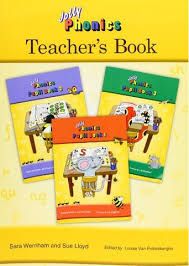
    The Jolly Phonics Teacher’s Book in print letters is a 184-page soft-cover, full-color manual that accompanies the Jolly Phonics Student Books 1, 2, and 3.  It begins with a section that explains the Jolly Phonics program and teaching method and, then, carries on with step-by-step instructions for teaching lessons using the Student books, including brief stories to tell children to help them hear, practice, and remember the 42 sounds of English

    Color-coded with miniature views of the student pages, the Teacher's Book is simple to follow and makes using the 
    Jolly Phonics Student Books 1, 2, and 3 easy.


    Jolly Phonics and Jolly Grammar Review

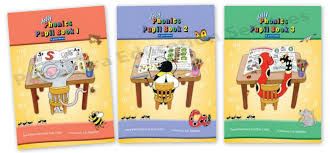
    The Jolly Phonics Student Books 1, 2, and 3
    are thin, 48-page, soft-covered, full-color workbooks that students use when learning:


    • what each of the 42 letter sounds are
    • how to form them 
    • how to blend them for reading 
    • how to segment sounds in words for writing 
    • and how to spell.

    Each contains traditional worksheet activities such as coloring, matching, tracing letters, filling in blanks, etc.  However, they also contain keys for remembering sounds through kinesthetic learning that is reinforced through Jolly Songs (which I will talk about shortly.)

    The workbooks also introduce
    tricky words and alternative spellings of vowels, thereby offering children comprehensive practice which encourages them to independently read and write.

    In Student Book 1, the sounds of the alphabet and digraph sounds are taught in an order that has students reading words almost right away.  Call out boxes on workbook pages teach actions to help students remember sounds and handwriting exercises get children writing.  Listening for letter sounds, blending sounds, and beginning to learn tricky words are all included in this portion of the program.

    In Student Book 2, children build on knowledge from Student Book 1, learning capital letters, tricky words, and basic sentence structures though such activities as guided writing exercises.
     

    In Student Book 3, short and long vowel sounds, new spelling patterns,  and more tricky words are introduced, as are some independent writing exercises.
    Jolly Phonics and Jolly Grammar Review

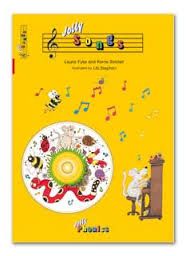
    Jolly Songs
    is a 24-page, full-color, illustrates paperback that comes with a song CD.  It includes a collection of songs set to familiar tunes for each of the 42 letter sounds.  It also contains games, activities, and more.  To be honest, we did not use this part of the program much, because, although two of my three children enjoy music with lyrics, the songs seemed a bit "young" for all of them.  However, as a former classroom teacher and tutor as well as a homeschool mom, I can say that the songs are cute and clever at times and could be helpful for certain students.

    Jolly Phonics and Jolly Grammar Review

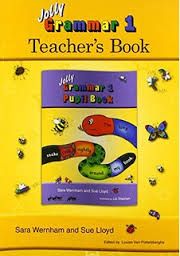
    Jolly Grammar 1 Teacher’s Book in print letters
    is a 104-page, soft-cover, full-color guide that is formatted much like the Jolly Phonics Teacher's Book.  It includes and introduction section that explains how to teach the program along with ideas to help you work with your child.  It then continues with structured lessons that correspond to activity pages in the Grammar 1 Student Book.  Included in these are child-friendly descriptions of grammar points and clear instructions for teaching one spelling and one grammar lesson per week.

    Jolly Phonics and Jolly Grammar Review

    The
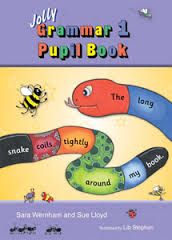
    Jolly Grammar 1 Student Book  is an 80-page, full-color, soft-cover book that is designed to follow Jolly Phonics and to introduce grammar and spelling rules to improve writing and reading comprehension.  It contains:
    • rules behind alternative spellings
    • short and long vowels
    • compound words
    • plural endings
    • alphabetical order
    • parts of speech 
    • verb tenses 
    • antonyms and synonyms 
    • sentence structure
    • punctuation

    and more.

    The back of the workbook has space for spelling word tests.


    How Can All That Offer Flexibility?


    Of course, Jolly Phonics and Jolly Grammar are written as comprehensive programs to be used in full in consecutive order by pre-k through first graders.  However, they also work well taken a bit piece meal with at-grade-level and older remedial learners.  I used them in this way.


    Basically, I tucked Jolly Phonics 1 and the accompanying Teacher's Guide into my six-year-old's 1:1 reading-and-writing time bag.  Then, several times a week during our 1:1 times, after reading 2-3 familiar picture books and introducing one new one, I pulled Jolly Phonics out to key into phonics review, and, more importantly for my six-year-old, handwriting. 

    To date, he has not relished many handwriting and copywork exercises, but there has been something about the Jolly Phonics pages that has ignited his desire to form more beautiful letters.  We do not copy every dotted letter on the Student Book pages, nor write every free-hand one, but work until my son has formed at least one beautiful letter.  Then, we read the word list and listen for key sounds, crossing out pictures of words that do not contain the sounds.

    I like that the key sounds are not contained at the beginning of pictured words only.  Sometimes they come in the middle or at the end.  This keeps my son on his toes and helps him listen and segment more carefully.


    With my nine-year-old, my approach is similar.  I tucked Jolly Grammar 1 and its Teacher's Book into her 1:1 time bag and some days, after reading 2-3 familiar picture books, writing freely in a short question and answer response journal, and introducing a new picture book, we do a page of the Grammar Book, working on spelling or grammar.  Sometimes, if my youngest's 1:1 bag is nearby, though, we browse the Jolly Phonics book, too, reading as many of the word lists in it as we can in 3-5 minutes (to help me diagnose which phonemes and phonograms my daughter is still struggling with.)

    Never have I done a full lesson as written in the Teacher's Guides of Jolly Phonics and Jolly Grammar with my children, but often have I slipped in 5-15 minutes segments of lessons, helping my children review and solidify their phonics and grammar knowledge without tedium.  I so appreciate how easy it is to do this with the slim, well-organized, and colorful student and teacher books.

    Using the programs in a flexible, short-snippets way works for us well right now.   I intend to continue keeping the student and teacher's books in our 1:1 bag repertoire.  I can also see how the program could be beneficial used "as directed" for other families.  It is comprehensive and well-written.

    What Do the Children Think?


    When I asked my six-year-old about Jolly Phonics, he told me:

    I like it.  It's easy.  I usually do three pages at a time now with my mummy.

    The reading is easy.  I like tracing the letters and making them beautiful.  I like "x"ing out the pictures the best. Sometimes I draw on them instead, like I drew a sun peaking out of the rain instead of "x"ing the rain out on one page.


    When I asked my nine-year-old daughter what she thought about Jolly Grammar (and Jolly Phonics, because she uses it, too, sometimes), she said:


    It's good.  It's a tiny bit easy.  I've learned some of the stuff already, like "th" and "ck", so it's a review.  Maybe some of the words I did not know before.  Writing some of the dictation is a challenge, but some of it is really easy.


    The best thing about it is I have confidence that I can do it.  I don't like the dictation sentences much.  I want to keep using it though because it is easier than some other things and it will strengthen what I know, reviewing things and tossing in a tiny bit more.


    When my son, who has been rather writing-reluctant, indicates that he likes writing letters, and my daughter, who is "behind" in English Language Arts and sometimes gets altogether too frustrated and down by the fact that reading does not come naturally for her says, "It's easy," and "I have confidence...", I think, "Hoorah!  Jolly Phonics and Jolly Grammar are helping us meet goals, fill holes, and slip traditional work easily into cozy 1:1 reading-and-writing times.

    Learn More

    Jolly Phonics and Jolly Grammar Review

    Head on over to
    jollyliteracy.com (just2ducks LLC) where you will find loads more information and some helpful Parent and Teacher Resource Freebies, too.

    You can also find
    jollyliteracy.com (just2ducks LLC) on Facebook, Twitter, and Pinterest.

    Jolly Phonics and Jolly Grammar Review 
     
    Forty Schoolhouse Review Crew families - some with children in pre-k through first grade and others with remedial learners tried out Jolly Phonics and Jolly Grammar 1.  See what they thought by clicking through the banner to read their reviews.
     
    Crew Disclaimer

    LinkWithin

    Related Posts with Thumbnails