Showing posts with label Clubs. Show all posts

Sunday, March 8, 2020

Enjoy Art, Music, and Poetry with the Transfiguration


Looking to add some art, music, and poetry to life and learning this week?

Perhaps the plans I just laid our for our upcoming AMP club can help.

Once again this week, we'll spend part of our Art-Music-Poetry club time with a focus on faith, reflecting back on this Sunday's readings about the Transfiguration while doing a picture study. Then, we'll have some free choice mountain-themed music appreciation, a bit of Emily Dickinson for poetry an some drawing time.


Study The Transfiguration by Raphael
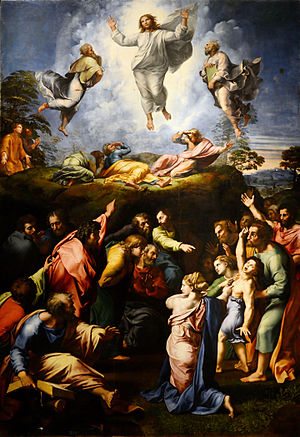
Transfigurazione (Raffaello) September 2015-1a.jpg
Source: Wikipedia

We'll begin by asking if anyone can recall who Raphael is and when he lived (an artist during the High Renaissance.)

Then, we'll recall some of the characteristics common to the High Renaissance, such as:

  • perspective.
  • precise anatomical correctness.
  • authentic emotionality and expression.

We will also see if anyone cane name describe some characteristics of Raphael's individual style, such as:
  • clarity
  • rich color
  • effortless composition
  • grandeur

After that, we'll study the last painting Raphael painted - The Transfiguration - a painting that has been described as Raphael's most beautiful and divine and was commissioned in 1517 by Cardinal Giulio de Medici, who later became Pope Clement VII and currently hangs in the Vatican Museums.


To study the painting, we will examine it for 30-60 seconds. Then, I will remove the image and ask each child to narrate some of the details that they noticed.

Then, we will look at the painting again using this Youtube video or looking at a reproduction and reading a reflection of it found at Loyola Press.


Add Some Music Appreciation


Since we'll be talking about the Transfiguration, which happened on a mountain, we'll explore clips of classical music inspired by mountains, letting each child pick one title to listen to a portion of and chatting about whatever resonates with the children.

Chat about Poetry


Continuing with the mountain theme, we'll read a brief poem by Emily Dickinson entitled "The Mountain" and chat about any reactions the children have to it.

The Mountain 
by Emily Dickinson


The mountain sat upon the plain
In his eternal chair,

His observation omnifold,

His inquest everywhere.


The seasons prayed around his knees,
Like children 'round a Sire:
Grandfather of the days is he,

Of dawn the ancestor.


Create Mountain Artwork and Pray 


Finally, we'll create artworks of mountains using a Creating a Masterpiece Mountain Hike drawing project. (You could also choose a video from Youtube at the level of your children or simply create original artwork instead.)

If there is time, we will conclude by recalling that prayer is one of the pillars of Lent and, then, try out an imaginative prayer exercise from IgnatianSpritiuality.com.


I pray these ideas might help you and yours enjoy art, music, and poetry as you continue your Lenten journey.

Sunday, September 29, 2019

Celebrate St Francis of Assisi through Art, Music, and Poetry


If you're looking for a way to include the riches of art, music, and poetry into your day on October 4th, feel free to borrow ideas from the plans I've made for our
AMP Club meeting. 

When I realized meeting was schedules for St. Francis of Assisi's feast day, I decided to connect all of our activities to Saint Francis.

Invite Children to Share What They Know about St. Francis

{Some links which follow may be affiliate links.}
St. Francis images, statues, books, a candle, and some Little Ducks gummies,  K-Kritter animal crackers (due to St. Francis' connection with animals) honey-almond cookies (said to be a favorite of St. Francis), or another treat can make a wonderful invitation to welcome children to the feast day celebration.

Once everyone has gathered, you might ask whose feast day it is and what children know about St. Francis.


Share about St. Francis and the Birds

File:St Francis Statue 2.JPG
Source: Wikimedia Commons

During the sharing, if no one pipes up with the story of St. Francis and the Birds, wonder aloud about how many St. Francis statues and images include birds and why that could be... Then, wait for the children to chime in.

If a child can retell the story of St. Francis and the Birds, encourage that child to do so, adding details as seems fitting. You may even wish to read or listen to the words of the Sermon to the Birds:


My little sisters, the birds, much bounden are ye unto God, your Creator, and always in every place ought ye to praise Him, for that He hath given you liberty to fly about everywhere, and hath also given you double and triple raiment; moreover He preserved your seed in the ark of Noah, that your race might not perish out of the world; still more are ye beholden to Him for the element of the air which He hath appointed for you; beyond all this, ye sow not, neither do you reap; and God feedeth you, and giveth you the streams and fountains for your drink; the mountains and valleys for your refuge and the high trees whereon to make your nests; and because ye know not how to spin or sow, God clotheth you, you and your children; wherefore your Creator loveth you much, seeing that He hath bestowed on you so many benefits; and therefore, my little sisters, beware of the sin of ingratitude, and study always to give praises unto God.
Saint Francis of Assisi - c1220


The Song of Francis by [dePaola, Tomie]
Source: Amazon

You might also wish to read a picture book related to St. Francis and the Birds, such as The Song of Saint Francis or Saint Francis Preaches to the Birds.

Source: Amazon

You could also listen to a story on YouTube.


St. Francis and the Birds Art Appreciation

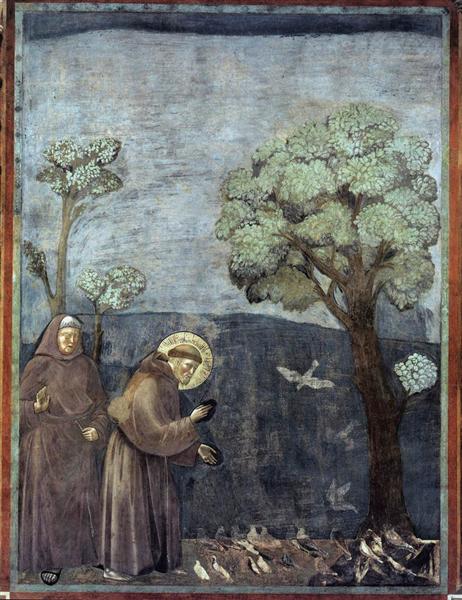
St. Francis Preaching to the Birds, 1297 - 1299 - Giotto
Source: WikiArt

Next, introduce Giotti's image of Saint Francis Preaching to the Birdsthe fresco of St. Francis Preaching to the Birds, or another great artwork on the same theme.


File:Francis preaching the birds.fresco. master of st francis. Assisi.jpg
Source: Wikimedia


Encourage the children to study the image for 30-60 seconds.  Then, turn it over and ask the children what they recall from the image.

(If you've never done a picture study before, Simply Charlotte Mason has a good explanation with a demo video, Well-Trained Mind explains how to lead with simple questions, and Mater Amabilis offers an approach. A Humble Place also offers a FREE Giotti Picture Study Resource!)


Source: Amazon

You might also wish to share The Story of St. Francis or The Message of Saint Francis for browsing.


Source: Amazon


St. Francis and the Birds Music Appreciation and Creation


Share that many musical compositions have been inspired by birds and ask children to name some famous composers.

Vivaldi Handel, Beethoven, Saint-Saens, or others may come up. (If they don't, you can cue such names.) As they do, share clips of classical music that these famous classic composers created with the inspiration of birds.  Squilt, Spinditty, and Classical-music.com all have curated some with YouTube videos.

While listening, you may wish to do some "musical sketching" by  "drawing what they hear". Or, you could simply listen to one piece, and, then, play the others while children create their own bird artworks.

My children and I may also try our hand at creating pencil drawings of owls with Creating a Masterpiece. You might enjoy that too.  Or use one of many free online tutorials for creating bird art, such as this one:

Share and Write Poetry

Finally, invite children to share any poems they might know about birds and share Robert Louis Stevenson's "Time To Rise":

A birdie with a yellow bill
Hopped upon my window sill,
Cocked his shining eye and said:
"Ain't you 'shamed, you sleepy-head!"


Notice how in the poem, the bird addresses someone. Recall how St. Francis addressed the birds. Chat about how there are different types of poetry and one is "Direct Address", or a poem that talks directly to another person or thing, such as a bird!

Source: Amazon

If desired, read a bit more about Direct Address poems in Poetry from A to Z and suggest at the end of reading about them that the poems can also be written to inspire! Much like St. Francis' Sermon to the Birds inspires us to be grateful and praise God.

Then, challenge children to write a direct address poem to a bird or other animal that has a faith-inspired message.

More Feasting, Fun, and Learning with St. Francis

You might also consider adding other. St. Francis feast day fun, leading, and food to your day:

Celebrate with St. Francis

Go on a St. Francis Nature Hunt

Enjoy a Game

I'd love to hear if you use any of these ideas and how your feast day celebrations go. Please do pop back to comment here or on our Facebook page to let me know.  I also, of course, welcome your ideas, inspiration, and links for celebrating!

 St. Francis of Assisi, pray for us!

Sunday, October 14, 2018

Create Art and Pray for All Souls

Do you have creative kids?  Have you lost a loved one?  Then, this idea is for you!


Make a calendar to remind you to pray daily for our beloved dead.


It's super easy to do.


Simply create an image that reminds you of November, and, then, glue it and a calendar grid onto a piece of cardstock.


You may also want to expand this art project into a full lesson, teaching (or reminding) your children about All Souls Day, the monthly dedication to pray for the dead, opportunities to help the dearly departed through gaining an indulgence for them, pairing your project with Eternal Rest copywork or with a STEAM design challenge.

Or you can make it into an art, faith, and poetry lesson as we did this past week in our Art, Music, and Poetry club.


{Some links which follow are affiliate ones.}

We began our club with a brief prayer, and, then, got right into reading about Paul, Jean, and Herman Limbourg in Artists that Shaped the Renaissance.


After chatting briefly about the Limbourg brothers, the time in which they lived, and their art, we did a picture study of Très Riches Heures du Duc de Berry, October, a beautiful artistic work created by the Limbourg brothers between 1412 and 1416 as a part of a Book of Hours.


The children were wowed by the detail within the reproduction on page 19 of
Artists that Shaped the Renaissance.

Then, we looked at a modern Liturgy of the Hours book, chatting about what it is and how it is used before pausing to read a portion of it. 

We read and briefly discussed a psalm, asking the children what stood out to them in the psalm, both in terms of poetic devices and from the perspective of being Christians listening to the Living Word.


Finally, we adapted the art project for Lesson 4 in Artists that Shaped the Renaissance in order to create watercolor paintings of things that remind us of November using watercolor pencils and regular watercolors.

When each of our paintings was completed, we affixed it to a piece of black cardstock and, then, cut out a blank monthly calendar grid to attach below it.

Viola!

Individual calendar pages to be used throughout November to pray for our beloved dead.

Now, we're jotting down names of our dearly departed to pray for on each day of November.  If you'd like us to add the name of your beloved dead to our prayer calendar, please just let us know

Here are a few more snapshots of our lesson time:


Also feel free to browse our other All Souls related posts.


 Take a Few Minutes of Your Day to Help Holy Souls

 Pray for All Souls with FREE Eternal Rest Grant unto Them Copywork Printable in English and Latin

 Try a Design Challenge for All Saints and All Souls Days


 5 Ways Children Can Live in Faith for All Souls

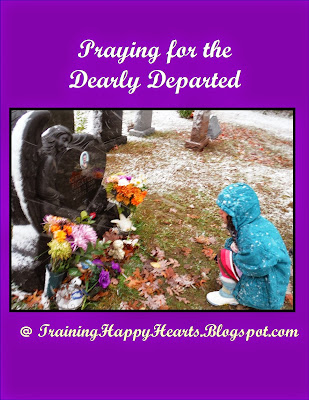
 Please Join Us in Praying for the Dearly Departed


 A Simple Activity for All Souls Day -- Or Any Day You Want to Pray with Children for the Faithful Departed
Eternal rest grant unto them, O Lord. And let the perpetual light shine upon them. And may the souls of all the faithful departed, through the mercy of God, rest in peace. Amen.

Saturday, January 27, 2018

Plan a St. Brigid and St. Verdiana Art, Music, and a Poet-Tea


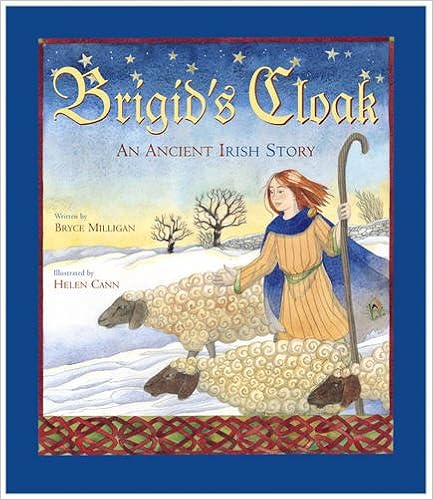
February first is the Memorial of Saint Brigid of Ireland and also that of Saint Verdiana (although some calendars have Saint Verdiana's day listed as February 16th.)  It is also a day that our AMP It Up club is scheduled to meet.  Thus, I am planning another saint-based Poet-Tea, filled with faith, food, friendship, art, music, and poetry.

If you'd like to include saint-centered snacks and arts immersion on the St. Brigid's and St. Verdiana's feast day, I thought I'd share our Poet-Tea plans.

A St. Brigid and St. Verdiana Poet-Tea Setting and Menu
{Disclosure: Some of the links that follow are affiliate ones.  Should you click through them and make any purchase, we may receive compensation at no extra cost to you.}

Our poet-tea table will be decorated with:


  • a white tablecloth (for the purity of the saint' love for God) layered with a blue fabric with golden "stars" on it (since St. Brigid's mantle is sometimes depicted as blue with stars).
  • green candle (to remind us that we are in Ordinary Time) and a white candle (also to remind us of the purity of the saints' love for God).
  • several books depicting Saint Brigid and Saint Verdiana including:
http://amzn.to/2kIsCk7 
Saint Bridget and the Fox and Saint Verdiana and the Snakes in Amazing Saints & their Awesome Animals

  •  a St. Brigid cross (if I have time to fashion one) and some dry beans to remind us of how St. Verdiana, with her charitable heart,  gave away all her beans to the poor).
  • a globe, so we can locate Ireland (for St. Brigid) and Italy (for St. Verdiana).
  • perhaps some snake and cow figurines (since snakes play into St. Verdiana's stories and cows into St. Brigid's)

The food and drink we will serve s still being decided, but will likely include some of the following:
  • bread, water, and herbs (because St. Verdiana's diet consisted of eating bread and water once a day, and, sometimes, eating herbs or vegetables.)
  • beans (because Verdiana gave beans to the poor.)
  • apples (because apples play into one of the tales of St. Brigid's miracles and charity.)
  • coconut milk (because there are a number of tales and traditions related to St. Brigid and milk, but my children are cow-milk-free kids and one of our guests has both nut and soy allergies, so coconut milk is our only milk alternative)
  • oat bread (adapted from traditional St. Brigid's oat cakes)
  • blueberry jam (because it is traditional to eat on St. Brigid's day.)
  • an "Italian Flag" fruit plate and an "Irish Flag" vegetable plate (because St. Verdiana was Italian and St. Brigid was Irish.)

Whatever the fare ends up being, I know, we'll pray pray grace, some spontaneous prayers, and a Traditional Catholic Prayer to Saint Brigid before digging into it and chatting more about the lives of Saint Brigid and Saint Verdiana, who were both known for their charity.


Poetry

We will revisit the poem The Giveaway, a long-time St. Brigid Day favorite of mine using a pdf from Clondalkin Village Parish.  Then, after reading about Saint Verdiana, I will ask the children to try their hand at writing a poem, inspired by The Giveaway, about Verdiana.

Music

Bridging from poetry to music, we will take a peak at the lyrics of the Hymn to Saint Brigid as we listen to it sung on a Youtube video:


We will also sing along to We Sing a Song to Saint Brigid.


Art


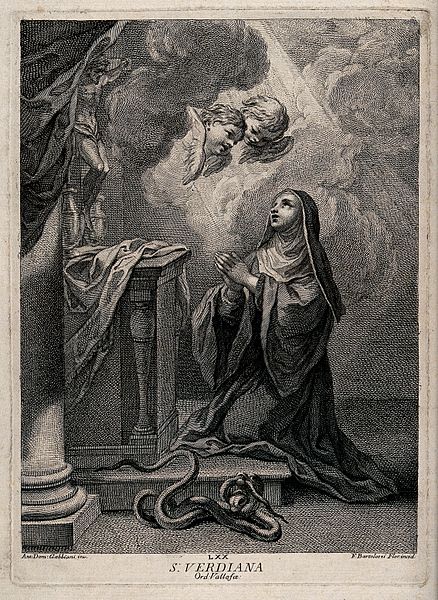
This file comes from Wellcome Images, a website operated by Wellcome Trust, a global charitable foundation based in the United Kingdom. Refer to Wellcome blog post (archive).

Finally, for art, we will notice how the illustrations in 
Saint Brigid and the Cows use hatching and how an engraving of St. Verdiana by Bartolozzi uses stippling, much like his other artwork did as demonstrated in the detail below:


Then, we'll explore hatching and stippling using simple exercises like this one:


Or, perhaps, by creating our own simple line drawings of items and creatures that remind us of Saint Brigid's or Saint Verdiana's story, and, then, adding value to our drawings through hatching or stippling.


More


Find loads of ideas, resources, and links for lessons inspired by Saint. Brigid and Verdiana as well as plans for a luncheon.


Enjoy some ideas for simple stories and notebooking -including a link to a free online story, take a peak at plans for a simple Saint Brigid Feast day for younger children, or flashback to how we celebrated one year when my children were wee ones.


Browse through Poet-Tea plans and photos for other liturgical celebrations.

Saint Brigid, pray for us.  Saint Verdiana, pray for us.

Sunday, June 18, 2017

Celebrate Corpus Christi with Art, Music, and a Poet-Tea


Happy Feast of Corpus Christi!  


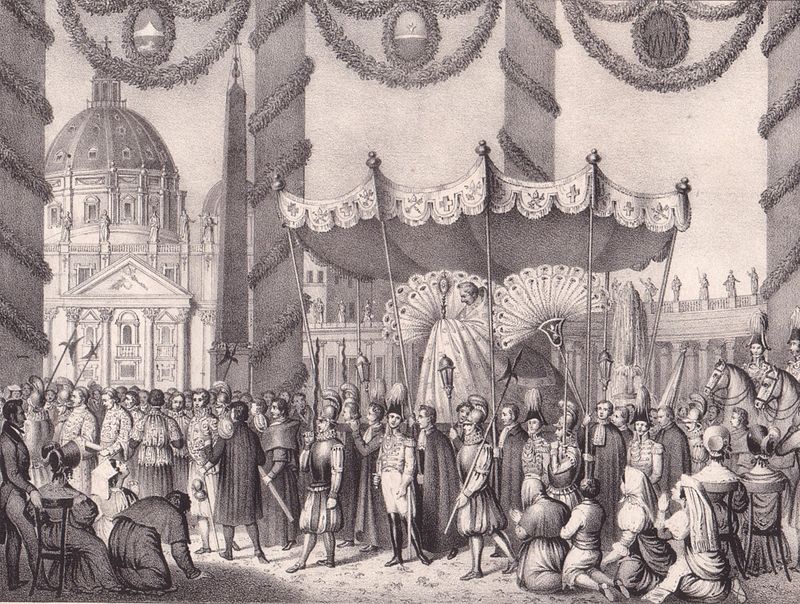
This floating feast day was instituted in 1264 and is currently celebrated either on the Thursday or Sunday after Trinity Sunday, depending on your location.  This day, also called the
Feast of the Body and Blood of Christ, was inspired by a Eucharistic miracle and a vision of an Augustinian nun from Belgium named St. Juliana of Mont Cornillon and honors the Real Presence of Christ in the Eucharist.


Corpus Christi procession, BL Harley 7026, f. 13 (England, c.1400-c.1410
Traditionally, Eucharistic processions are held on this day, with rose petals strewn in the path of the Sacrament. Some people also decorate their homes with candles in windows, as well as with floral wreaths, greenery, and banners. 


At our home, this year, Corpus Christi Thursday also was celebrated with a Poet-Tea.

A Feast of Corpus Christi Setting and Menu


{Disclosure: Some links which follow are affiliate ones.}

Since our final AMP It Up club meeting of the year fell on
Corpus Christi Thursday, I suggested to the other family that would be coming that focus our Art, Music, and Poetry explorations on the liturgical celebration of Corpus Christi with a simple Poet-TeaThus, for Corpus Christi, our
simple poet-tea table was decorated with:


  • a white tablecloth (for purity)


Had I had time to go out and get roses, I might have also strewn our table with petals and, for fun, even set up a peg doll or Lego processionPerhaps next year...


Since the morning before our AMP club gathering was busy, however, I kept things super simple, including the symbolic drinks and foods that were minimal, meaningful, yet tasty:


  • grape juice (representing wine which transforms into the Blood of Christ. Any red or purple juice, or even real wine, could, of course, also work)

  • gluten-free Glutino crackers (representing the bread which transforms into the Body of Christ. Any round cracker, wafer candy, bread loaf, or even unconsecrated communion wafers - sometimes used by parents whose children need to practice for First Holy Communion - could work.)

  • grapes (again, reminding us of wine)


Our Outdoor Poet-Tea for Corpus Christi


Once our friends arrived for our Corpus Christi poet-tea, we gathered at our celebratory table set under the shade of a tree, and I asked the children what the foods laid out on it might remind them of.  They answered, "The Last Supper!", "the Eucharist," "First Holy Communion," "the Fruit of the Spirit," and "the Holy Trinity".  With this, I bridged into asking the children if they knew what solemnity is celebrated by the Church either 10 days after Pentecost or on the Sunday after Trinity Sunday - Corpus Christi!

I, then, asked the children to guess what the words "Corpus Christi" might mean, whereupon they suggested "the Body of Christ".


Using an infrographic downloaded from CBCPNews, we, then, chatted about the history and significance of the Corpus Christi, before gathering around my laptop to watch a brief video about Corpus Christi from Britannica Kids.

After sharing a few more thoughts about the day - and about Eucharistic miracles, which the children were quite interested in, we prayed grace and enjoyed our tea fare.While the children enjoyed some time to play and chat, we cleared the food and drink and placed paper and art supplies on the table.  Then, when we called the children back from their break, I explained that while I was preparing for our gathering, I had looked poetry written especially for Corpus Christi or about the Body and Blood of Christ. In doing so, I had found fun, medieval riddle poems at a Clerk of Oxford which were originally from
BL Royal 17 A XVI:


It seems white and is red;
It is alive, and seems dead;
It is flesh, and seems bread;
It is one, and seems two; [i.e. to be composed of many parts]
It is God's body, and no mo. [nothing else]


 and DIMEV:
It seemeth white and it is red;
It is alive and seemeth dead;
It is flesh and seemeth bread;
And is true God in his Godhead.

The children got a kick out of looking at these poems written in old-style language and also enjoyed hearing me read their modern translations aloud.  We chatted about what each line of the riddles might refer to based on the children's understanding of the Mystery go the Blessed Eucharist.


BL Royal 2 B XIII, f.22 (London, c.1508)


We also talked about how old Bibles and books were often illuminated.


I, then, explained that Corpus Christi inspires more modern poetry, too.  As examples, I shared two sonnets from Malcom Guilte: Love's Choice (about the Sacrament itself) and This Table (about the communion table).  In these poems, we noted rich words and phrases that brought sensations to mind and emotions to heart.

After that, I reminded the children that portions of Bible itself are considered poetry and shared how I had found an interesting concrete-poem style image of a Bible verse online at My Catholic Faith Ministries:


The children thought this image was "so cool", and I agreed! 

I, then, recalled our past discussion about how hymns and songs are often simply poetry set to music.  I explained that there are a number of such musical poems related to the Body and Blood of Christ, some of which they might know from Mass, Adoration, and other experiences. 


I had considered sharing musical excerpts of such songs or reading their lyrics as poetry using the article Corpus Christi: Our Debt to St. Thomas Aquinas from Catholic Exhange and Catholic Culture's Corpus Christi Hymn section, but I could tell the children were getting antsy.  Thus, I decided to simply play the
Corpus Christi Sequence Hymn of St. Thomas Aquinas from YouTube as background while the children worked on their own poetic and artistic creations.


I suggested to the children that they use the simple supplies set on the table -- paper, pencils, colored pencils, Color Sticks
, and Thin Stix -- to meet one of three challenges:


(1)  Design a concrete poem inspired by Corpus Christi using your own words or words from the Bible.  Then, decorate the border of it.


(2)  Write any style poem you wish about Corpus Christi and, then, illuminate a portion of it.


(3) Write any style of poem you wish inspired by the Eucharist, and, then, make a separate illustration - perhaps a still-life using our candles, chalice, and paten.


Before turning on the Youtube music and having the children get down to creating, I offered them one last bit of inspiration by quickly chatting about the symbolism, using this excerpt from Catholic Culture as a resource:


"The usual symbol for the Holy Eucharist is a chalice, with a host rising out of it.

The chalice is shown with a hexagonal base, as a rule, symbolizing the Six Attributes of the Deity (power, wisdom, majesty, mercy, justice and love), and with a richly wrought stem of gold, studded with precious stones. The host is shown as the typical circular wafer, upon which may be imprinted the letters I. N. R. I., from which proceed rays of light, symbolical of the Real Presence, the substantial presence of Christ under the species of bread and wine.


An altar, upon which is set a cross, two or more candles in their tall candlesticks, a chalice and a ciborium, is another symbol often seen."


The children then set to work creating while listening to the music from my laptop.  (Of course, YouTube has plenty of other Corpus Christi hymns, talks, etc. some of which contain beautiful art images, that we might have enjoyed if we were not outside enjoying the beautiful weather!)


Finally, the children shared their creations with one another...


and went off to play again.

Our Corpus Christi Poet-Tea proved a lovely closing gathering for our AMP It Up club year, allowing us to celebrate three things we value: faith, friendship, and the arts.  We do hope to enjoy more such gathering next fall through spring and, that by sharing about this one, we inspire you with your own celebrations and learning.
Happy Corpus Christi!


O Lord Jesus Christ, You who have given us Your precious Body and Blood to be our meat and drink, grant that through frequent reception of You in the Holy Eucharist, I may be strengthened in mind and body to do Your holy will. Amen.


Jesus in the Blessed Sacrament, have mercy on us.


{Short Novena prayer from Catholicism.About.Com}

Please do share your own Corpus Christi traditions, prayers, recipes, resources, and ideas with us!  We love discovering new ways to live the liturgical year in our domestic church.

LinkWithin

Related Posts with Thumbnails