Wednesday, July 13, 2016

How Screentime Became Family Art Time for Us This Summer {An ArtAchieve Review}


In the summer, there is one thing I want less of in our home:  computer time!  Yet, when I was offered a chance to review the Entire Level I program by ArtAchieve, I could not resist the temptation to add just a bit more time sitting in front a screen to our summer schedule.  Mind you, however, that time sitting involves more than just sitting.  Indeed, it wraps family time, creative pursuits, and a bit of professional art teaching all into one engaging half hour to hour to to hour, to, well,  however long the last artist in our family wants to sit at our kitchen table polishing off a project.

Have Your Heard of ArtAchieve?


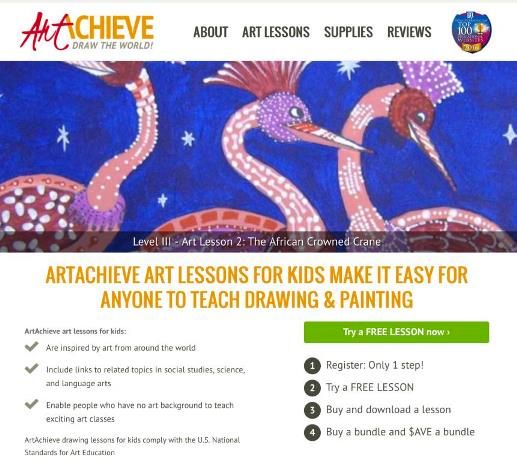
Art Lessons for Children ArtAchieve Review

I admit, when I was offered the chance to review
ArtAchieve's Entire Level I program, I had no idea what it was.  However, as soon as I clicked over to the ArtAchieve website and read its mission, I knew I wanted to review the Entire Level I program.  For the opening remark in the mission spoke of something I have witnessed but not experienced firsthand - that "anyone can learn to draw."

You see, years ago, I was a child who liked to create, but who received little encouragement, and perhaps a bit too much criticism, for my (lack of) art ability.  Thus, I thought, Some people just cannot do art well, and I am one of them.

Then, an experience in my twenties changed that thinking. 

I was living and teaching in Japan and became wowed by the fact that every Japanese student of mine was a competent artist and that the average elementary-school child in Japan could draw, paint, and create art work on level with many junior and high school counterparts from America.   At annual art days, when the entire school would go on outdoor excursions to create art, which was later displayed at schoolwide culture festivals, I realized that every individual is capable of creating beautiful art.  When art is made a focus, basic techniques are taught systematically, and people are given opportunities to create on their own and in community, skills blossom!  


As a homeschool mom, then, that is what I seek for my children as far as art goes:


  • teaching of techniques
  • time and space to create
  • community to create and share with


ArtAchieve offers all that!

Its author John Hofland
is an experienced homeschooler, art teacher, and world traveler who makes art accessible to even the most novice child or adult and, in my experience, creates an opportunity for success right from the git-go!  Better still, because lessons connect to art from around the world that Mr. Hofland has collected images of, lessons also  dovetail nicely with topics in social studies, literature, science, and other subjects -- with connections made even easier by the lists of  supplementary links, resources, and ideas that are included in each lesson.  Plus, since all you need for the art lessons are an internet connection, a printer, and basic art supplies, such as pencils, paper, watercolor markers, a Sharpie, and oil pastels, lessons are super easy to facilitate and won't break the bank nor have you running here, there, and everywhere for specialty art supplies!

How We Used Art Achieve


We began using ArtAchieve with the free sample lessons offered on the site, and, then continued on with the ones we received access to with our one-year license to  the Entire Level I program, which consists of 11 projects (including the free samples) and their warm ups.


Art Lessons for Children ArtAchieve Review

At first, we used the slideshow version of the lessons, but, then, quickly realized that we liked the video lessons better.  So, to use the lessons, I'd sit down, download printables for a particular lessons, print them out, set the needed materials on the table, call the kids to the table, then, hit play on the video and set to creating artwork together.  Easy peasy and successful!

Even on days when the kids were a bit grumbly, by the time we got to coloring our artworks, we were all smiles and chatter.  (Mind you, Mr. Hofland suggests playing music when doing art and staying silent, but that's just not our style.  We tried.  We failed at the silence, but succeeded at the art - enjoying chatting about what we were doing and offering encouraging observations to one another.)

Thus it was that our summertime has become more filled with screentime, but also with smiles and creative fun!

What the Kids Have to Say


My youngest, five, has not always liked to create art as Mr. Hofland directs, but he does enjoy coming to the table to prepare himself to work as Mr. Hofland suggests (by rubbing hands together until they are warm and then placing them over eyes and breathing deeply).  My youngest also enjoys creating alongside his siblings and I, even if his creations veer dramatically from the projects suggested (as the man does among the suns below.)


When I asked my youngest about the Entire Level I program, he had this to say:
 

I like in the videos when they show the pictures, not the guy. I also like when my hands are smooth and I rub them and put them on my eyes.  The art is okay.  I like the coloring.

My youngest is not a boy of many words.  His sister, at nine, however, is more loquacious. 


During lessons, my daughter often began verbalizing self-critical frustration early-on despite hearing Mr. Hofland's constant encouraging reminders on video, which her brothers and I echoed.  However, after a bit, her confidence and satisfaction grew, and, when I asked her what she thought of the program, she said:
I like (this program) so far.  I like the man.  He always has us do the exercise with our hands and I really like it.  I also like how he gives us tips. 
I REALLY like the sun picture better than all the rest I have done, but I am not sure if I will like it the best, because I have not done every project. 


I liked how when we did the cat, we had more free will than in the bugs one, where you had to copy every detail or you would not get the right shapes of bugs.  With the cat, you just had to copy a little.  With the sun, all you HAD to do was the coloring and the circle.  The rest was your FREE WILL (besides using cool and warm colors).
 

I made a big mistake with my sun, though.  It said I was supposed to color the rays, but I did not get that correctly and colored outside of them.  So my rays are all white now, but I still like it. 


I guess you don't have to follow all the rules to get art you like. It's good to know the rules, because once you know them, you can figure out which ones you really want to follow and which ones you don't really need to follow to create the picture YOU want to create, not what someone else wants you to create, but what you want to.  I like that the guy says, "Remember you are not coloring for your neighbor, your teacher, your mom, or me.  You are coloring for yourself." 

I hope you'll like the art program, too, if you do it.  I think you should if you like art.

Yep!  I'd say the
Entire Level I program is a success for my daughter.


 ArtAchieve is a win with my oldest son, too.  He has always liked drawing and creating, but often has not cottoned to set projects for any length of time.  With ArtAchieve that is changing.  He sits down excited to see specific projects and to remain focused until he completes them.  


When I asked my oldest what he thought about the program, he said:

I like it.  It's fun.  I like learning about the different art from the different countries and being inspired to make my own art especially. 

I preferred the videos to the slideshow, because they were more fun.  I liked seeing what the man's art looked like.  It showed me what was different between mine and his and gave me ideas.


So far, the bugs was my favorite project.  I liked drawing the bugs and it was enjoyable coloring them.  I enjoyed making patterns, coloring, and seeing them in the end.


I asked my mom if we can get Level 2 someday!

I think other people will like this, too.  Everyone.  Kids, grown ups,...  It's fun! 

Final Thoughts

I have been well pleased with my decision to try
ArtAchieve out and with the focused, creative time doing so has encouraged my children and I to spend together.  I am also now experiencing the art instruction and encouragement I never did as a child myself and find it so satisfying to create simple projects alongside my children.


"Oh, Mama, I love yours!"  "Do you like how these colors pop, Mom? I do."  "Look at mine!  Look at mine!"  "It's okay.  You won't know what you like until it's done."  "I think that's really good."

Hearing all these comments and more has made the moment many a time for me since we began using
ArtAchieveI am delighted with how using the Entire Level I lessons have increased my children and my art skill and offered us opportunities to encourage one another.  Without question, I would recommend ArtAchieve to anyone who is not confident at art and wants to meet with success while creating, experimenting, and learning basic art skills.

Learn More



Art Lessons for Children ArtAchieve Review

Almost one hundred Schoolhouse Review Crew families tried out
ArtAchieve's Entire Level 1, 2, or 3.  Enjoy reading what each had to say and browsing the different projects each family has chosen to share by clicking through the banner. 
Art Lessons for Children ArtAchieve Review 
 
Find ArtAchieve on:

And, don't forget, you can try out 
FREE sample lessons to see if ArtAchieve suits your family!


Crew Disclaimer

Sunday, July 10, 2016

Experience the Testimony of Saint Maximilian Kolbe


This past week we did not get to experiencing all of the sensory-smart ways I had brainstormed for learning more about Saint Maximilian Kolbe.  However, we did enjoy some reading, chats, and activities, which culminated* with Mass and veneration at Our Lady of Perpetual Help, where the Pilgrimage of the Relic of St. Maximilian M. Kolbe had stopped.  (*I use the word "culminated" loosely as there will surely be more study and learning about Saint Maximilian Kolbe to come.)

What a beautiful church Our Lady of Perpetual of Help is.  From the outside, it looks like a simple church.


Inside, though - wow!  As soon as my children and I stepped inside we thought, in my son's words:

This is amazing!  It was gorgeous.  There were statues and paintings everywhere.  The painting of Jesus resurrected and the people just looking up at him, staring in awe.  It was so impressive.  So pretty.


I did not take a ton of photos inside, because I did not think it would be appropriate to keep snapping photo after photo during veneration time, but I did take a few so that my children could better remember our experience, and so that we could continue chatting about the symbolism we had seen and the stories we had heard in the coming weeks, using the photos as a starting point.


My youngest was obviously exhausted when we were at Mass and fell asleep.  He woke as veneration began and was bleary eyed when his siblings took him up to the reliquary to look for the first class relic beard hairs within it.


While there, we
noticed some of the symbolism of the reliquary:
  • a base shaped like Poland, where Saint. Maximilian Kolbe was from
  • thorns to represent the atrocities committed during the occupation of the Third Reich
  • the lily bursting forth fro the thorns represents purity
  • the tulip represent matryrdom (and, together with the lily, represent love triumphing over hatred)
  • a knotted cord represents the vows of chastity, poverty, and obedience taken by all in the Franciscan order, including St. Maximilain Kolbe

We also noted the colors of the flowers by the altar - red and white - and talked about how these are the same colors as the crowns young Raymond Kolbe (which is what Saint Maximilian Kolbe was called as a boy) said he would accept from Our Lady.  As the story goes, one night, Our Lady appeared to young Raymond in a dream.  She was holding both a red crown and a white one and asked which he would accept.  The white meant her would persevere in purity.  The read meant he would become a martyr.   Raymond said he would accept both, and, indeed, through his life and death, did just that.

Plus, we examined the painting that was near the relic and connected it to what we know about Saint Maximilian Kolbe. The children noted that:
  • In the background there are smokestack sand fences, reminding us of the prison camp Saint Maximilian Kolbe was imprisoned in
  • The prison uniform he holds has his prisoner number on it.
  • His habit speaks of his calling as a Franciscan priest.
  • He holds the crowns he accepted from Our Lady.


Nearby were images of the Divine Mercy and Saint Faustina, so we chatted about those, too, and prayed at the side altar where they were.

Before we left, a sweet Franciscan sister gifted each of us with a Miraculous Medal.  The children took these up to the Saint Maximilian Kolbe relic, prayed, and touched them to the relic.  Yep, at that point, as had happened during  several points when I walked into the church, when I gazed at the artwork, when we celebrated Mass, when I looked down at the sweet face of my sleeping youngest,... tears brimmed in my eyes.  So much to be grateful for.  So many mysteries and graces.  So many blessings.


Life gets busy - very busy - and there are choices to made each day to move towards God or away.  I am grateful for the examples of saints who show us, time after time, how to move toward our Lord.  I am equally thankful for those who currently accept calls as nuns and priests, praying for us and shepherding us.  Likewise, I am thankful for ministries like Our Lady of the Angels that enrich us with experiences such as being able to experience the
Pilgrimage of the Relic of St. Maximilian M. Kolbe

Experience the Church and Pilgrimage Virtually

If you
would like to take a virtual tour of Our Lady of Perpetual Help, please view images of beautiful artwork in a slide show on the Our Lady of Perpetual Help website.

If you would like to learn more about the Saint Maximilian Kolbe relic or find out if it will be visiting you soon, check out the 2016 Pilgrimage page.


You can also view a video talk that explains Saint Maximilian Kolbe's story:


May love continue to triumph over hatred and may all of us in our troubled century listen to the testimony of Saint Maximilian Kolbe that love without limits is possible.


Saint Maximilian Kolbe, pray  for us.

Friday, July 8, 2016

Learn Latin through Storybook Readers


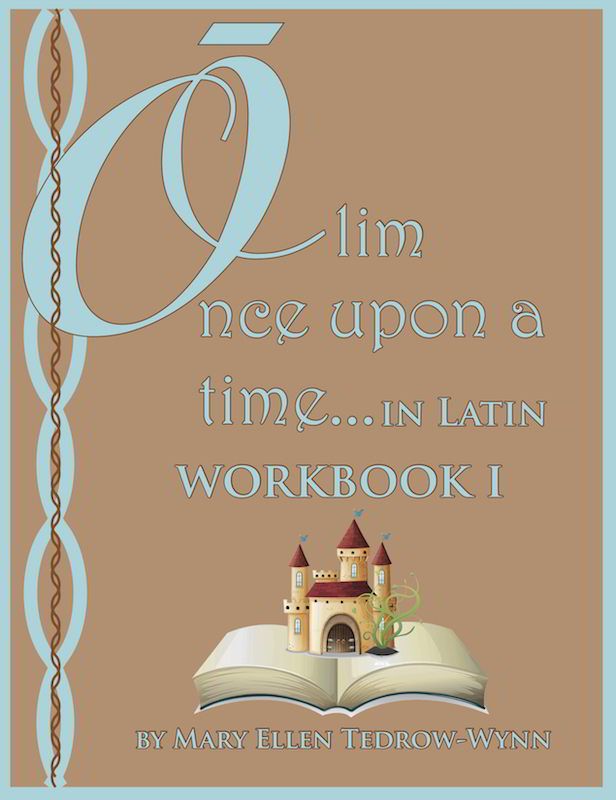
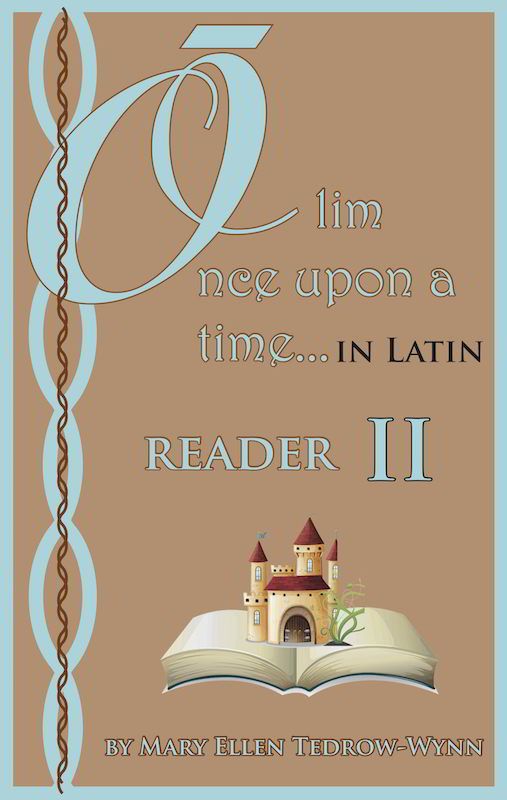
I had not heard of the Olim, Once Upon a Time in Latin, Reader I and the Olim, Once Upon a Time in Latin, Workbook I by Laurelwood Books until I was offered a chance to review them. 

Once I read a bit about them, though, I jumped at the chance to try them out with my children as I felt the reader and workbooks would dovetail perfectly with some of our current homeschool initiatives and goals, such as:


  • learning about Aesops' fables.
  • renewing efforts to learn foreign languages.
  • enjoying more learning time together as a family.
  • spending more learning time with concrete resources as opposed to computer-based ones.

Indeed, when I looked at the descriptions of the reader and workbook online, I was delighted to see that the reader contains the stories of The Three Little Pigs, The Tortoise and the Hare, and the Crow and the Pitcher.  Two of these three stories were ones that my daughter explored in a recent creative dramatic co-op class I taught and, thus, I felt the reader would make a fabulous follow-up.

I was equally happy to see that the corresponding workbook would provide concrete exercises to go along with the reader's stories, hopefully offering an easy-going way to slip foreign language learning back into our family study times whether those occurred at home or on a break between things when out-and-about.  For, in this season of life, we are often out-and-about so resources that we can easily toss in a tote bag and take with us from kitchen table, to couch, to minivan, to waiting area, to blanket in the sun are ideal.  The
Olim, Once Upon a Time in Latin, Reader I and the Olim, Once Upon a Time in Latin, Workbook I are just such resources.  Both are slim, portable soft-cover books.

About Olim

There are currently six readers and corresponding workbooks in the Olim series.  Each non-consumable reader contains familiar fables, parables, or Bible stories in both English and Latin, with adorable black-and-white illustrations.  Corresponding workbooks are consumable and contain exercises that go along with the vocabulary and grammar used in the readers.


Reader I, which we received, is 57 half-sheet-of-paper-sized pages long and includes:


  • a page on how to use the reader.
  • a 3-page Latin pronunciation guide,
  • a page of Roman Numerals,
  • the stories of The Three Little Pigs, The Tortoise and the Hare, and The Crow and the Pitcher, first written in English in simplified form, and, then, in Latin in a matching form.
  • sidebars with vocabulary notes on every Latin page.
  • geometric shapes to denote pars of speech with each adjective in Latin denoted by a triangle next to it and each direct object by a square.
  • darling pencil-like illustrations, which are the same in the English and the Latin portions of the reader


Latin and Penmanship {Laurelwood Books  Review}

The corresponding workbook is 80 8.5 by 11 pages long.  It starts off with some notes and a pronunciation guide and concludes with an answer key.  In between, it is chock full of activities that correspond directly to the readers and include such things as:


  • fill-in-the-blank activities
  • sentence recognition and completion
  • matching
  • writing English definitions based on Latin root words
  • Digging Deeper sections
  • Digging for Treasure challenges


Some of the "deeper" sections are relatively challenging and include:

  • nominative and accusative cases,
  • etymology,
  • verbs,
  • singular and plural forms,
  • perfect and imperfect tenses,
  • infinitives,
  • adjectives and adverbs,
  • prepositions and negatives,
  • asking yes and no questions,
  • and derivatives. 

Both the reader and workbook are written for a Grades 2-5 level, however, as you can see, they are pretty meaty, and, thus, I feel, can be used with older students, too.

Our Use and Thoughts

I first introduced Olim to my children on a blanket on our front lawn after breakfast by reading the English version of The Three Little Pigs, which my children immediately commented was different than versions they knew, and, then, doing my best to puzzle out the pronunciation of each word on the first page of the Latin version of the same story.  We practiced the first couple words on that page and, then, paused to attempt the first page of the workbook, at which point, my children got frustrated.  They simply were not ready for the written exercises, and no one wanted to make the workbook his or her own nor to be our family scribe.  Thus, we put the workbook away and went back to page one of the story, giggling over our attempts to pronounce "parvi porci"

Later that day, we asked Daddy to guess what "Olim" and "parvi porci" mean and were proud to know something he did not.

Another day, we read each story in the reader in English, and, then went back to the first page of the Latin version of The Three Little Pigs
to practice the words again.  From there, we continued a such during different sittings, sometimes just using the reader and, at other times, attempting some of the workbook activities.


Although we enjoyed toting our Olim book and workbook about, and found ourselves breaking out the reader during picnics at parks and having fun with words we had mastered, we never (to date) did take off with the workbook or get super great with memorizing the reader as I had hoped we would.   I dare say this is because we kept finding ourselves having to refer back to the pronunciation guide.  So, in the end, we decided that we like the concept of the reader and workbook, but are not ready to use them to their full potential yet. 

Without an audio of the reader for easier reference (as we are weak at using the pronunciation guide), and without the ability of two of my children to read and write fluently on their own and the desire of another child to do "book work", we the Olim materials have no yet proven as good a match for us as I had hoped they would be during this phase of our life and learning.  For, yes, they do dovetail wonderfully with our fables study, provide an opportunity for family learning, pack nicely into a tote, have fun illustrations, come with handy vocabulary columns, etc. However, they do not contain a CD or link for an audio of the story and, without such a feature, we found ourselves getting "stuck".  (None of us are gifted with languages!)

My youngest, at six , said:

I liked the English stories and the pictures.  The Latin was too hard.  I don't know anything, like how to pronounce it.  The book and Mommy tried to teach me, but I needed someone else to say it.

And, yes, he means someone else besides Mommy, who trips up flipping back and forth to the pronunciation guide.


My oldest, at ten, said:

Olim is okay.  They could improve it by making the English and Latin over and above each other.  They also coul improve it by making the stories more like they are in other places.  For example, The Three Little Pigs was different.  The wolf eats the pigs!


What I do like bout it... the stories are short, so you can read the English versions quickly.  You can't read the Latin quickly though.  It's kind of hard, because you cannot understand how to pronounce it easily with the key.  I'd like to have a CD, so you can be exposed to hearing it.

Also, the workbook is too hard for me.  It is long and not fun.


Mind you, my son is about as far from a workbook kid as one can get.  He also, unfortunately, is in a stage where he does not like much that does not com easy for him.  I keep introducing things to get him beyond this stage, but, so far, little has, including the Olim series, which, although not "right" for him right now, is quality stuff, which he told me once he'd like to revisit after learning Latin with some audio-visual materials first.  For he does like the stories, he just wants to pronounce hem more easily.My daughter, at nine, said:


I thought it was a little hard, because you had to go back to the beginning to learn how to pronounce words and also go over which word was which.  So, I think it would be better if the English version and the Latin versions were on the same pages. 

I liked the words themselves though.  "Pare porci" is my favorite.  It sounds fun.

I liked doing the workbook out loud.

I liked that the book can be used as just a story in the English version or the Latin version.  Instead of just having how-o-learn words, you can read a story.

I liked the illustrations, too.

I thought it was cool tat they had some Aesop fables, because I had just done an Aesop fables class.  The fables in the book are different, but they are good.

So, as you can see, while the Olim series is not a perfect fit for us, we all found merit in it and hope to revisit it once we have a better handle on pronouncing Latin without having to look back at the written guide all the time.


Learn More


Latin and Penmanship {Laurelwood Books  Review}


Just because e Olim, Once Upon a Time in Latin, Reader I and the Olim, Once Upon a Time in Latin, Workbook I by Laurelwood Books are not perfect for us right now does not mean they might not be ideal for you.  With a basic command of Latin pronunciation or a different learning style, Olim would move from being a quality resource set with learning merit to a spot-on one, I think.  I love that it is story-based and families can use it together. 

Latin and Penmanship {Laurelwood Books  Review}

If you'd like to see how Olim fit other families, or if you'd like to check out others' thoughts on further Laurelwood Books'  products, be sure to click on over to read the reviews of 100 Scholhouse Review Crew families who tested out one of the first four volumes of Olim, Once Upon a Time in Latin, State the Facts: A Guide to Studying Your State; the Scripture Scribe series; and Patriotic Penmanship. 

You can find Laurelwood Books on Facebook, too. 

Crew Disclaimer

Sunday, July 3, 2016

4+ Sensory-Smart Ways to Learn about St. Maximilian Kolbe


I learned this week that a church not too far from us will be hosting the Pilgrimage of the Relic of St. Maximilian M. Kolbe this coming week, so I hope re-arrange our schedule in order to bring my children to either a prayer service, Mass, or veneration at the hosting church. 

Whether we are able to work such a visit into our schedule or not, I plan to focus this week's faith-learning time on St. Maximilian Kolbe, whose feast day is coming up on August 14.  I've come up with seven sensory-smart ways to share ore about St. Maximilian M. Kolbe with my children and thought you might be inspired by them, too.  Of course, I'd love to hear about your favorite
St. Maximilian Kolbe prayers, activities, resources, ideas, and links, too!

{Disclosure: Some links which follow are affiliate ones.  Should you click through them and make any purchase, we may receive small compensation at no extra cost to you.  Thank you for supporting us in Training Happy Hearts.}

 
~1~
Taste Saint Maximilian Kolbe's Geography


My children know very little about St. Maximilian Kolbe, so we will likely begin our study about him with a reading and prayer from the Picture Book of Saints which focuses on him.  Within this reading, there is mention of some of the places St. Maximilian Kolbe lived: Poland, Japan and India.  Thus, as a part of our ongoing gentle geography studies, we will likely locate these places on a map and, then, to tickle our gustatory senses, we may plan some simple Polish, Japanese, and Indian dishes into our weekly meal plan.  We will also chat about how blessed we are to have ample food to eat and what we can do for those that do in conjunction with discussion about how St. Maximilian Kolbe often shared his food with other prisoners at Auschwitz and, ultimately, suffered starvation.


~2~
View Saint Maximilian Kolbe's Life


I am not sure my younger children are ready for the heaviness of learning too much about Nazi prison camps, but I think my oldest (who happens to love audio-visual learning) can handle it, so we may watch a short video about Saint Maximilian Kolbe together.  I have this one bookmarked, but welcome your suggestions, too.


Please do share your favorite titles and ideas for learning about Saint. Maximilian Kolbe.  Also, be sure to see if
the Pilgrimage of the Relic of St. Maximilian M. Kolbe will be close to your area soon, too.

~3~
Love Like Saint Maximilian Kolbe


We will also read the story about Saint Maximilian Kolbe in the Loyola Kids Books of Saints, which ends with asking readers to think of hard steps taken to live in difficult situations.  I am thinking hat after chatting about the story and the question it concludes with, we might get some proprioceptive input in by lifting, bending low, and reaching high to collect and deliver donations for those in need.  Or, we might focus on tactile or visual input with a "loving others" artwork that the children can help envision and create.

~4~
Sculpt or Scavenge for Saint Maximilian Kolbe Symbols

Source:  Our Lady of Angels Province


As I read about the reliquary used for the pilgrimage, two connected learning-and-sensory activities popped into my head.  The first is to engage the tactile and visual senses in sculpting symbols related to St. Maximilian Kolbe's life.  The second is to use our visual, vestibular, and proprioceptive senses with an outdoor scavenger hunt related to St. Maximilian Kolbe - finding a thorn bush to symbolize the thorny occupation of Poland, a white bloom to represent purity, a red bloom to represent martyrdom, something hair-like in nature to remind us of St. Maximilan Kolbe's beard, Japanese knotwood to remind us of a country the saint had once lived in, etc.

~MORE~
Connect Kids to Learning About St. Maximilian Kolbe

As I read Word on Fire's 9 Things to Know about St. Maximilain Kolbe yet more ideas came to mind.  However, I know we'll be too busy this week to weave many of them in.  Still, I thought I'd share my quick thoughts in case any spark a learning experience idea for you:
  • Engage the visual sense in making red or white crowns or visions of Mary paintings.
  • Enjoy STEM activities.
  • Tour a printing place, radio station, or movie studio.
  • Make cards for the imprisoned.
  • Share food with the hungry.
  • Get involved with the works of an organization that supports families, prisoners, journalists, political prisoners, drug addicts, or pro-life activities -- all things St. Maximilian Kolbe is patron to.

Undoubtedly, there are plenty more resources, ideas, and sensory-smart activities that can engage children in learning more about Saint Maximilian Kolbe.  I would love it if you'd share thoughts and links!  Also, do check if the Pilgrimage of the Relic of St. Maximilian M. Kolbe is headed towards your area as well.

Thursday, June 30, 2016

Can Perfect Portion Control and Old-Fashioned Favorites Go Together? {A Review}


(Note:  This  honest review contains affiliate links as per our disclosure.)

When I was asked if I would like a copy of The Perfect Portion Cookbook in exchange for an honest review, my curiosity was piqued.  While I have never been one to count calories, the concept of the cookbook sounded interesting:  150 comfort food recipes redesigned to offer old-fashioned flavor while also offering an easy way to balance meals since every recipe in the cookbook comes with a clear illustration of a 100 (200, 300, 400...) calorie portion. 

Thus, despite the fact that I was unsure of if my family would actually be able to eat many of the recipes included in the cookbook due to our special dietary needs, I agreed to the review.


A Well-Thought and Inviting Design


When my review copy of
The Perfect Portion Cookbook arrived, I was immediately impressed by the many full-color photographs on its cover, end pages, recipe pages, and tip pages.  Upon perusing the cookbook further, I was equally impressed by how true to its mission it is.  Happy Days' TV star and director Anson Williams, along with co-writers Bob Warden (a New York Times best-selling author) and Mona Dolgov (a reputed nutritionist) certainly met their goal in creating a cookbook that is chock-full of recipes for classic comfort foods as well as tips, graphics, and even meal-plans to make it easy for folks to enjoy eating without overeating.

Recipes for apple turnovers, chicken pot pie, chili, crab cakes, flatbread pizza, meatloaf, sweet & sour meatballs, ... even cheesecake... are accompanied by tantalizing full-color illustrations and clear graphics that show how large a 100 calorie portion of what each recipe would look like. 

Mind you, the suggested serving size is often larger than 100 calories.  The idea is that if you know what 100 calories of a recipe looks like, you can choose to eat, say, a 400 calorie breakfast, a 500 calorie lunch, and a 600 calorie dinner, while still leaving room for three 1000 calorie snacks throughout your day.

The
The Perfect Portion Cookbook also offers:
  • culinary tips
  • nutrition "tricks" for better-for-you ingredients
  • information on calorie goal-planning
  • a seven day suggested meal plan of perfect portions
  • lists of 10o-calorie portions of protein, carbohydrate, raw vegetable, cooked vegetable, fruit, dairy snacks, sauces & condiments, and fats to make snack and sides planning easier
  • ideas for balanced snacks as well as grab & go ones
  • ideas for burning calories and meeting success at tipping the scales

Thus,
The Perfect Portion Cookbook proves a well-rounded, helpful cookbook which invites you to enjoy perennial favorites while making portion control easy.
How Perfect is the The Perfect Portion Cookbook?


If you eat a pretty traditional American diet, love comfort foods, and seek recipes tweaked to make such foods a bit healthier and easier to apportion, The
The Perfect Portion Cookbook is for you.

If you love cookbooks with glossy pages and beautiful full-color photographs,
The Perfect Portion Cookbook may also be for you.

However, if, like me, you have folks with special dietary needs in your home,
The Perfect Portion Cookbook may prove for better browsing than for actual use.  For, I have to be honest.  In our our home, we have a several who eat gluten- and casein-free, one who is vegetarian, and one who is moving toward a nutritarian diet, so many of the recipes included in the cookbook were simply not ones that would work in our kitchen without major adaptations.   That said, I like the concept of the book for others and plan to happily gift our review copy of The Perfect Portion Cookbook forward to someone who can utilize it more than us.  For I know many who would love it!

I also will add that if the authors of
The Perfect Portion Cookbook ever make a special diets cookbook with a similar format - tantalizing photographs, culinary tips, helpful lists, easy graphics for portion planning, etc. - I would love to see it!  For me, such a cookbook would be ideal.  For you, The Perfect Portion Cookbook may be!

LinkWithin

Related Posts with Thumbnails