Saturday, May 9, 2015

Avoid Burnout and Enjoy Homeschooling with Ease {A Review}


Every year at this time two things happen in my life:
(1)  I begin evaluating our current home education approach, deciding what to tweak for the coming school year.

(2)  My phone and computer message indicators light up with inquiries from folks interested in homeschooling that ask, "How do you do it?"

Thus, when an opportunity came up to review the Successful Homeschooling Made Easy Course by Successful Homeschooling Made Easy, I took it.  The course acts as a Homeschooling 101 for both those who are beginning their homeschool journey and those that are simply ready for a reboot.  Beginning it at this time of year seemed like perfect timing to me!


What is Homeschooling Made Easy? 
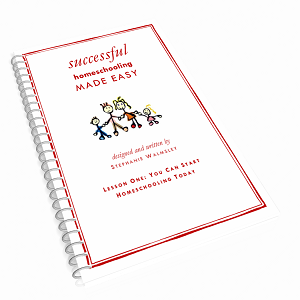
Successful Homeschooling Made Easy Review

The Successful Homeschooling Made Easy Course is a 26-week, online course designed and written by Stephanie Walmsley to help new and veteran home educators know exactly what they might do to begin successfully homeschooling right now.
 
As soon as you sign up for the course, you immediately receive the first lesson, which will get you started on a successful homeschool journey, without overwhelm, right away.  Then, over the course of 26 weeks, you receive a topic-based PDF each week via email to help you continue to build upon an approach that will keep you and your kids sane as well as happily learning.

Throughout the course, an array of homeschool-related topics are presented in logical, bite-size pieces that include tried-and-true strategies for:

  • scheduling
  • planning
  • selecting curriculum
  • record keeping
  • handling obstacles when things get tough
  • avoiding common pitfalls
  • fireproofing yourself against burn out
  • fitting in homekeeping
  • choosing extra curricular activities
  • and so much more!

Thus, whether you are a parent who is just beginning your homeschool journey, or are a veteran homeschooler simply ready for a fresh start or a bounce back after burnout, the course acts like a home education coach that offers practical tips, insights and encouragement, as well as step-by-step how-to's in order to incrementally help you to build a thorough, successful homeschooling approach.

Each lesson is organized with:


  • a preface
  • loads of targeted information and examples
  • space for taking notes in order to tailor ideas to your personal homeschool situation
  • a helpful summary
  • an assignment
  • a look at what is coming next.

Some of the Pages I Printed

Lessons are meant to be printed, but can easily be read on a computer or handheld device.  (I only printed pages with forms, lists or notes spaces that I wanted to write on.)

My Experience

As I mentioned above, the course is typically delivered in 26 weekly sections.  However, for the purposes of this review, I received the first four lessons all at once, and, then, further lessons each week, thus, making my way through the first nine lessons before I sat down to write this review. 
Lesson One: Start Homeschooling Today is one of the longer lessons, at 26 pages, but it did not feel long.  Rather, its length seems just-right for getting families (re)started on a successful homeschooling approach through the practical step of developing a basic eight-week schedule.

The chapter concludes with a do-able assignment, which I opted to tweak, gently adapting our schedule rather than posting it for the family:


Lesson One, p. 24 Excerpt

Prior to the assignment, among other things, the lesson discusses implementation of a "Literacy Hour", complete with photographic examples of writing time journals from emerging readers and writers to practiced ones.   As I read this portion of the lesson, I was reminded me to renew my commitment to daily journaling with my children.  Admittedly, that effort has still not become a daily one for us yet due to a trip to see an ailing relative thrown into a mix of which includes many pre-scheduled clubs and classes, but at least writing became more consistent!

 
An Excerpt from My Daughter's Journal


Lesson Two:  Math Made Easy breaks the sometimes daunting task of choosing a math approach for your children into five understandable components which can make teaching math both easy and fun - and it did so in a mere 15 pages.  

Since I have already landed on a math curriculum that works for my oldest and am happy with our approach for our two younger children, I did not need to apply much of this chapter into our personal homeschool endeavors, but I did fins myself nodding in agreement with the 12 Tips the lesson offered for choosing a math curriculum:


Lesson Two, p. 10 Excerpt

Lesson Three: Welcome Home is 17 pages long and offers testimony from 15 homeschoolers.  Again, this lesson was not that relevant to my circumstances, but, I think, would be poured over by newbie homeschoolers.  I appreciate the enthusiasm and reassurance of all of the homeschool moms that shared their experiences in this lesson.

Lesson Four: Fireproof Your Homeschool is right up my alley.  In its 14 pages, it encouraged the scheduling of a fun activity, asked me to reflect on what I want from my life and our family's home education pursuits, and offered a short list of resources for further resources.

Lesson Five: Three Key Ingredients for Success offers more opportunities to think, plan and solidify why you do what you do.  In its 11 pages, it also offers titles for further readings, before coming to its conclusion:
Lesson Five, p. 11 Excerpt

I could not agree more with the idea that clear goals makes homeschooling and family life happier, more fun and more successful, so I appreciated the opportunity to reflect further on goals I have already set using the prompts in this lesson.

Lesson Six: Fulfill Your Dreams devotes its 13 pages to a reminder so many moms, whether homeschoolers or not, need:  take care of yourself!  I, for one, always need to be reminded to be kind to myself and to take time for self-care.

I appreciated all of the ideas, examples and reflective questions in this lesson and found two quotes quite timely:


Lesson Six, p. 9 Excerpt

Lesson Six, p. 9 Excerpt


In fact, as I read this lesson, I recalled an important medical screening that I had been neglecting to schedule and of the fact that I need to start exercising and eating better again.  I also smiled as I thought about how self-critical I can be, and yet how my kids love, appreciate and learn with me daily despite my "failings". 

Lesson Seven: Why Curriculum Doesn't Matter, in its 12 pages, explains a bit about the history of education as it related to home education and summarizes a number of homeschooling styles and method.  It also succinctly puts into words what I have explained to folks countless times:


Lesson Seven, p. 7 Excerpt


I could not agree more with the idea that, while curriculum can be helpful, education can happen even without a formal boxed curriculum and that what is right for you and your family are different than what is right for others.  I also love that the  Successful Homeschooling Made Easy Course does not start with curriculum talk in week one (since curriculum is hardly the first priority in successful homeschooling) and, then, in week seven, when it finally dives into curriculum, does so with perspective.  

Lesson Eight: Why You May Need to Let Go of Good Things gets into socialization, out-of-home activities and the need for balance with at-home time in its 12 pages.  For me, it was a rather apropos lesson since an area of discord between my husband and me right now is how often the kids and I are not at home and how it is affecting the condition of our house, if not our family.

Thus, part of the checklist in this chapter hit home for me:


Chapter Eight, p. 11 Excerpt

The quote at the end of the list did, too.  For admittedly, home has hardly been as rich an experience for my children as outside our home has been this year and, looking ahead, I need to choose to change that.


As I read this lesson, I thought about how our family committed to embracing an experiential home education style this year and how, as a part of that, our home-out balance ended up getting rather skewed.  Between field trips, clubs, classes, library programs and other outings, we have been out almost every day for one part of the day or another, and, although I have ensured that my children still get daily time to hang, play, decompress, etc., I admit, that time often happens outside of our home.  "Home" has not been as rich a place as "out" has been this year.  I want it to be.

This lesson worked to speak to me more about the fact that where there have been benefits to all of our out-of-home happenings this year, there have been deficits, too.  


Lesson Nine: Housework and Homeschool spends 15 pages getting into a shortcoming of mine:  housekeeping!  Despite having involved my children with chores from an early age, I have not been consistent with housekeeping (perhaps because of all that out-of-home time we have!).  So, this chapter hit home, too.  I know I will be re-reading all the details that go with its summary!


Chapter Nine, , p 15 Excerpt

Along with these lessons, I also received on of the bonuses involved in the course - Bonus One: More on Math.  This 14 page supplement contained a variety of games, book ideas and charts which were rather old-hat for me, but would likely be quite helpful to a novice homeschooler.

I look forward to continuing through all 26 lessons of the
Successful Homeschooling Made Easy Course
and only wish there were an option to receive larger chunks of the course at one time - or even the entire course at once.  For, while I appreciate the idea of doling the course out week-by-week so as to help homeschoolers focus on one topic or habit at a time without overwhelming them, I also would prefer to pace myself through the course instead of having to remember to scan my overloaded inbox each week for the next portion of it.  I would guess other home educators (especially veteran ones) would also prefer to receive and download materials just once.  I hope, in the future, this becomes an option.

Final Thoughts

Successful Homeschooling Made Easy Review

If you are quite new to homeschooling, this course could act as a welcome "virtual coach" to guide you through getting started with your journey and building habits that can lead you and yours to success.  It is truly packed with both the big picture ideas and smaller details that any homeschooler might consider.

If you, like me, are a veteran homeschooler that is simply reflecting and revamping before another year of homeschooling, this resource can be helpful, too.  While some parts are definitely written more for a novice home educator, in the parts of the course I have seen thus far, there are plenty of practical ideas for more experienced homeschoolers


The Successful Homeschooling Made Easy Course is definitely one I am benefiting from and one I would recommend to others. 

Learn More


Wondering if the course would be a good fit for you?  Try the first lesson free.  Or purchase the course at its current price of $9.50 per month or $48.62 up front (a 15% discount) with a 4-week money-back guarantee for those that are not completely satisfied.
Find Successful Homeschooling Made Easy on Facebook.



Successful Homeschooling Made Easy Review


  • Read what 8- other Schoolhouse Review Crew parents think about Successful Homeschooling Made Easy.

 How might Successful Homeschooling Made Easy help you enjoy stress-free homeschooling?
 
Crew Disclaimer

Friday, May 8, 2015

What Timeless Warm-Weather Pleasure Floats My Kids Boats?

Making boats, of course!


http://traininghappyhearts.blogspot.com/2015/05/boatmaking.html


The other day, Nina helped me share about a simple spring pleasure that she enjoys: making dandelion crowns

 
http://traininghappyhearts.blogspot.com/2015/05/what-simple-spring-fun-can-you-enjoy.html


Today, I thought I'd follow up with another timeless warm-weather activity that all my children enjoy: making and floating boats.

Recent Boat-Making AdventuresTruly, on our recent trip to see my in-laws, I realized anew that boat fun is  an activity that never seems to get old for my children despite how old my oldest is getting!  In fact, of all three of my children, he seems to be the one that explores with boats the most:


...saving them when they crash against rocks under bridges...


...sending them adrift near gutters...


... trying to get them to cross small ponds...


Luke and his siblings also like to construct their own boats from natural materials...


http://traininghappyhearts.blogspot.com/2011/10/boat-making-co-op-lesson.html
They have also long-loved making boats with recyclable materials.

The material matters far less to the children than the experience of the timeless warm-weather pleasure of making and floating boats!

It's Fun AND Worthwhile


How many dandelions can the boat carry?

On small rivers, on ponds, in the ocean, in our kiddie pools, even in the sink, child-constructed boats float often around here when the weather is warm.  As they do, the children inherently:

  • learn about buoyancy.
  • practice the engineering and design process.
  • exercise their brains and bodies.
  • demonstrate focus.
  • immerse themselves in sensory smart experiences.
  • employ both fine and gross motor skills.
  • breathe and relax.
  • explore natural surroundings.

They also often end up coming together as a team and, most importantly, delight in self-directed play, usually outdoors.  That sure makes boat-making a worthwhile way to enjoy warm-weather hours for my crew How about for yours?


Do you children enjoy the timelessness of boat-making?  What other classic activities never seem to get old for them?

Thursday, May 7, 2015

One Practical, Picture-Filled Lapbooking Resource {A Review}

Heidi St. John,  author of The Busy Mom, mom to seven homeschooled children, and favorite conference and radio speaker, offers a wide array of audios, books, ebooks and accessories at Real Life Press.


I received one of Heidi's helpful how-to ebooks for review and was so impressed by it that I decided to become an affiliate for it: Lapbooking Made Simple is a quality resource that I have been happily putting to use with my children and am delighted to share with you today!

What is Lapbooking Made Simple?


http://reallifepress.com/site/portfolio-item/lapbooking-made-simple-ebook/?ap_id=martianne

Lapbooking Made Simple is a 54 page lapbook packed with explanations, ideas and examples about how and why to lapbook.  In six short chapters and an "extras" section, it offers both the novice lapbooker and the practiced one practical tips and thoughts that can be put to use right away.
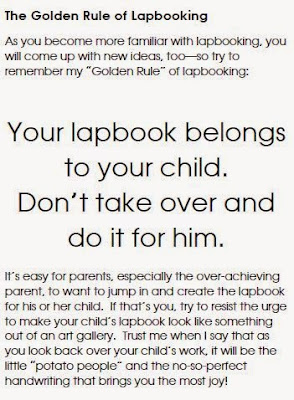
  • Chapter One introduces what lapbooking is and closes with a "golden rule of labooking" that I laughed at when I read since it is one I have to always remind myself about:
 
http://reallifepress.com/site/portfolio-item/lapbooking-made-simple-ebook/?ap_id=martianne
Credit: Lapbooking Made Simple, p.4


  • Chapter Two dives into what unit studies are and how lapbooks can be used in conjunction with them.

  • Chapter Three explains how to get started and relates the authors experience and, subsequent tried-and-true tips that I could relate to!  (Yes, it is easy for me to want to dive in and do too much at once. I appreciated the reminder to do a little at a time.)

http://reallifepress.com/site/portfolio-item/lapbooking-made-simple-ebook/?ap_id=martianne
Credit: Lapbooking Made Simple, p.12


  • Chapter Four explains some of the different mini-books that can used in lapbooks and includes both text and visual examples of how each highlighted mini-book can be used.
http://reallifepress.com/site/portfolio-item/lapbooking-made-simple-ebook/?ap_id=martianne
Credit: Lapbooking Made Simple, p.13

  • Chapter Five discusses Lapbooking vs. Notebooking, offers links to some wonderful notebooking resources, gives a list of tools families might find helpful for lapbooking and notebooking and describes how to combine the two approaches.

http://reallifepress.com/site/portfolio-item/lapbooking-made-simple-ebook/?ap_id=martianne
Credit: Lapbooking Made Simple, p. 22


  • Chapter Six details, step-by-step, how to create a lapbook and contains beautiful, full-page photographic examples of beginning, intermediate and advanced lapbooks, as well as a handy list of materials you might have around the house that lend themselves perfectly to lapbooking.

Credit: Page 31, Lapbooking Made Simple
Credit: Lapbooking Made Simple, p. 31


  • Extras include an array of print-cut-and-go mini-book templates in both black and white and color.


http://reallifepress.com/site/portfolio-item/lapbooking-made-simple-ebook/?ap_id=martianne


Our Experience

When we received
Lapbooking Made Simple, my children and I were already in the midst of beginning a cookie-cutter lapbook on The Lion, the Witch and the Wardrobe that we'd found online.  After reading Lapbooking Made Simple that project paused while my children dove into parallel lapbooking projects on other topics.

Nina chose to combine homemade lapbooking and notebooking elements for her Australian echidna project for our monthly geography club.  She did not want to use ready-made templates nor to be told what or how to proceed.  Instead, she wished to present material she has learned in her own way, and, remembering Heidi's tips, I supported her choice and helped her only when she asked me to do so.
You can just see the hint of the picture that hides under this lift-the-flap feature.

And here it is.  Nina was wowed by how small an echidna is in its mothers pouch and wanted to surprise others with the picture during her presentation.

 Luke, likewise, wanted to begin his own self-directed lapbooking project on something he has yet to have at home, but which he has been reading up on with zest and determination, hoping to save enough money -- and earn enough privileges -- to purchase and use:  Minecraft!
Luke chose to use one of the templates from the book to make a pocket to educate clueless me about some of the creatures in the game he so desires to own.

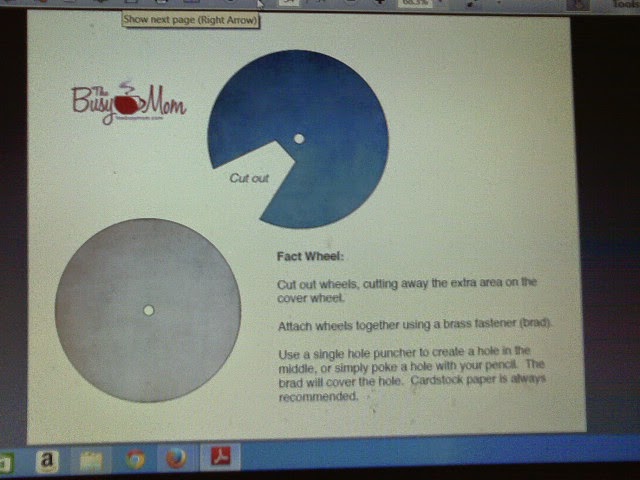
He also modeled another element after one he noticed in the e-book when I was reading it on my computer.  (And, use, I had to bite my tongue so as not to immediately point out his spelling error in the word "hostile".)

When Nina saw what Luke was doing with his spinner, she wanted to make one, too.  And, there began the fourth in-progress lapbook we have going now.


Nina love, love, loves one of our friend's babies and has decided she wants to make a lapbook all about him.  Too cute!

The way I see it, whether lapbooking through literature, as a part of club and unit study projects, or as a way to highlight interests (while encouraging my reluctant writer Luke to self-direct himself in some writing!), lapbooking and notebooking are a welcome addition to our home education pursuits.  Likewise,
Lapbooking Made Simple is a fantastic little resource that the kids and I have been using and will continue to turn back to for inspiration and practical printables!  I am glad we had the chance not only to review it, but to keep it as a resource for continued learning fun.  Whether you are someone who has never heard of lapbooking or someone who has been making lapbooks with your children for a while, Lapbooking Made Simple
might make a welcome addition to your resource collection, too! 

Learn More


Real Life Press Review 
 
Crew Disclaimer

Wednesday, May 6, 2015

What Simple Spring Fun Can You Enjoy?

(written with help from dandelion model and crown creator Nina!)


The winter snows have finally melted and sunshine bathes the ground in color.  Happy yellows dot green fields beckoning all to enjoy timeless spring pleasures.

Recently, when taking Nana outside at her nursing home, Nina and her cousin delighted in dandelions.  They picked bouquets, sent loads of "gold" on paper boats down a little river and fashioned their very own dandelion crowns!

Nina would like to share how she made hers:

1.  "First, you pick dandelions.  How many you pick depends how big you want your crown to be.  You should look for ones with long stems."


2.  "Then, you begin to tie or braid the dandelions together until you get a rope of dandelion flowers.  You also can tie some extra extra ones in the knots."


3.  "Once you have a rope, you tie it into a circle and place it on your head.  There you have your dandelion flower crown!"


"Have you made a dandelion crown before?  Do you like mine?"

How Might Your Children Close Math Learning Gaps? {An A+ Interactive Math Review}


Despite the fact that our family chooses a rather relaxed, eclectic home education style with little to no formal testing, when we were offered an opportunity to review the Adaptive Placement Test and Individualized Lesson Plan by A+ Interactive Math , I took it.  

The Potential of A+ Interactive Math's Adaptive Placement Test and Individualized Lesson Plan


As I read about what the program had to offer, I was confident that it might prove an effective fit for the children's needs and my own.  I thought:

  • My children typically enjoy online learning programs.  This one offers multi-media lessons, practice problems, step-by-step solutions and more.  That could meet the children's desire to do more things online and my wish to make some of their online time "on point" with engaging learning.

  • Since we focus largely on interest-led learning, definite gaps exist in what my children have mastered as compared to peers typically educated in brick-and-mortar buildings.  Eventually these gaps will fill, I know.  The idea of a program that might spark an interest and desire in my children to painlessly find and fill "gaps" with ease, enjoyment and expedience is appealing.
 
 
  • My inner Type A/former-teacher self still likes to have "i's dotted", "t's crossed" and boxes checked even while my "relaxed", eclectic home educator self chooses to focus largely on strength-based, child-led learning.  Short, focused lessons on key topics, interspersed between longer sessions of hands-on and experiential learning, have become a norm for our family.  The concise lessons offered online in the Adaptive Placement Test and Individualized Lesson Plan could be a super tool for us, helping me be certain the children have mastered specific concepts while engaging my children in easy, enjoyable, individualized lessons.

In short, I hoped that my children would welcome the Adaptive Placement Test and Individualized Lesson Plan as a tool for learning and that, through using it, they might build stronger math mastery with smiles and success.

The Reality of A+ Interactive Math's Adaptive Placement Test and Individualized Lesson Plan in Our Home

When deciding what to review here at Training Happy Hearts, I only accept review products what I think might work for our family and, after using a given product, I am candid about our experience with it.  I love to be able to find - and recommend - products that have proven successful with our family and could help others. 
The Adaptive Placement Test and Individualized Lesson Plan, in my family's experience, fits half the bill of what I love:  It is a is a well-developed, sound program that follows through on the basics of what it promises:  online lessons, practice, review, grading and tracking that can help children close learning gaps in a typical math curriculum through an easy-to-use interface with carefully selected content and features.   Unfortunately, for our family, it did not prove the best fit.  The "engaging" and "fun" part just did not happen and, since the curriculum it fills the gaps for is a typical "Common Core" aligned one, both my husband and I found some of the vocabulary, concepts and learning points it focused on unnecessary.  We are far more into practical life applications than modern math processes and lingo.
That said, I do think the program has merit.  If I did not, I would not have tried it.

Our Seven-Year-Old's Take


I introduced the program with enthusiasm to my daughter first and sat down next to her using its easy interface.
 

After viewing the How to Get Started tutorials, we quickly began the Placement Test.  Although it, too, was easy to use with its voice, text and graphics, the content was too challenging for her, and she soon became discouraged.  


So,
we called it quits for the day and I later logged into my portion of the software to change the settings for Nina to a lower grade level.  At this level, Nina met with a bit more success, but still did not love the program nor was she eager to use it.   Despite her lack of enthusiasm, I did persist in re-introducing it to her and, as I sat down to write this review, Nina had the following to say:

Aren't there kids who have such strict stuff to do that it would be a treat to be online instead of getting stuff on paper to do?  They might like it... It (the program) was okay, but it was a little hard at certain levels.  Others were easy.  (I'd) maybe (like to continue it.)...  There is value in learning a lot of math problems... Sometimes they did a good job explaining things that were confusing, but some things I still did not understand.  I might want to use it again.

Our Nine year Old's Take

My oldest son Luke was far less positive about the program than his sister.  When chatting about the
Adaptive Placement Test and Individualized Lesson Plan before writing this review, his sister had looked for the good in it and had even suggested that she might like to continue to use it, because she can see its potential value for her.  Luke, however, bluntly stated:

I never, ever want to do it again.  It is the worst thing in the world.  It's so boring.  I'd rather do the laundry...  I did it because my moms made me do it...

For although he had found the actual interface of the program easy to navigate and use, he had not been engaged by the content and its presentation.  I knew this since I had sat next to Luke during some of his use of the program, and had been nearby during others.  Thus, as I talked with him about the program, I agreed that the it was not a "perfect" fit for him, since it just did not appeal to him in the way of being fun and engaging, but encouraged him to continue to use it sometimes.  I pointed out that, through our collective prior persistence to get Luke to use the program, he had, in fact, been introduced to concepts he had been hitherto unfamiliar with and, through the adaptive nature of the testing, had proven that he could succeed with questions about those things.   


I asked him if that success felt good>  He shrugged non-commitedly.  So I inquired about his overall experience with the program, "Did you learn anything?"  His reply was:


No.  I forgot everything the math test asked me.

Frankly, I know Luke has not forgotten everything, but I dare say, he has forgotten some of it.  When Luke is not engaged in something, he can do what he needs to to get by and be done with it, but he does not always retain information long term.  With his neurology, our son is definitely one where learning must be intrinsically motivated.  Once it is, mastery comes quickly.  Unfortunately, this program did not capture him enough to ensure such mastery happened on a regular basis.

Still, when I asked Like if he felt the program might be good for anyone else, he went on to conclude:

Yea, those who like being bored.  Only parents like it.

My Take

Of course, I do not agree Luke's assessment of the program in full.  Luke's own sister sees value in the program and, as other reviews will show, some other children like it even more.  Parents do, too. 
As I mentioned before, despite the fact that the program is not a great fit for my family, I see value in it.  Sure, it is not as fun and engaging for mine as I had hoped it would be, but it might be for others.  And, yes, it includes far more emphasis on modern math teaching methods and lingo than either my husband or I feel is necessary, but that style might work for some. 

Regardless of whether the program was "right" for us, I truly feel that the Adaptive Placement Test and Individualized Lesson Plan could be an effective fit for children in schools or at home who seek to know where their gaps in a modern, traditional math program are and who wish to be able to fill those gaps through the use of an easy-to-use interface that provides concise, "on point" lessons, review and testing toward math mastery.    I like that, even if the program was not the best fit for my son, in particular, it is straightforward and encouraging, letting students know when they needed extra help, assuring them they can get that help and providing targeted lessons to "fill the gaps". 

All things considered, I will continue to encourage my daughter to use the program as she asks to do so while we still have access to it and, in doing so, will hold out hope that my son may choose to jump aboard with it again since, if nothing else, it provides some math practice for him while also offering him a chance to exercise persistence.

Learn More

A+ Interactive Math Review

Find A+ Interactive Math on:


View a demo of the program.

Purchase 3-months online access at the current introductory sale rate of $29.99 with further discounts for additional students


A+ Interactive Math Review


Read what other Schoolhouse Review Crew families thought about the Adaptive Placement Test and Individualized Lesson Plan and another quality program, the Family Math Package 

 
A+ Interactive Math Review

Crew Disclaimer

LinkWithin

Related Posts with Thumbnails