Showing posts with label Logic. Show all posts

Wednesday, August 18, 2021

The World Needs More Logic... Start Teaching It at Home {A Homeschool Review Crew Review of The Fallacy Detective}

Disclosure: I received this complimentary product through the Homeschool Review Crew.


Woah! Propaganda. Coercion. Social media memes. Mob mentality. Personal attacks. Lack of common sense and reasoning. These days our world seems plagued by such things which make uncovering - and arguing for - truth difficult. That's where The Fallacy Detective by Hans Bluedorn comes in. 


A handy 250+ page softcover workbook edition of The Fallacy Detective can easily help you learn to spot common errors in reasoning so you can arm yourself against the lack of logic in today's world and suss out truth in conversations, news reports, social media posts, commercials, and elsewhere - including your own arguments.


Plus, if you are like me, the book can become  inspiration for an upcoming co-op course.

What is a Logical Fallacy?

"What is a fallacy?" you might ask.

If you are unfamiliar with the term "fallacy" it simply means an error in logic - a place where someone has made a mistake in his or her thinking.


Fallacies include:
  • avoiding the question (red herrings, special pleading, ad hominem attack, genetic fallacy, tu quoque, faulty appeal to authority, appeal to people and straw man)
  • making assumptions (circular reasoning, equivocation, loaded question, slipper slope, part-to-whole, whole-to-part, either-or)
  • statistical fallacies (generalization, analogy, post hoc ergo propter hoc, proof by lack of evidence)
  • propaganda (appeal to fear, appeal t pity, bandwagon, exigency, repetition, transfer, snob appeal, appeal to tradition, appeal to hi-tech, etc.)
How Does the Book Teach about Fallacies?

In its 38 chapters, The Fallacy Detective introduces you to to the faulty tactics of avoiding the question, making assumptions, statistical fallacies, and propaganda using a clear, conversational tone, engaging illustrations, comic strips and witticisms, multiple exercises, summary pages, an answer key, and even a game.


The exercises present bits of conversational snippets, newspaper articles, advertising samples, and short headlines. 


The game has you making up your own fallacies and winning points for creating the best ones.


The summary pages act as a quick reference and review.

Together, the content of the books help you strengthen your skill at sifting through a barrage of bad reasoning and falsehoods so you can better discern truth in today's world.

My Approach Thus Far...

Shortly after receiving my review copy of the book, I admit, I did something I do not usually do with materials I am reviewing: I hid it!

Why?

Because as I began reading the material I knew immediately that I want to use it for a co-op class I will be teaching this fall, and, thus, did not want my youngest son (who will be in the class) to see the book, get curious, and read ahead. Nor did I want my older two children to spoil the fun their little brother will have debating the exercises with his buddies in co-op by pre-debating them at home.

So, instead of having my kids use the resource  before writing a review on it, as I often do with resources, I, instead, secreted the book away in my bedroom and snuck it out in the early mornings and late nights to read through, appreciating that it could be read in short snippets - due to chapters being only a few pages long, quizzing myself with the exercises, enjoying how the included comic strips get points across, and deepening my understanding of informal logic before I set about teaching it to a group of 10+ year olds. 


I am now excited to present the brief, conversational, yet to-the-point lessons to my co-op students this fall and, even more so, to engage them in discussing the exercises and related examples of fallacies that we find in every day life and media. 


I also intend to offer the book to my older two children to use as part of their high school credits. For, I believe The Fallacy Detective is a solid tool for  teaching kids (and adults!) how to recognize bad arguments, propaganda and falsehoods - an increasingly necessary skill in today's world! 

Final Thoughts

I love the ease and appeal of 
The Fallacy Detective and am excited for the conversations that will develop from it in our fall co-op and home studies.

I would recmmend 
The Fallacy Detective for:

  • middle schoolers, high schoolers, and adults who seek to better understand sound reasoning as they seek and share truth.
  • students who wish to work independentally. (As I have experienced, the format is conducive to self-study and self-checking of answers. It could also count for 1/2 to one credit for logic or critical thinking, depending on how it is used by higschoolers.)
  • families who like to learn and discuss together. (The short lessons and easy to read aloud exercise format would make this resource wonderful for reading aloud and discussing thoughts as a family.)
  • teachers of co-ops and classes. (Lessons are dsigned for both private and classroom use.  I, personally, cannot wait to share this resource in an upcoming critical thinking and speech class at co-op!)

All that said, I would not recommend this book to you if you are looking to learn about ins and outs of formal logic - such as syllogisms, scientific reasoning, argumentaion, etc. For, these things are not within the aim of the book. Rather, logic as seen and used on an everyday basis is.  
In my opinion, the world needs more of that! 

Sound daily reasoning. This is a logic course that promotes it.

Discover how other homeshcool families are putting this book and another by 
Hans Bluedorn  to use by clicking through to find 20+ video, social media, and blog reviews from the Homeschool Review Crew!

You can also connect with Hans Bluedorn and The Fallacy Detective :


Friday, June 12, 2020

Enjoy Problem Solving with Logic and Math {A Review}


Disclaimer: I received a FREE copy of this product through the HOMESCHOOL REVIEW CREW in exchange for my honest review. I was not required to write a positive review nor compensated in any other way.


The world surely needs more people who can work through difficult problems and use logic, so I always appreciate resources that can help my children develop such skills.

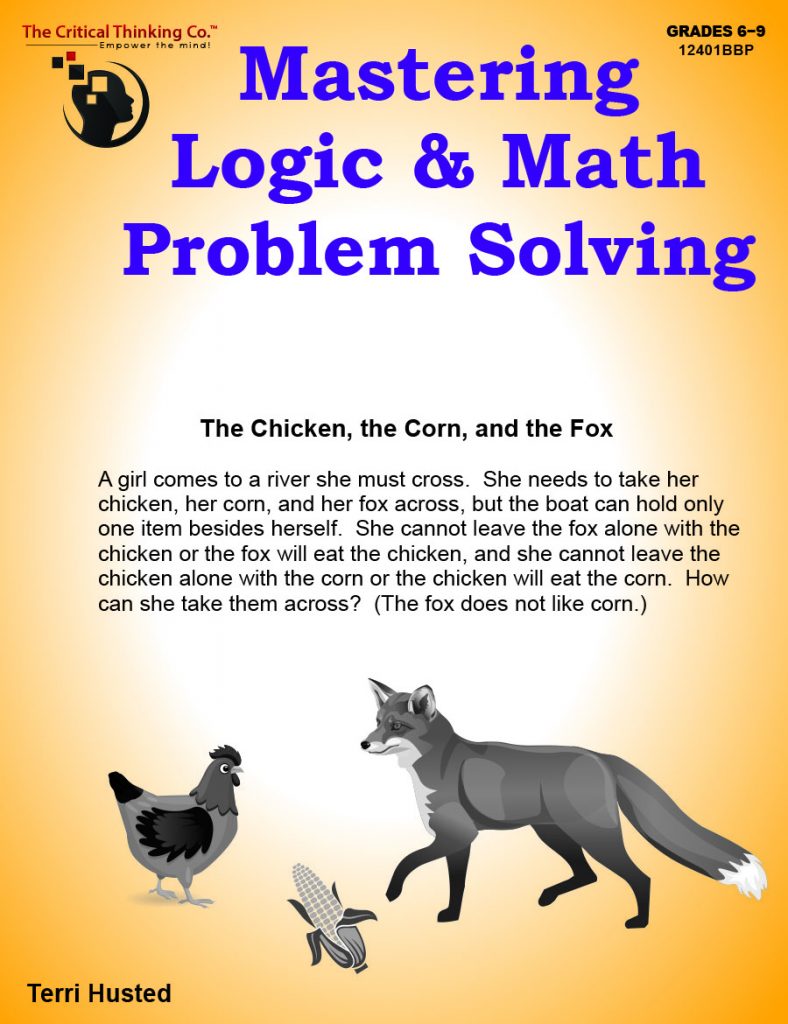
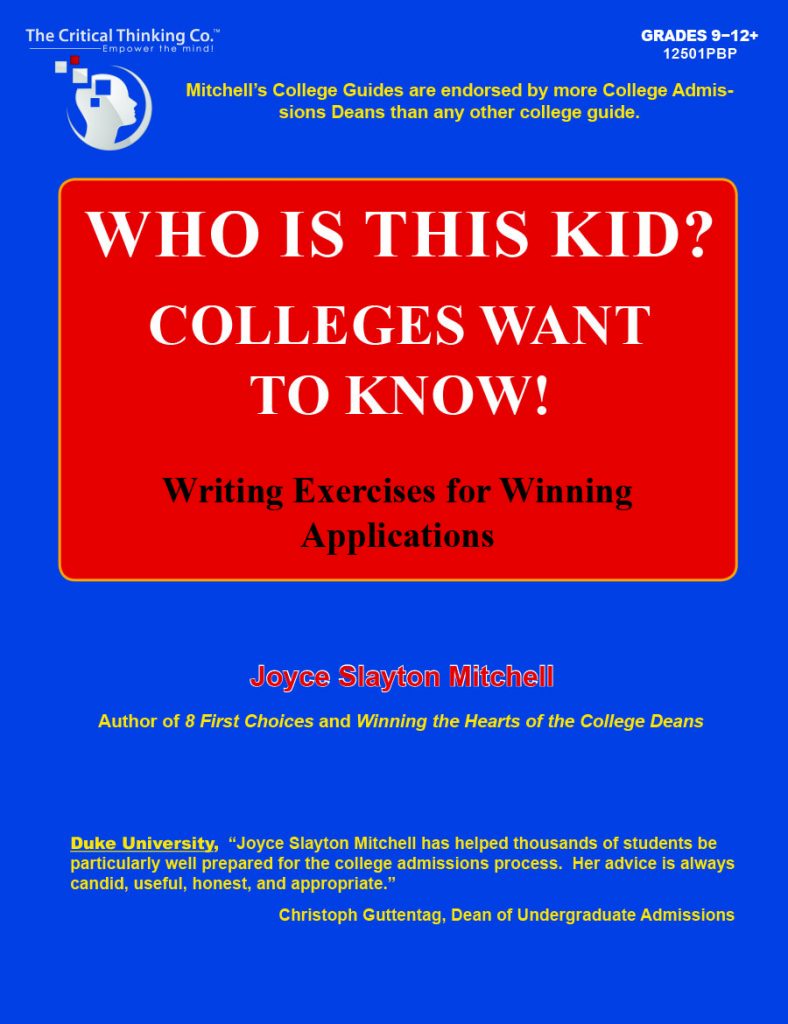
Mastering Logic & Math Problem Solving by The Critical Thinking Co.™ is just such a resource!


What Is The Critical Thinking Co.™ and Mastering Logic & Math Problem Solving?


The Critical Thinking Co.™ is a family-owned business that was established in 1958 and now offers 600 titles in reading, writing, math, science, and social studies which aim to help students achieve success in life through developing critical thinking skills without drill and memorization.
One of the many helpful resources they offer is 
Mastering Logic & Math Problem Solving by The Critical Thinking Co.™, which is a 180-page softcover workbook that is designed to help students in grades 6-9 sharpen critical thinking skill through solving problems using logic and math.

The book is also available as an e-book.


The bulk of the workbook contains problems across a variety of topics:
  • Multicultural Logic Problems
  • Fun With Classical Brain Teasers
  • Number Theory Problems
  • Problem Solving with Sets
  • Ration, Proportion, and Percent Problems
  • Algebra Word Problems
  • Geometry Word Problems
  • More Algebra Word Problems
  • Probability Word Problems
  • Topology Word Problems

The book also offers:

  • an introduction that explains what problem solving is and how to help student with it
  • ideas for using the book with individual students, in groups, and in a classroom

  • general problem-solving strategies
  • answers/solutions

  • a printable rubric and portfolio pages
  • bonus activities

It is a wonderful collection of puzzles and problems that offers flexibility to use with individuals, small groups, or an entire classroom in a sequential order or by type of problem.


How Did We Use Mastering Logic & Math Problem Solving?


My soon-to-be-10-year-old, just-13-year-old, and I used Mastering Logic & Math Problem Solving by The Critical Thinking Co.™  together as a group or during 1:1 times. Sometimes, my husband joined us, too.

We started with Multicultural Logic Problems and Classic Brain Teasers, some of which we were already familiar with, but most of which were challenging for my children (and, sometimes, husband and me!)

Generally, I challenged my youngest child, middle child, or both together with a problem and let them work at it until they got it or reached a frustration level that was escalating too much. Then I offered a hint or called a break.

When my children solved problems quickly, we sometimes did more than one in a row. Other times, a single problem took more than one session together to solve.


As we worked, at times, there was discussion, laughter, and positive creative thinking. Other times, to be honest, there was frustration and quarreling.

Such frustration and quarreling, of course, was challenging, but it was good, in a way, for it made me recognize how much more I need to work on virtues in our household and how much more I need to emphasize that "we can do hard things" and that "hard" does not equal "bad".

For, most certainly, as I used this resource, I recognized just how frustrated and ornery one of my children can get when presented with a problem that is not easily/quickly solved. I also recognized just how creative and outside-the-box that child's thinking could be - almost too much so in the case of this resource, since, in trying to come up with solutions to the problems, that child often tried to add elements to the clear storylines presented in the book that diverged a bit too far from the intent of the problems.

When that child did so, I ended up restating/reclarifying what I felt were clearly presented parameters and reigning the realm of possible solutions back into ones that exercised logic or math rather than far-fetched storytelling.

This did not always get met with the best of attitudes, but it was all a part of the learning, and I appreciated how this resource did not just do what it sets out to - offer a wide variety of problems to be solved using logic and math - but also highlighted some areas of character growth that we need to work on here.

What Did My Children and I Think?


One of my children said:


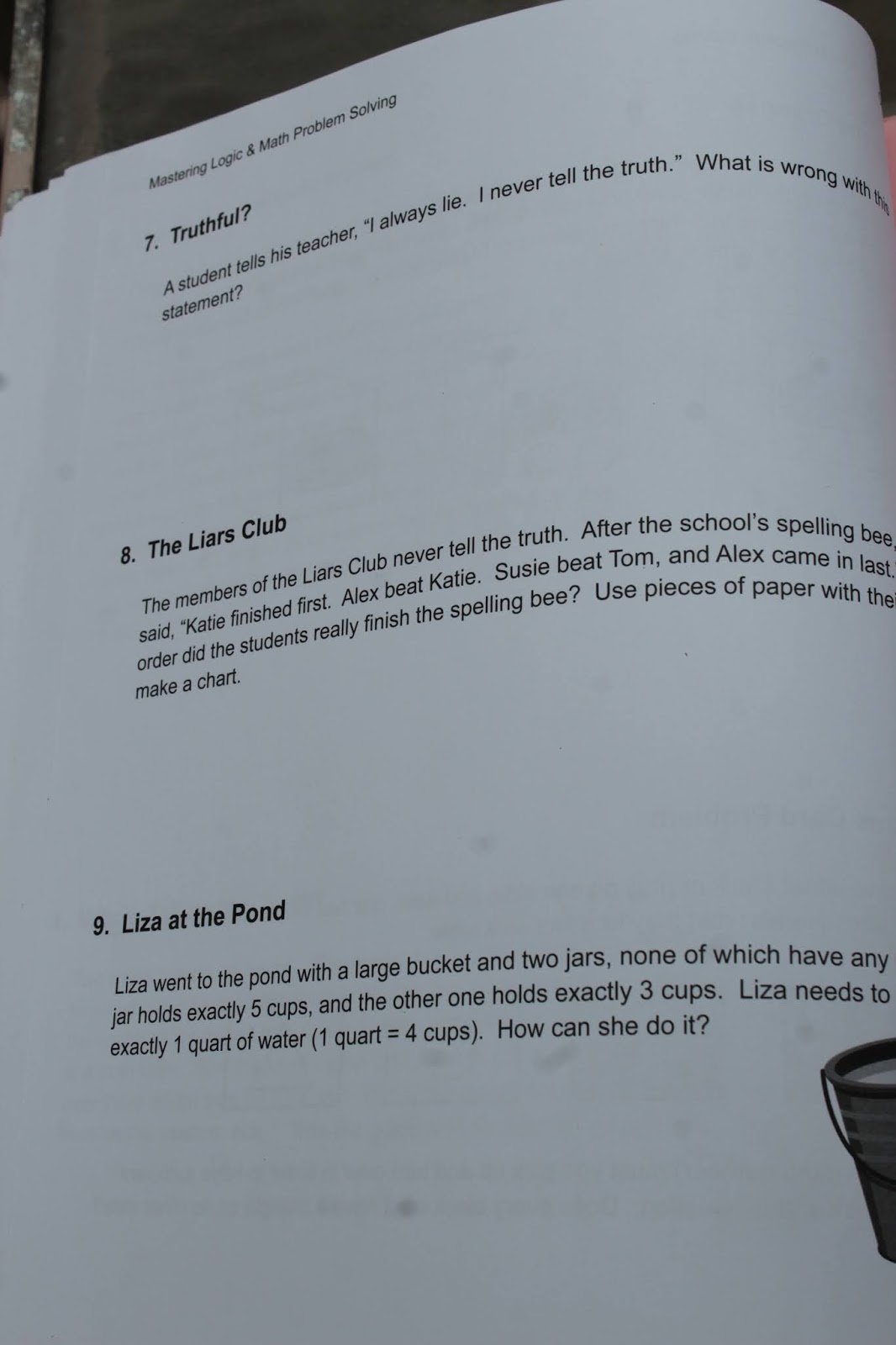
To solve the problems... we sketched out on paper, used implements, and actually did things, like the cup one.

In the future, I would like to use the book, with just myself or maybe one other person (my mom), not with other people in my family, because one of my siblings that I do it with gets frustrated and mean, and I prefer quiet when I work things out.

I would recommend this book to people who need help with logic. W
hen I did it with just my mom, I liked it.

My other child said:

The first time I used the book, it was a torturous time, because I could not figure the problem out. The next day, I had figured the problem out and challenged my dad to it. Then, we tried a few more problems. Sometimes, I hated it. Sometimes, I liked it. 

Personally, I liked the resource and would recommend it, because:

1. It offers a wide variety of problems to encourage critical thinking. The classical brain teasers, problem solving, algebra word problems, geometry word problems, age problems, probability word problems, topology fun word problems, and more in this resource encourage you to analyze, think aloud, pause, rethink, etc. until solutions are found.

2. It highlights skill areas to grow in. People can do hard things. They can disagree but still be kind. They can be confused and push through. They can use different methods to come up with similar solutions or similar methods to come up with different solutions. They can strategize, visualize, verbalize, and work together or alone... and they can realize that doing all this need nor bring the nasties out. This resource not only highlighted for me and mine problem solving skills we could work on, but also where we could grow in character and virtue.
3. It offers meaningful math. Although we have not gotten to the latter portions of the book, even in the first few chapters, practical applications of math and logical patterns were used. I have also looked at the later chapters and see how more traditional math applications play in. 

 
4. Flexibility is inherent in the resource. A generous copyright allow purchasers to reproduce the resource for a family or classroom use. Also, the workbook can be used individually, in groups, or in a classroom in order or cherry-picked to supplement other learning. 
5. Parents can use it with no prior experience. The Introduction Teacher Notes, Answer Key, and Appendix material all ensure that any parent can use this resource easily with their children. 
6. It focuses on skills our world needs. Few problems in life have cut and dry solutions and so an ability to analyze, think of all possibilities, and, then, use logic to come up with answers is important. This resource offers kids opportunities do do this.  
7. It is not busy. Pages within the resource are not overly busy and have plenty of white space, which is helpful for kids with ADHD, dyslexia, and sensory issues. (We face all of these things here.)

Obviously, then, even though one of my children did not always favor this resource, I found it had merit and would recommend it to others with middle school age children. (Just be prepared for some behavior bumps if your child is easily frustrated or going through some tweenrage times.)

Learn More

We have used and appreciated other resources from The Critical Thinking Co.™ and you can browse our other reviews from this vendor here.

You can also click through here to find links to 65 video, social media, and blog reviews from other Homeschool Review Crew families who have recently tried out:


And, of course, you can connect on social media:

Thursday, June 7, 2018

Learn Formal Logic with the Well Lauded Traditional Logic by Memoria Press {A Review}


{Some links which follow may be affiliate ones.}

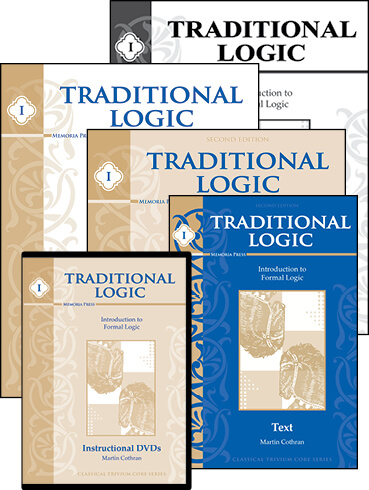
 For years now, I have read nothing but good things about Logic by Memoria Press, so I was delighted to be offered a chance to review the Traditional Logic I Complete Set this spring with my 12 year old.


What is Traditional Logic?


The Traditional Logic I Complete Set is comprised of a text, workbook, teacher key, quizzes and test book, and 2 DVD video course. The DVD's basically say the same thing as the book, we have found, and do so in a rather dry way with a somewhat dated quality.  However, they videos can still be useful for driving points home.

The text, workbook, and quizzes, we find, are very traditional and "schooly" in presentation, but also quite solid!  In them, students learn about:

  • the Christian theory of knowledge
  • four kinds of logical statements
  • four ways propositions can be opposed
  • three ways propositions an be equivalent
  • seven rules of the validity of syllogisms

And, don't worry about all those words like "proposition" and "syllogism".  The material presents and defines each clearly!

Thus, the program is comprehensive, and, if it is used by an at-level student as intended, it is also easy-to-use for clear independent learning.


How We Used Traditional Logic and What We Thought


Since my son is not yet at the seventh grade level and Traditional Logic I is geared for students in grades 7-12, I knew the material might be a little beyond his solo capabilities.  So, I talked to my boy about whether he wanted to tackle the course and how best we might approach it.

Because my oldest son loves to argue and is interested in strengthening his ability to debate with and persuade others, he did want to try 
Traditional Logic I.  (He joked that when he'd finished the course, he would be able to make sound arguments a to why I should allow him endless screen time. LOL!)

Further, since our family is planning to join a local forensics club in the fall, both my son and I agreed that building a foundation in formal logic might help us succeed, bolstering my ability as one of the club coaches and my son's skills as a debate and speech team member.  (We just love when review opportunities and fall plans dovetail so nicely!)


Thus, the decision to use the course made, my son and I had one more choice to consider: Would my son use 
Traditional Logic I as designed - independently - or would we try a different approach?

After watching the following video sample lesson and viewing samples of the
99-page text, 92 page workbook, 114 Teacher Key, and 33 page Quizzes and Tests booklet on the Memoria Press website, we opted for the latter.


Traditional Logic Sample Lesson

We knew my oldest son would have a better chance of focusing and engaging with the excellent content of Traditional Logic if we made time to work on the curriculum together, inviting a friend who has an older version of the program to join us. (For having friends join in on learning always makes things more fun, right?)

Thus, we asked a friend whose family uses the Classical Education model to join us as a study buddy, and, since he is interested in logic and has an older version of
Traditional Logic (which presents the same thing a the new edition text and workbook do, but all in one worktext), our friend said, "Yes!"


So began our
Traditional Logic studies.

Basically, each week, our friend comes by our home and, the boys and I (re)read and discuss the lesson materials together.  Then, sometimes, I have the boys complete workbook pages together or take provided quizzes, while, at other times, I use the questions in the workbook to do game-show style quizzes with the boys.  Doing so, helps keep the tedium of typical text-and-workbook learning away for my son, while keeping the well lauded material accessible.

So far, we have completed between 1/4 and 1/5 of the course using this approach and are all learning as we go - even me!

While we increase our understanding of logic, we share a few laughs, and - okay - some screwed up brow looks, too.  For, as clearly and concisely as formal logic is explained in
Traditional Logic, the learning curve of logic-specific vocabulary and concepts is still significant.

Our friend said, "It is hard, but I like it!"

My son said:


The book is a little confusing.  There are words like simple apprehension, syllogism, and material, living, sentient, rational substance on the Porphyrian Tree, which just means man.  The words are explained, but it hard to remember all the stuff.

I want to keep using this though.  It's hard, but I am learning stuff that might help me when I argue with people and when I join CIA (a public speaking and debate team).

I've been using Logic with my friend and my mom.  It's been going pretty well.  We usually read and talk and, then, do Quiz Time on paper or orally, which makes it fun.

To be honest, Logic is not the most exciting thing I have ever studied and I would not want to do it on my own, but I want to keep studying it with my friend.  I could not otherwise, because I would not focus well.
Oh, and there is one unsound argument in the book.  An example says, "All books are boring." That is not true at all. (wink) "

Obviously, my oldest son and his friend are learning and have more learning yet to do!  So, we have already decided that we will continue to have study buddy logic lessons using Traditional Logic so that the "more learning" will continue to happen.

We're all pleased with
Traditional Logic and recommend it to others as a well-written program.


Learn More


Ninety Homeschool Review Crew families reviewed either:

You can find all the reviews by clicking through.

Read the reviews.

You can connect on Social Media, too at:


Crew Disclaimer

LinkWithin

Related Posts with Thumbnails