Showing posts with label Literacy/Language. Show all posts

Thursday, March 18, 2021

My New Favorite Way to Use Learning Cards

{This post was initially shared in 2014 at Upsidedown Homeschooling Blog where I was a contributor. That blog can now only be found using the Wayback Machine, so I am resharing the post here for easier access.}


Between homeschooling and tutoring, I make and use a lot of learning cards! Vocabulary cards, spelling cards, math cards, Alerting Activity ABC Cards, 3-Part Movement Cards, Saint Symbol Cards, Life of Mary Sequencing Cards, 3-Part Bob Book Cards, M and N Discrimination Cards, Act Like and Elephant Cards… You name it. Week in and week out, my children, my tutoring students and I use all types of cards to tackle new learning objectives and to review old ones.

Almost any learning objective becomes hands-on and interactive when learning cards are involved.


Of course, being so card crazy, we have developed a regular repertoire o10+ games and activities for using learning cards, and, we love adding to it!

Even when little ones are too young to play with siblings, they can with your help. My youngest likes to place markers when I play with my oldest.


Over the past two weeks, we did just that!

We revamped the simple strategy game of Tic Tac Toe to be a learning card game

Playing is easy, effective and engaging.

Winning rounds happens quickly, which keeps the game pace moving along and motivates children to keep learning and reviewing.


To playyou need nine or more learning cards and two piles of distinct markers. (We use Bingo chips, but coins of two different colors or any distinctly colored or shaped small objects would work.)  Set your cards up in a 3 x 3 grid.  Then, you are good to go.

Playing Learning Card Tic Tac Toe

  1. Have Player One start the game by selecting a card. If Player One can read the card, spell the word on it*, solve the problem on it, state a key fact related to it, make a sentence with the word written on it, name the part of speech of it, answer the question posed on it or do whatever the learning objective of the card is, Player One may put a marker on it.
  2. Player Two then chooses a card and does likewise.  Play continues until a player has three markers in a row or until all the cards are covered.
  3. At that point, players shuffle the places of cards within the grid, or trade new cards into the grid, and play another round.
  4. Whoever wins three out of five rounds is the winner.

It’s that simple!

A Note on Playing with Spelling Words

Flip the cards over to use Tic Tac Toe as a Spelling game.


To use Tic Tac Toe to practice spelling words, place all cards face down.  Have Player One hand a card to Player Two, who reads it to Player One.  Player One then must spell the word correctly in order to place a marker down.

Learning Card Tic Tac Toe is adaptable, too!

Just like learning cards themselves are, so is Learning Card Tic Tac Toe, and that is one of the reasons I love it.  I am constantly coming up with new variations and uses for this easy card game:

  • Learning Card Tic Tac Toe can become Four-in-a-Row or even Five in a Row to cover more material in one round.
  • For students who need more movement in order to meet sensory needs, the game can be super-sized with full-sized sheets of paper as cards and stuffed toys as markers. 
  •  To make this game equally valuable for multi-disciplinary review as it is for focusing on one specific learning objective, cards used can target a single subject or a mixture of subjects and skills – English Language Arts, Math, Science, Character and Virtues, Social Studies, just about any topic...
  • Students who are reluctant to practice handwriting or spelling can be encouraged with the “carrot” of making game cards.
  • Almost any age can play.


In fact all three of my children, plus two of my tutoring students, have played round after round of this game with me in the past couple weeks.

My three year old used Learning Card Tic Tac Toe to practice basic phonic sounds; my six and eight year olds mastered spelling, vocabulary and reading words with it; my high school tutoring student learned and reviewed SAT materials with it; and my fourth grade tutoring student practiced parts of speech, sentence building and target reading words with it.  In doing so, all of us found Learning Card Tic Tac Toe quick, easy and effective at providing lots of learning through enjoyable repetition.

Learning Card Tic Tac Toe is a keeper!

So, what are you waiting for? Grab some cards and markers and go play a quick game with your learner today.

Monday, March 8, 2021

Love Gameschooling? Check Out the Reading Game {Review and Giveaway Link}

 DisclosureI received this product free through the Homeschool Review Crew.


As a home educator and tutor, I am always interested in quality resources to enliven lessons and strengthen reading skills. Thus, I was excited about the opportunity to review The Reading Game, 2nd Edition from Allsaid & Dunn, LLC


The award-winning 
The Reading Game, 2nd Edition was created by Kenneth Hodkinson - known for his time-tested Wordly Wise program - and works to help children learn 180 sight words and begin reading with them using a systematic, game-style approach.


The 180 words include words from the Dolch Word List for Pre-K through 1st grade and from the Fry List (the100 most commonly used English words) and are first presented to the child through color-coded, leveled Memory-Match game cards, and, then, included on captioned picture cards, and in specifically written illustrated readers.

How Do You Play The Reading Game?


You - or any parent, teacher, tutor, or older child that can read - plays Memory Match with your child using the first set of red cards (10 cards of five matching words). As you play, you read the words aloud so your child can both see and hear the words.


Then, once your child has mastered this first set of cards - demonstrating an ability to read them during the game without hesitation, the next set of ten cards is used for playing Memory Match.

Once the second set of cards is mastered, you give your child the red picture card labeled 1-2 and your child tries to read its caption. (The card contains words that have been learned.)

If your child struggles with the picture card, you celebrate whatever your child had success with, and, then, play more rounds of Memory with the first sets of cards to reinforce with your child each of the 20 words previously presented.


If your child succeeds with reading the captioned card, you can move onto playing Memory Match with red word card sets 3 and 4. Then, try picture card 3-4.

After that, continue on through red card sets 5 and 6, reads the last red picture card, and, move onto reading the illustrated red book called, Skunk.

Of course, do not do all of this in one sitting. Simply play at your child's pace, picking up each time where you left off last time.


Following this pattern through the red, orange, yellow, green, blue, and purple sets of playing cards and corresponding picture cards and books, your child will learn 180 words and read those words in sentences on picture cards and in stories in the books.

What a low stress, fun, and systematic approach to early reading for typical learners!
The game can also be helpful for children with dyslexia and can tie into a phonics-based approach. (To see example phonics patterns found in the book, you can download the Rules Booklet online - which also comes in print form in your The Reading Game box.)


Is your child ready for The Reading Game?


If your child is a typical learner who is familiar with letters and shows an interest in storytime by pretending to read or wanting words pointed out while reading, then your child is ready to try The Reading Game.

If your child is a struggling reader who shows readiness as above but tends to need a more explicitly phonics-based approach, then you may wish to use the game slowly in addition to more intensive phonics-based instruction, for as you can see from the word list of the first book, the program jumps quickly from V-C and C-V-C word patterns to other patterns, plus sight words.


How Did I Use The Reading Game?


I have a 10 year old who is a typical learner and was curious about the game when we first received it, so I adapted the game material use for he and I to use during a couple 1:1 learning times. He moved quickly through the game materials, but enjoyed his foray with them, saying:

This game is under my level, so we adapted it. My mom had me spell each word and make sentences with the word cards. She also had me read the picture cards and stories fluently with expression. I liked reviewing with this game and think it would help younger kids.


We sometimes still take the word cards out and pull random ones to create silly sentences and stories.

My 13-year old is a struggling speller who just began to blossom with reading, so I also adapted the game materials for her use similarly. She said:


I like how this program has cards so if you wish, you can play games with it. I also like how it has the picture cards and books. I think that it would be nice for younger children to be able to play.

She also noted when reading the books quickly with me for fluency and expression that "some words have a dot in the middle" and asked why. I had her guess: Students just learning to read sometimes get thrown by compound words, so the makers of the material must have decided to divide the words for easier reading.


I also used the game with two of my tutoring students, ages 7 and 9, that have dyslexia. Both of these students were thrilled to see me pull out The Reading Game and, immediately, began laughing and smiling as we played 1:1 Memory Match with it as directed in the game instructions, with the small addition of me suggesting that whoever finds a pair must make a complete sentence using the word before keeping the pair and going again.

One of the girls definitely needed me to explain/hint at some of the phonics needed to read some of the sight words, so, for example, for the word "they", I pointed to the t-h and said, "Oh, t-h says /th/ and e-y here says 'ay'. So, that's they." Or, "Mmmm, w-h says /wh/ and the a here says /ah/, so this is wh-a-t." Both girls, though, progressed and, so far, have been able to read red cards 1-2, 3-4, and 5-6 with some help and, by their requests, tackled reading Book 1, too.

Further, both girls LOVED the back-and-white photos on the cards - guessing at what the captions would say before they read them - and equally enjoyed the illustrations in the book.


I have also pulled sentences from the picture cards and book for the girls to use for copywork and dictation sentences.

The girls quite enjoy The Reading Game and, even though some of the words presented in it are truly challenging for them, happily persist, learning as we go. One of them saw the game on my table the other day and exclaimed, "Oooo, I love that game. Are we going to play it?" (Of course, we did.) The other always comments on the cute animal photos and illustrations.


Would I Recommend The Reading Game?

If you are a home educator, teacher, or tutor, I would definitely recommend this game as a well-made, simple way to teach or reinforce reading, pending on if you are dealing with typical learners or those with challenges.

I always appreciate games that can be used again and again and are not parent/educator/tutor intensive. This is definitely one of them.

The materials are well made, the box is sturdy, directions for play/use are clear and simple, and success has already been had with my students.

Although I was not able to play the game on a daily basis with right-level learner yet, I can see how playing a few minutes a day could get a child from playing with word cards to reading within a week or so. For, with my tutoring students, we progressed from cards to the first within just a few sessions.

Further, six staged sets of memory games, picture cards, and storybooks can be revisited with older/more skilled learners, with random cards being pulled for sentence and story writing challenges, the picture cards being used as visual prompts for independent writing.


Plus, for those that need data-driven/reportable proof of learning, you can find pre- and post-assessments and class recording sheets online. These can also be printed - or the back of the book word lists referenced - for a quick look at which words have been presented.

Learn More


If you are the type that likes visual examples of things, find video demonstrations of The Reading Game online

If you would like to see how other beginning or struggling readers have been enjoying some gameschooling and having chance to build
 confidence in reading through The Reading Game, click on over to the Homeschool Review Crew to find video, social media, and blog review from 25 families.


At the Homeschool Review Crew page, you can also enter to win one of 5 The Reading Game boxed sets that are being given away!

Finally, you can find The Reading Game on social media at


Friday, July 10, 2020

Immerse Kids in Survival Skills & Adventure with a Classic Book & Excellent eGuide {A Progeny Press Review}

{Some links which follow may be affiliate ones.}

Disclaimer: I received a FREE copy of this product through the HOMESCHOOL REVIEW CREW in exchange for my honest review. I was not required to write a positive review nor compensated in any other way.

If you are a book study guide lover or just want to cherry pick ideas from an excellent eGuide as your lower elementary through high school students read classic stories, I encourage you to ch
eck out Progeny Press, a popular Christian vendor of study guides for literature that makes it their mission:

"To teach our children to think clearly, to understand literature, and to rely on the scripture for truth and values, and enjoy themselves while they do it!"

We're recently been checking out their 
My Side of the Mountain Study Guide by Carol Clark - an eGuide meant for students in grades 5-8 which can be completed in 8-10 weeks - and I can honestly attest that it is a thorough, varied guide chock full of ideas for learning, review, and discovery.


The guide is written to be used in its entirety for independent unit-based engagement and study. However, it is also designed and organized in such a way that parents and/or students can easily scan it to pull an idea here and an activity there for more flexible enrichment or targeted study.

The Study Guide Comes in a Handy Digital Format


When you order your
 My Side of the Mountain Study Guide, or any eGuide from Progeny Press, you get instant access to a downloadable study guide and separate answer key.

The interactive PDF format of the eGuide works on our Windows laptop, and, I hear, works on Macs, too.

Once  opened with the FREE Adobe Readerprogram, the eGuide allows students (or parents who have students narrate to them) to enter answers directly on the computer and save their progress as they work. (I believe with an a
lternative app the fillable fields of the interactive guide can work on mobile devices and tablets, too.)


This interactive PDF format is convenient! It means that do not have to print any of the guide if you'd rather just have your kids work onscreen. Or, you can easily print just what you need or want - the whole guide at once, a single lesson or page as students need it, or multiple copies of pages for your family's use.
All the convenience and learning. None of the paper and ink waste. Love it!


What I love even more is that the answer key can also be easily printed or accessed onscreen which can help parents/teachers to check student work without having to read and answer questions on their own.

Plus, there is free technical support offered should you encounter any difficulties when using the digital guide and answer key. This, though, I doubt would be needed by anyone, since the eGuide and Answer Key are so easy to use. Seriously, everything worked A-okay here with this study and one we did previously.


The My Side of the Mountain Study Guide Is
One Complete Study Guide!

When I said the My Side of the Mountain Study Guide is "a thorough, varied guide chock full of ideas for learning, review, and discovery" earlier I meant it 100%.

The eGuide offers:

  • author information
  • story synopsis and background
  • pre-reading activities
  • vocabulary study
  • Bible study
  • critical thinking
  • comprehension questions
  • post-reading activities
  • writing prompts
  • resource listings
  • literary device activities
... and more. In doing so, it really gets students engaged and learning as they immerse themselves in reading classic literature and thinking about survival skills, adventure, and faith.

Included in the 63-page interactive eGuide are:

  • Literary Techniques to include adjective use, alliteration, allusion, anthropomorphism, assonance, comic relief, coming of age (obildungsroman, which was a new word for me), conflict, dramatic structure, facts vs. opinion, flashback, full-circle ending, irony, metaphors and extended metaphors, mood, onomatopoeia, oxymoron, paraphrasing, point of view, recapping, similes, suspension of disbelief, verb use, and more.
  • Moral Lessons and Character Values about such things as acceptance, being alone, bullying, fear and worry, daily life, honoring parents, hospitality, lying, patience, provision, superstitions, and understanding God.
  • Activities and Writing Assignments to include at and design, cooking, creative writing, a crossword puzzle, drama projects, essay choices, field trips, health & nutrition, journalism, journal writing, letter writing, legends, maple syrup, math connections, parody, plant research, poster projects, research writing, rock climbing, safety chats, science connections, wooden toys, and more.
  • Suggestion for Further Reading, which include more materials by the same author and books that tie in with or are similar to My Side of the Mountain.

You can find samples of the eGuide at My Side of the Mountain Study Guide.


Why We Chose the My Side of the Mountain Study eGuide and What We Thought


A few years ago, I got it in my head that I wanted to use the well-loved classic, 
My Side of the Mountain by Jean Craighead George, to start an outdoor book-and-adventure club with friends. However, life kept happening and the club never came to be. Still, I wanted to read the book with my younger two children before they age out of it. Thus, when an opportunity came up to review the My Side of the Mountain Study Guide by Progeny Press, I took it as a prompt to break the book out for some relaxed Mom-and-us style learning.

Key word there is relaxed! Because we were using this thorough resource during the bridge from spring into summer when we tend to wind down more formal studies, I opted to use the eGuide in a non-traditional way with my children.

Basically, we read my old, weathered copy of 
My Side of the Mountain together as we swung on an outdoor swing together, laid on a blanket in the sun, or snuggled before bedtime. Then, every few chapters, I would break out the study guide with the kids and use it for prompts for faith-and virtues-chats, oral quizzes about vocabulary, literary devices, etc.

I also browsed it for ideas for enrichment for practical life and survival skills among other things.


This led to nature walks and explorations...

 ...salads with wild edibles...


 ... some strawberry picking...


... foraging for clay and trying to make clay ovens...


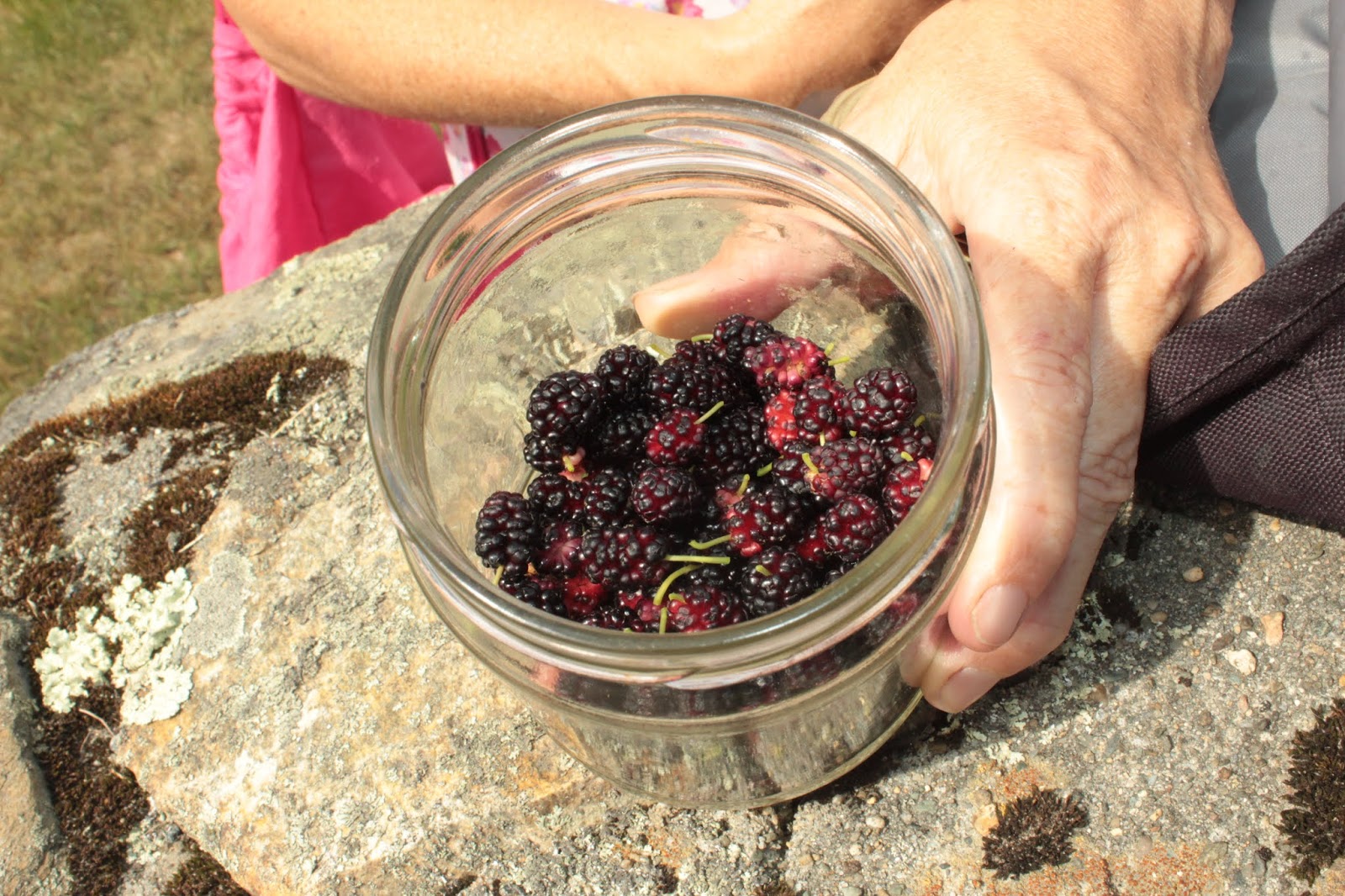
... picking mulberries...


...building fires...


... picking black raspberries...


... making chocolate covered strawberry deliciousness...


... foraging for and whittling walking sticks...


... and more!

There has just been so much inspiration for hands-on, outdoor, fun and learning!

Or course, there has been indoor learning, too.

Sometimes, I read my children questions from the guide and had them answer orally while I took quick notes on their answers in the fillable fields so I would remember which questions we'd already covered.


One time, when we did this, I set a timer, gave the kids game chips as points for every correct answer and, let the child who had the most chips at the end of the game choose if we would have a snuggly read together or watch one of the movies we'd found in the resource section together before bed.


The winner chose the latter, so we found free access to one of the recommended movies on Youtube. Then, as we began watching it, my other child came in, and the movie engaged us all.

After watching, the movie we dovetailed into natural conversations that night and the next day during which the kids compared parts of the movie to My Side of the Mountain (especially the survival aspects and the ideas of running away and coming of age), chatted about survival skills, and discussed some cultural and faith points that  the movie and our eGuide-enriched study of My Side of the Mountain brought to the fore.


I was delighted with all this and grateful for the eGuide, since I had never heard of the movie before and do not think we would have happened upon it without the eGuide's suggestion.

I also do not think our entire experience with My Side of the Mountain book would have been as rich as it has been without the eGuide. I am grateful that the eGuide allowed us to embrace natural, relaxed learning, to find some great extension activities/resources, and to review some key literary devices, vocabulary, and more.

The My Side of the Mountain Study Guide certainly is a blessing that has all the typical vocabulary exercises, comprehension questions, writing prompts and literature device studies that you'd expect in a literary unit study which can be used traditionally or in a more relaxed way. It also focuses on connections between the classic book of one boy's adventure and coming of age and Scripture and offers a wide array of optional activities and further resources to engage students in wonderful exploration and learning.

I most certainly recommend the My Side of the Mountain Study Guide to others with middle school age learners whether they like independent literary studies or relaxed, hands-on family learning like us.


Learn More

Progeny Press gets a two thumbs up from me both for this My Side of the Mountain Study Guide and for an earlier Progeny Press review of their Give Me Liberty E-Guide due to how well it is written and designed and how family-friendly they are with wonderful extension ideas and permissions that allow you to use the eGuides with multiple children within your family.

Progeny Press earns similar ratings with other families, I hear, for its wide variety of E-Guides geared toward elementary schoolers, middle schoolers, and high schoolers.  You can read about some of the other titles offered among the 64 Progeny Press social media, blog, and video reviews that Review Crew families have shared.


You can find Progeny Press on:


Tuesday, August 14, 2018

Enjoy a Paddington Bear Unit Study

We are big picture book lovers in our home, so I was curious to check out one of the Picture Book Explorer Packs from Branch Out WorldPaddington Bear when it came up for review.


Made for Homeschoolers by a Homeschooler


This literature-based unit study is aimed at children ages 5-10, but appropriate for a wider range, too.  It comes as a downlaodable pdf, so you can use it with all your children at once - printing copies of maps, mini-books, and more for each child to complete - or with one child now and another child later.   

Obviously, the study's creator Helen Royston gets that homeschool families appreciate the freedom of being able to ethically print as many copies of the study materials as necessary for family use.  That may be because Helen is a 25+ year homeschool veteran herself.

Like all Picture Book Explorer Packs, the Paddington Bear one has a link to the United Kingdom and provides fun and learning for families.

What Will You Find Yourself Doing During This Unit Study?


Used as designed, you read the picture book Paddington by Michael Bond (ISBN 978-0007236336) over five consecutive days and choose accompanying activities from the study to complete.  These activities are grouped, daily, by subject area:

  • Day 1 – Exploring the Setting:  You can learn about England and Peru, do mapwork, create timelines, make a mini-book about the pushes and pulls of migration, and more.
  • Day 2 – Exploring the Words:  You can read about the author of Paddington Bear Michael Bond, chat about themes, encourage narration, make a vocabulary pocket, spotlight subject-verb agreement, focus on characterization, and adapt stories for different audiences.


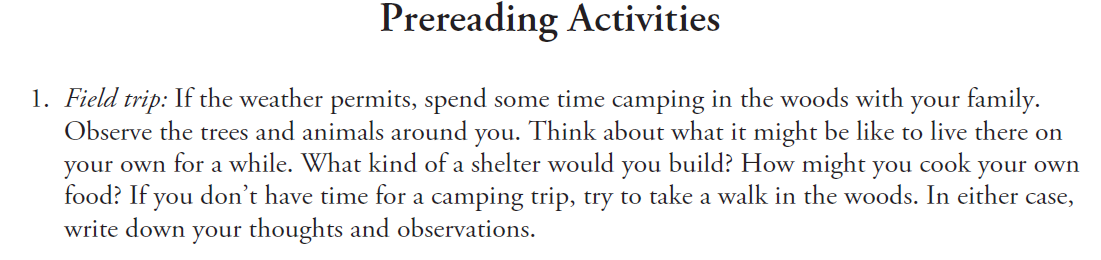
  • Day 3 – Exploring the Pictures:  You can learn about the illustrator R.W. Alley, do a picture study of one of the book's illustrations, chat about and/or make a mini-book of architectural features, learn about principles of design and try your hand at overlapping and creating emphasis through the use of color, leading lines, contrast, and position - studying an illustration from the book and, then, creating your own artwork.
  • Day 4 – Exploring Science: You can learn about spectacled bears and fill out a fact sheet if you like, learn about shaving cream, create edible and nob-edible foam, explore steam and do nature study in your garden.

  • Day 5 – Exploring Math, Crafts and More: You can explore parallel and perpendicular lines (in connection with train tracks), play around with numbers spotted in the book, explore spatial awareness with packing (in reality or with a paper template), make shaving foam art, create a cultural craft, cook up recipes, and more.
Truly, if unit studies are your family's favored style of learning, this one is excellently written - providing information and ideas that you might not readily find elsewhere and helping your children make connections while also making memories.

There are over 30 activities described in the book and pages and pages of printables including timelines, mini-books, maps, flags, and notebooking pages.  There are also handy lists of needed supplies and book and film go-alongs. It is a well-written study.

It is also one that can be used flexibly!


How Did We Use This Study So Far?


My children and our lifestyle do not currently accommodate sitting down and reading the same picture book day after day for five days.  Nor are we able to spend time this summer diving into loads of Paddington-inspired activities.

What we have been able to do is cuddle on the couch with a picture book in hand and a unit study nearby on a laptop creen during a few particularly rainy days when other plans have been cancelled. 

As such, we have enjoyed reading together, then, using portions of the unit study pdf on-screen to help guide chatter about the book's author, the illustrator, certain pictures, art and design techniques, and more.

We have also pulled up the included maps and named South America and the United Kingdom, found London and Peru, etc.  (Because we are in a constant battle against paper piles here and simply do not want to print more things that will increase their depth, we chose to do many of the activities in this study through discussion and pointing onscreen rather than through printing, coloring, cutting, and writing.)

We have opted to forgo some of the messier or more time-consuming experiments and recipes included in the study for the time being, but have read through them and are looking forward to trying some out during colder, less busy seasons.

However, because we do like hands-on things, we have not delayed all the fun!


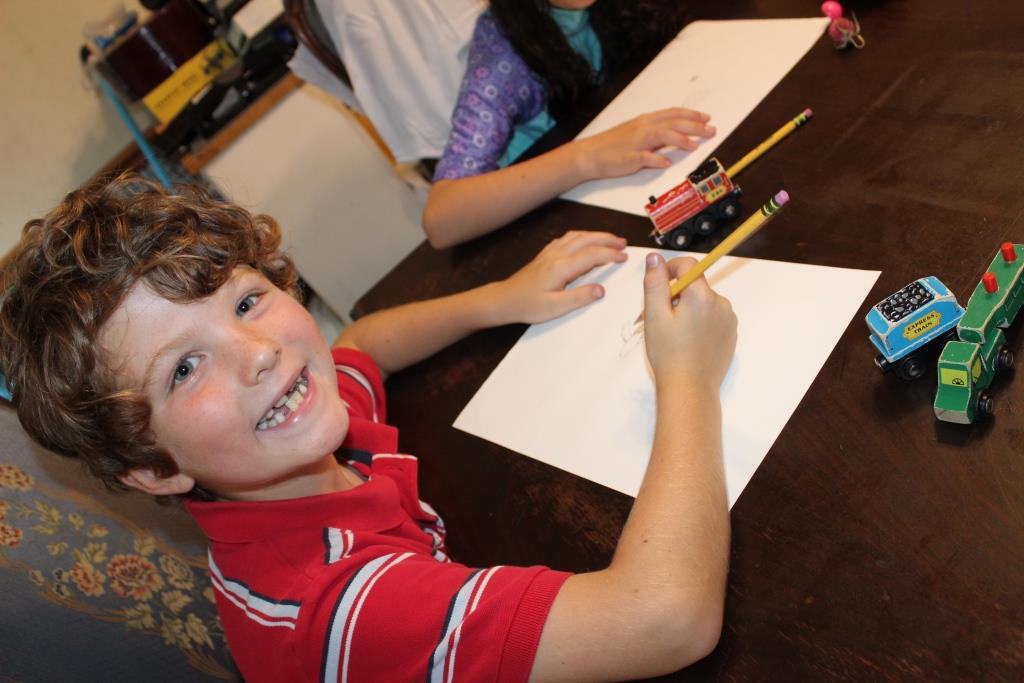
Indeed, we opted for some hands-on art and math -which has been enjoyable (and easier to clean up then science and cooking at this juncture in life!)


We have also borrowed a stack of other Paddington books from our local library to use for free reading and 1:1 reading times and have been happy to revisit the character that we spent time with previously when my oldest was younger.


Without question, as we have revisited Paddigton using our Branch Out WorldPaddington Bear, we have made new connections

We have also been able to apply ideas from the study - such as those we practiced on layering and emphasis - in making cards for a sick friend.


This was a fun endeavor that made the study more valuable to us.


For, in our homeschool endeavors, even more valuable than a lesson learned in connection to a piece of literature, is a concept or skill we can incorporate into daily life.


Inspired by the conversations we had during unit study activities about themes in the book - such a being kind to others...


And, knowing a dear little baby we know is in the hospital with a very serious condition, and we'd be blessed to see his siblings, we decided to step away from just drawing fruits as suggested in the unit study, and, to apply art and design ideas to creating cards with well wishes instead...


I just love that things discussed and focused on with the study transferred to life so easily.

Helen Royston did a wonderful job researching and presenting information, activities, and ideas for this study.  
I truly appreciate how this homeschool resource could provide a full week's worth of homeschool studies or can be used flexibly in the time life allows for it.

Of course, is you are a picture book and unit study lover with elementary-aged children 
Branch Out WorldPaddington Bear  is ideal. 

Learn More

Some of the other Homeschool Review Crew families dove into all of the activities in this unit study 100% and have wonderful photos and thoughts to share.  Be sure to click through to find their reviews.

LinkWithin

Related Posts with Thumbnails