Showing posts with label Art Appreciation. Show all posts

Sunday, November 14, 2021

Combine Picture Study, Paragraph Writing and Saint Stories for St. Clement's Feast Day


November 23rd is the Optional Memorial of St. Clement 1, Pope and Martyr. It can also be a wonderful day for coming together as a family for art appreciation, writing, and saint stories.

We did just that last year.

St. Clement Picture Study and Art History /Appreciation


I gathered my children together and presented them with these two images:


I asked them to
study the images for a full minute without speaking, and, then, hid the images and asked each to share some recalled details.

Then, I showed the images again and asked my children to notice any similarities and differences in them, which, of course, had them noting that the main figure in both paintings is similar.

This led to me explaining that both paintings were created by the same artist - Bernardino Fungai, an Italian painter.

I, then, asked my children if they could guess when the artist lived based on the style of the painting.

We noted that the painting had rather flat figures, lacked naturalistic depth and volume, but had some semblance of a realistic nature and a definite background (rather than, say, gold leaf).

With this in mind, we determined the paintings must have been done after the Medieval art period - when figures were painted quite flat and stiff without much background - and before or just entering into the Renaissance period, when human figures were painted with realism and backgrounds were highly detailed. Thus, the painting must be from the Gothic era, bordering on the Renaissance. (
The painter lived 1460- c.1516.)

I, then, asked my children what purpose they thought they painter had had in creating the paintings.

We decided it was to tell a story.

I asked if anyone could think of another word for telling stories and we got to the word narrations.

Types of Paragraphs Mini-Lesson


I bridged to the idea that storytelling, or narration, is also done with writing, of course, and that one type of paragraph is a narrative paragraph - or one that tells about an event or series of events, usually in chronological order.

I, then, asked the children if they could recall the other three main types of paragraphs:
  • descriptivedescribes a person, an object, or a scene in detail, often using many sensory detail
  • expository - often lists facts, gives directions, or explains ideas; sometimes defines terms, makes comparisons, and/or shows cause and effect and typically uses logical order
  • persuasive - shares an opinion about a particular subject and tries to convince readers to agree with the opinions and to take action; often uses order of importance
We, then, discussed that just as painters rarely arbitrarily select the figures, colors, and more for their artwork, writers often select types of paragraphs with specific purposes in mind.

If writers seek to entertain readers or express themselves, they typically use narration or description.

If they seek to inform, they often use exposition - and sometimes narration.

If they wish to influence people, they use persuasion.

Thus, several paragraphs written about the same subject might be very different, depending on why a writer wrote them.

With this in mind, we chatted about other things we know about paragraphs, including going over the fact that we divide a larger body of writing into paragraphs to give a readers’ eyes a rest and to indicate switches to new main ideas.

We also talked about starting a new paragraph when:
  • expressing a new or different main idea
  • explaining another part of your subject or step in a process
  • providing another kind of support for your opinion 
  • changing the time or location
  • changing speakers

Writing Challenge

All that discussed, I set a timer and challenged each of us to choose ONE type of paragraph and to write something inspired by the paintings in paragraph form.

After that, we shared our paragraph's and guessed what type of writing - narrative, descriptive, expository, or persuasive - each of us was going for. (We had all chosen narrative!)

I then revealed the names of the paintings: St. Clement Striking the Rock and Martyrdom of St. Clement and asked if anyone could recall anything about St. Clement.

St. Clement Study

{Some links which follow may be affiliate links.}

Our own stories shared, I then read the St. Clement story from Once Upon a Time Saints, which we chatted about briefly.

Finally, as a sort of invitation to creativity, I showed my children this St. Clement video from Youtube:


My hope was that the video might inspire my children to learning more about this saint and other saints through questioning and/or perhaps decide to make some videos/film shorts inspired by this one.

That did not happen that day, but the seeds were planted for another...

And the creative writing that came out of the day was entertaining enough to share - which I will do in a moment.

First, though, I would just like to say that the paintings, mini-lesson, writing, and reading became a worthwhile cross-ages, cross-curricula study, and I pray that by sharing about it here, you are inspired to enjoy art, writing, and the saints with your own children.

Stories to Share


In the first narrative piece, the writer married elements of Biblical writing with humor, with his own personal style, combining inspiration from both Fungai paintings - as well as from the characteristic style of Gothic paintings - into the story.
The Bishop hit a rock and said, "Let there be water." And water gushed from the rock. 
Now, there happened to be a dancing lamb on the rock, and he got swept away away into the ocean where he got hit by an anchor that the same bishop that hit the rock threw.  Yes, he can bilocate at any given time. Also, he can grow giant whenever he wants. Shrinking stuff for him is as easy as breathing for us mere humans.
The next story told took inspiration from the Martyrdom of St. Clement, and then began to use ideas from the other painting, Some paragraphs are move narrative and others more descriptive All work to tell a story with strong imagery, vivid verbs, and specific nouns.
It has been six weeks since we set anchor in this foreboding place. 
When we arrived, the land had seemed cheerful and welcoming because land does not roar and pitch poor vessels into the sky only to crash them back down with the snapping of timber. And land does not swallow ships whole in the belly of a wave. 
But, we soon learned and had its issues as well. 
Now, as we travel through this land, I long to hear the trickle of water in this desert.
The third story was only loosely inspired by the paintings, taking the figure in the armor-like head covering and the "gush" as inspiration for a dramatic, action-packed, and gruesome narrative.

The tall man wrenched his weapon from the dead guard and headbutted his next attacker.

Thane had seen enough. He threw himself at the scythe-wielding reaper of men, thrusting forward his spear. The pointed shaft penetrated the muscle of the man and pierced his heart, showering those nearby with blood as it skewered him.

Thane dropped his spear and drew his arming sword. Before him, northern raiders pillages the town, plundering its wealth, setting its building ablaze, and slaughtering or enslaving its people. 

A gaunt prisoner barely covered with threadbare strips of cloth, plodded away from the stone quarry. His throat ached with dryness.

As he paused his weary steps, closing his yes and drawing in a weak breath, heavenly vision of thirst-quenching water played in his mind's eye. 

Drip. Drip, Drop. The prisoner thought he could hear the soothing water in his imagination. Then, the gentle dropping sound turned to a full on splash that taunted him so strongly that his eyes flew open.

"What?" he croaked incredulously.

In front of him stood that crazy Clement who called himself and exiled Christian, and, in front of Clement stood an incredible flow of water - real, sweet water.

I hope you have enjoyed this look into our eclectic study of St. Clement and can enjoy your own inspired lessons with your children.

St. Clement, pray for us.

Wednesday, June 3, 2020

Learn The Elements of Art and Composition at a High School Level {An Artistic Pursuits Inc. Review}

Disclaimer: I received a FREE copy of this product through the HOMESCHOOL REVIEW CREW in exchange for my honest review. I was not required to write a positive review nor compensated in any other way.
Some links may be affiliate ones.

Would you like to see your child creating original works of art while learning about art history and art appreciation and developing techniques related to the elements of art an composition?


Brenda Ellis and company can help with that through her book ARTistic Pursuits, High School 9-12 Book One, The Elements of Art and Composition from Artistic Pursuits Inc.

My 12-year-old has been trying out the curriculum and likes it. I work alongside her sometimes and enjoy it, too.


Here's what daughter has to say about ARTistic Pursuits, High School 9-12 Book One, The Elements of Art and Composition:

I've used lower Level Artistic Pursuits Inc. books before and like them, so I was interested in seeing what the high school book is like even though I'm not in high school. 
When we received the book, I realized that we did not have all the material we needed to do every art project. We are missing stick vine charcoal, but the handy art supplies list says it is not need until the second semester, so we'll get some later.


(Back to the book.) It is a spiral-bound, softcover art curriculum book with a clear protective cover. It lays flat so you an easily complete picture studies, learn art concepts, and do art projects.


There are 16 units in the book which cover topics such as:
  • space
  • lines
  • values
  • form
  • shape  
 and more.  Typically, units follow the same pattern and are meant to be completed in two hour-long classes of about one hour over two weeks, but I used it at my own pace and sometimes extended projects.


She chose to add color to one of her first projects.

Some things I like about the book are the picture studies and project ideas.


Some things I don't like is all the reading. The book is text heavy for an art book. I'd rather see more examples and drawings or an optional audio or video component.
I think people my age or older would like this book. I will probably continue to use it. It is good and has certain lessons that are easier and certain ones that are more challenging for me. It has a good balance of ideas for creating, instruction, and learning about art history and appreciation.

So, as you can see, my daughter - even though a bit younger than the target age for ARTistic Pursuits, High School 9-12 Book One, The Elements of Art and Composition - likes it and would recommend it. 


I would also add that my daughter has some reading challenges and, therefore, tends to prefer art curricula and projects that allow her to learn and succeed while using her creative strengths without coming head on with reading roadblocks.

With that in mind, I would say that if you have a child with pronounced reading challenges, you might plan to do some of the reading in this art curriculum together. However, if you have an average reader, please do not be dissuaded from this curriculum due to my daughter's comment about it being text heavy.


Honestly, as I read the text with her, I found it to be well laid out, conversational, and appropriate for a high school level book. It engaged, explained concepts and instructions, and conveyed facts and thoughts about art history and appreciation well.

Further, I appreciate how well-balanced the program is with:


Noticing textures...

  • the first lesson of each unit helping students build a visual vocabulary about a topic which is explained and words and pictures before students complete a creative exploration assignment.


  • the second lesson offering art appreciation and history and then a prompt to apply observations to self-created art.


  • the third lesson diving into techniques and encouraging students to use specific materials and tools to create original works of art.


  • the fourth lesson culminating the units learning with a project that incorporates techniques and elements of art and composition using a variety of references such as landscapes, photographs, still lie objects, and more. It also typically contains an image of a student sample.

The book also includes information for getting started for parents and student an evaluation rubric, a bibliography, and course information for high school transcripts. These are helpful features.

I would love to see a list of artists and artworks used for the art appreciation and history sections, a glossary, and an index added to the book as extra bonuses.
ARTistic Pursuits, High School 9-12 Book One, The Elements of Art and Composition  truly is a comprehensive art curriculum that high school age students, adults, and even interested and adept younger students, can use independently to discover creative strengths while learning about art history, art appreciation, and techniques.


Inspiration...


My practice...
My daughter working on texture...

Learn More

Sunday, March 8, 2020

Enjoy Art, Music, and Poetry with the Transfiguration


Looking to add some art, music, and poetry to life and learning this week?

Perhaps the plans I just laid our for our upcoming AMP club can help.

Once again this week, we'll spend part of our Art-Music-Poetry club time with a focus on faith, reflecting back on this Sunday's readings about the Transfiguration while doing a picture study. Then, we'll have some free choice mountain-themed music appreciation, a bit of Emily Dickinson for poetry an some drawing time.


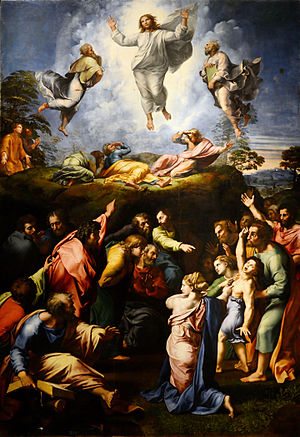
Study The Transfiguration by Raphael

Transfigurazione (Raffaello) September 2015-1a.jpg
Source: Wikipedia

We'll begin by asking if anyone can recall who Raphael is and when he lived (an artist during the High Renaissance.)

Then, we'll recall some of the characteristics common to the High Renaissance, such as:

  • perspective.
  • precise anatomical correctness.
  • authentic emotionality and expression.

We will also see if anyone cane name describe some characteristics of Raphael's individual style, such as:
  • clarity
  • rich color
  • effortless composition
  • grandeur

After that, we'll study the last painting Raphael painted - The Transfiguration - a painting that has been described as Raphael's most beautiful and divine and was commissioned in 1517 by Cardinal Giulio de Medici, who later became Pope Clement VII and currently hangs in the Vatican Museums.


To study the painting, we will examine it for 30-60 seconds. Then, I will remove the image and ask each child to narrate some of the details that they noticed.

Then, we will look at the painting again using this Youtube video or looking at a reproduction and reading a reflection of it found at Loyola Press.


Add Some Music Appreciation


Since we'll be talking about the Transfiguration, which happened on a mountain, we'll explore clips of classical music inspired by mountains, letting each child pick one title to listen to a portion of and chatting about whatever resonates with the children.

Chat about Poetry


Continuing with the mountain theme, we'll read a brief poem by Emily Dickinson entitled "The Mountain" and chat about any reactions the children have to it.

The Mountain 
by Emily Dickinson


The mountain sat upon the plain
In his eternal chair,

His observation omnifold,

His inquest everywhere.


The seasons prayed around his knees,
Like children 'round a Sire:
Grandfather of the days is he,

Of dawn the ancestor.


Create Mountain Artwork and Pray 


Finally, we'll create artworks of mountains using a Creating a Masterpiece Mountain Hike drawing project. (You could also choose a video from Youtube at the level of your children or simply create original artwork instead.)

If there is time, we will conclude by recalling that prayer is one of the pillars of Lent and, then, try out an imaginative prayer exercise from IgnatianSpritiuality.com.


I pray these ideas might help you and yours enjoy art, music, and poetry as you continue your Lenten journey.

Sunday, February 23, 2020

Enjoy Art, Music, and Poetry as You Prepare for Lent


It's easy to neglect the riches of art, music, and poetry as we move through the busyness of every day life and learning. Thus, I am always thankful when our AMP club gets together, since it encourages us to take some time for the arts.

I appreciate even more when a desire to live the 
liturgical year dovetails with our AMP plans. That is exactly what happened this week as we prepare for to enter into Lent.

If you'd like some ideas for sharing art, music, and poetry as you enter into Lent as well, perhaps the resources and ideas we used can help you.


Study The Fight Between Carnival and Lent

Begin by saying that you will be focusing on an artwork painted of a Dutch town. Ask if anyone knows where "Dutch" people and things come from ( the Netherlands). Then, find the Netherlands on a map or globe.

Pieter Bruegel d. Ä. 066.jpg
Source: Wikipedia

Invite children to share what they think they might see in a Dutch artwork. Then, without giving its title, study an image of Pieter Brueghel the Elder's The Fight Between Carnival and Lent from 1559 by having everyone examine it in silence for 30-60 seconds, looking at its details.

After 30-60 seconds have passed, remove the image and ask each child to narrate some of the details that they noticed.

Reveal the painting again, and a
sk if anyone has any idea what time period it comes from based on its characteristics.

Discuss the children's ideas, bearing in mind that the painting is from the Renaissance and some common characteristics of
Renaissance art are:


  • individualism: Artworks often highlighted individual people or the individuality in people. 
  • secularism - There were fewer church paintings. 
  • classicism - Some artworks showed classic Roman and Greek influence.
  • nature - Artworks often depicted the outdoors.
  • anatomy - Art focused on defined and precise human anatomy.
  • linear perspective - Art showed an appearance of things relative to one another as determined by their distance from the viewer
  • realism - Artistic representation aimed for visual accuracy.
  • depth - Light and shading were used to create a sense of depth.
  • symmetry - Balanced proportions were often included.


Include Some Music Appreciation


After chatting about the The Fight Between Carnival and Lent as an example of Renaissance art, suggest that everyone look at it closely once again, noticing more details and guessing at what the artwork's title might be. While doing so, as music appreciation, listen to a period composition or two.

One way to do this is with the following Youtube video. (Just preset the video to begin after the portion with the title showing so that you don't spoil the fun of having children come up with their own names for the painting.)


If using the Youtube video above, note that the music in it is composed by two composers, the first of which was a Dutch composer who was known for his church music and composed many Masses.

After the video concludes, chat about new details children noticed within the painting and what they thought of the music.


Connect to Faith


Ask if anyone might offer an idea for what the painting could be titled, then reveal it's true title
 and chat about Lent and Carnival / Shrove Tuesday / Fat Tuesday / Pancake Tuesday.

Watch the following 
Youtube video or look at the painting once more while reading this reflection from Loyola Press.


Pause for a moment to ask students to look inward and ask themselves what keeps them from following God? Invite them to think about this as they enter into Lent.


Transition to Poetry with the Symbol of Fish


Ask what the children know about Lent and how we observe Lent. Chat about ideas and, at some point, talk about the idea that a symbol often used in Lent is fish.

Chat about why we might be see the symbol of fish during Lent and at other times of the year. Children might point out that a fish is a symbol of Christ or that there are fish drawn on calendars to remind us to abstain. Let the conversation flow with their ideas.

Then, tell children that you will read some letter poems from a human to a fish and a fish to human which have little to do with Lent, but are interesting and fun poems.

Present "To a Fish" and "A Fish Answers" by Leigh Hunt.

Discuss any reactions the children have to each poem.

Wonder and Invite.


Wonder aloud about such things as:


  • How does the human feel about the fish?
  • How does the fish feel about the human?
  • What makes each poem a poem and not just a letter?
  • What poetic devices did you notice?
  • What imagery stood out to you?
  • What was humorous?
  • What did you like about each poem?
  • What do these poems speak to you about or make you think about?
  • What emotion do these poems show?

With older children, wonder how people may have looked upon Jesus during the time he was traveling and teaching and how he looked upon them... how each person at the for of the cross might have looked at Jesus and how he looked at them... how we look to God and how He looks upon us... 

If pairing your study of the painting and the poems as you think about Lent has made any connections for you, share them with the children.

Invite children to write their own perspective letter poems later about an animal, a symbol of Lent, Jesus' ministry and passion, etc.

Invite them to research more later about the Catholic rules of abstinence and why we can eat fish and reptiles during Lent, but not red meat or poultry.

If it did not come up during conversation, invite children to look into why a fish is a symbol for Christ later.  You might even point them to ideas from Catholic.com:


 "What did the fish represent? Above all, it was Jesus Christ. The dominant language of the early Church was Greek, and in Greek the phrase “Jesus Christ, Son of God, Savior” produced the acronym ICHTHYS, the Greek word for fish. A Christian poem of the second century spells the word with the first letters of each line. Thus, the fish is a simple creed: It professes belief in Jesus’ divinity and his identity as the Christ, the anointed Savior (see Matt. 16:16)." 


Create Fish Artworks


Finally create artwork of fish.

Like our AMP club did you might use a Creating a Masterpiece beginner drawing fish cartoon project. Or, you might choose an appropriate video from Youtube at the level of your children or simply create original artwork.


If, like us, you choose a happy-looking cartoon fish, ask children why we might have created such silly, smiling fish when discussing such a solemn time as Lent.


Tie into the idea that while we fast and sacrifice during Lent, we do so with a heart for Jesus. We do not moan, complain, and look glum. Rather, we sacrifice with inner joy and peace. Our fish artworks can remind us of this.

Finally, ask children to reflect on how we might wean ourselves from sin and selfishness throughout Lent through prayer, fasting, almsgiving... how we might better discern and live God's will for our lives... and how we might make His kingdom come first in our hearts.


I pray these ideas might help you and yours enjoy art, music, and poetry as you prepare and enter into a fruitful Lenten season.

Sunday, October 13, 2019

Celebrate St. Luke's Feast Day with Art, Music, and Poetry


If you're looking to include some art, music, and poetry in your observance of St. Luke's feast day, then I have some ideas for you.

Since our family's next
 AMP Club meeting happens to fall on St. Luke's feast day, and St. Luke is my son's name day, I have decided to marry feast day inspiration with our usual and AMP meeting activities, so we can observe the feast day with friends.

As I often do, I am sharing our saint-inspired AMP plans here in case you, too, would like to celebrate the liturgical year through the riches of art, music, and poetry.


Invite Children to Share What They Know about St. Luke


{Some links which follow may be affiliate links.}

St. Luke the Evangelists images, peg dolls, Figgies & Jammies "books", a reading about St. Luke, a candle, and perhaps another treat can make a wonderful invitation to welcome children to the feast day celebration.

Once everyone has gathered, looking at the symbols painted on the doll, the edible books, etc., ask children to share what they know about St. Luke.


Share about St. Luke


If you have time, after children share what they know about St. Luke, perhaps watch a few different Youtube biographies about St. Luke online, taking notes which can be used in a poem lately.

Or, read the brief St. Luke iography which can be found free online at Loyola Press and is excerpted from Voices of the Saints.


St. Luke Art Appreciation


File:De heilige Lucas schildert de Madonna - Maarten van Heemskerck-1532.JPG
St. Luke Painting the Virgin; source: Wikipedia


Offer children, or pairs or trios of children, different images of St. Luke(as pictured in this section) and encourage the children to study the image they receive or 30-60 seconds.  Then, to turn it over and recall what they can from the image in terms of "art words" and what was actually depicted.


A Painting by Hermen Rodesource: Wikimedia Commons

Chat about the things they note and, then, lay all of the images out side by side. Challenge the children to discover something that is the same about each of the images: Each has an ox in it!


File:17th-century unknown painters - St Luke the Apostle and Evangelist - WGA23506.jpg
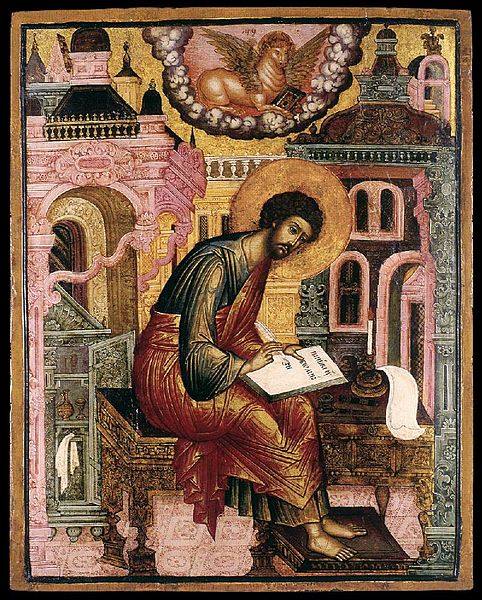
St Luke the Apostle and Evangelist; source: Wikimedia Commons

Ask if anyone knows why St. Luke is often depicted with or by the symbol of a winged ox. Point out, as is explained on Catholic Culture, that:

The ox, recognized as the animal of sacrifice, was applied to St. Luke because his Gospel emphasizes the atonement made by Christ's sacrifice of himself on the Cross.


File:Luke evangelist Guercino.JPG
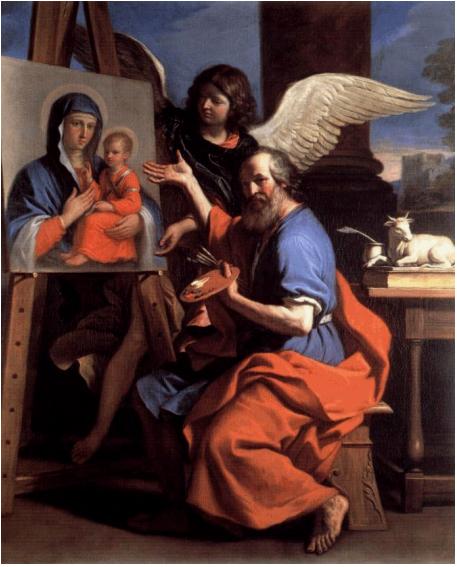
St. Luke Displaying a Painting of the Virgin; source: Wikimedia Commons 

Detail, as explained on Catholic Exchange:

Oxen were used in temple sacrifices. For instance, when the Ark of the Covenant was brought to Jerusalem, an ox and a fatling were sacrificed every six steps (2 Sm 6). St. Luke begins his Gospel with the announcement of the birth of St. John the Baptizer to his father, the priest Zechariah, who was offering sacrifice in the Temple (Lk 1). St. Luke also includes the parable of the Prodigal Son, in which the fatted calf is slaughtered, not only to celebrate the younger son’s return, but also to foreshadow the joy we must have in receiving reconciliation through our most merciful Savior who as Priest offered Himself in sacrifice to forgive our sins. Therefore, the winged ox reminds us of the priestly character of our Lord and His sacrifice for our redemption.

File:Frans Floris - Saint Luke painting the Madonna.jpg
St. Luke Painting the Madonna; source: Wikimedia Commons

Then, take specific note of all the different oxen in the images - their placement, the way they are painted, etc.

File:Maerten de Vos – St Luke Painting the Virgin Mary.jpg
St. Luke Painting the Virgin Mary; source: Wikimedia Commons


The Ox (or, Rather, Cattle) Music Appreciation 


Connecting to the idea of Luke's symbol being a flying ox, ask children if they think any classical music has ever been composed about an ox, or cattle.


Of course! There is actually a piece called "Pictures at an Exhibition" with a portion of it called "Bydlo" (The Cattle) which was composed by 
Mussorgsky in 1874 and, later, redone by other composers. (An audio of the piece can be found here.)

Play The Cattle for the children and ask them to try to imagine a scene.

Discuss how the piece was inspired by "a Polish
cart on enormous wheels, drawn by oxen."

Listen for how it begins fortissimo (ff) (loudly), suggesting that the lumbering oxcart's journey begins in the listener's foreground. 

Then, listen for how it reaches a climax (con tutta forza), followed by a diminuendo (decrease in loudness) to a final pianississimo (ppp) (quieter playing), suggesting the oxcart receding into the distance.

Have students name the instrument the piece was played on: a piano!

Then, without showing the Youtube video above, just listening to it, see if children can guess what the main instrument the piece is being played with in it: string instruments like cellos. (Perhaps, recall how the piano is also a string instrument, but crosses over to being percussion instrument.)


Finally, play the Ravel version of the same piece.  Have children listen for a different depiction of where the ox cart begins and goes to. See, if they notice how in the Rael version, you can hear the cart come from a distance, get closer, then go away.


Share and Write Letter Poetry

Ask children what they might say if they had a chance to talk to the oxcart man?  To the ox itself? To one of the composers? To Mama Mary and the Child Jesus? To St. Luke?

As how God talks to us. As about one way we know His Will and Word - the Bible, the inspired word of God, a sort of "letter" to God's people.
Read about what inspired Luke to write his Gospel and, then, suggest that instead of waiting to get to Heaven to ask St. Luke about writing the Gospel, we could compose our thoughts now into a Letter Poem - or we could write a letter poem to anyone else.

Recall the different types of poetry we have studied before, such as Persona Poems, Direct Address Poems, Haiku, and more, and then explain that a Letter Poem is a letter we write in a poetic form.


Source: Amazon

Read about Letter Poems in Poetry from A to Z and suggest that we each write a letter poem - perhaps a thank you letter as a poem - to someone we know who St Luke is patron to - artists, bachelors, bookbinders, brewers, butchers, glassworkers, goldsmiths, lacemakers, notaries, painters, physicians, sculptors, stained glass workers, and surgeons - or to St. Luke, Mama Mary, the Child Jesus, or even an oxcart man.

Begin drafting quick writes of such poetry, and, after five minutes, share poetry with one another.


Create Art

Finally, create some art.

You might model artworks after the art examined during the picture study.

You might draw an ox with wings.

You might create images of the Blessed Virgin Mother and the Baby Jesus.

Or, you could do a completely different art project, such  as Simplicity by Creating a Masterpiece, but challenge children to somehow add a symbol of St. Luke into their finished work.

Symbols include a winged ox, a winged calf, an ox, a picture of the Virgin, a palette and brushes, vials of medicine, physician's robes, an easel, a book and pen, hatchet, a wooden horse, books of his Gospel and of the Acts, a bishop, or someone painting an icon of our Lady.

More Feasting, Fun, and Learning with St. Luke

You might also consider adding other. St. Luke day fun, learning, and food to your day:

Rock Art and More

I'd love to hear about how you celebrate St. Luke's feast day. Please do pop back to comment here or on our Facebook page to let me know. 

 Lord God, who chose Saint Luke to reveal by his preaching and writings the mystery of your love for the poor, grant that those who already glory in your name may persevere as one heart and one soul and that all nations may merit to see your salvation. Through our Lord Jesus Christ, your Son, who lives and reigns with you in the unity of the Holy Spirit, one God, for ever and ever.
~The Collect

 St. Luke the Evangelist, pray for us!

LinkWithin

Related Posts with Thumbnails