Showing posts with label Reading. Show all posts

Sunday, May 1, 2022

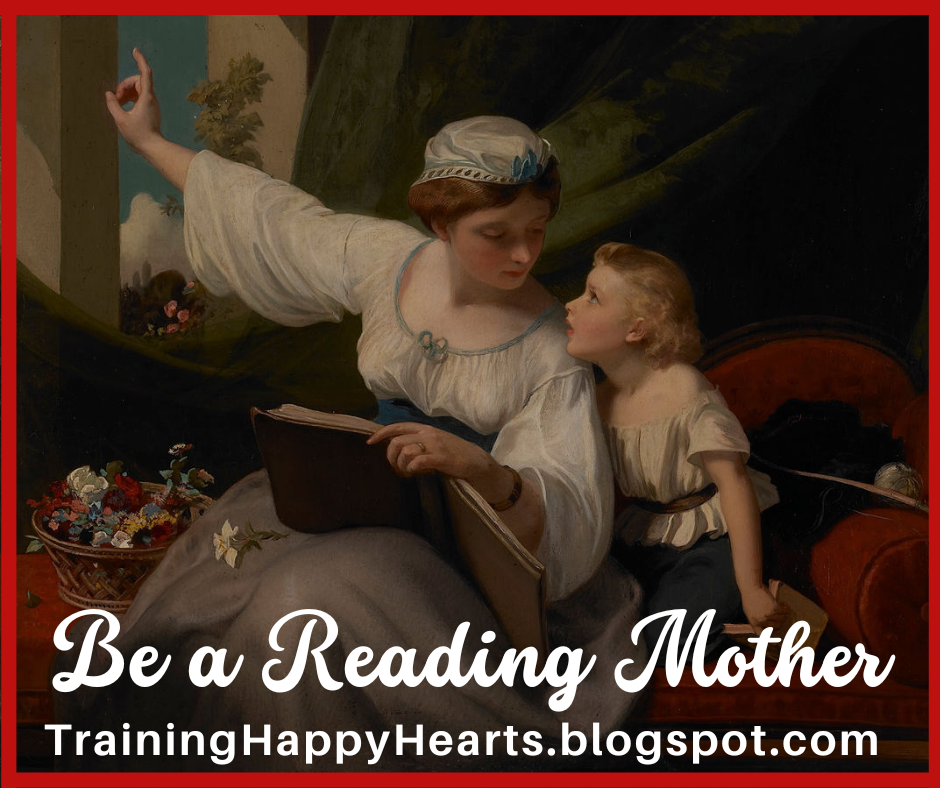
Be a Reading Mother!

Image: The Fairy Tale by James Sant

What a blessing each Lord's Day is when we purposefully slow down to focus on faith, family, sometimes friends, and, frequently, taking time to refresh ourselves before another week ahead.

As my children grow, we don't spend the entire day every Sunday together, of course, but we dp aim to be together for Mass and at least a bit of family time, too. 

Sometimes, our time together includes read-togethers. For, yes, even with teens and tweens, I still try to include read alouds in our lives. In the minivan and at home, we sometimes all get read to by an audio CD. At home, I also still read aloud to my kids.

Sometimes they grumble about it. Sometimes they eagerly gather. Always I am glad for the time to share time together with books.

I pray that when my children are older, they will look back at our read-together times with thoughts much like Strickland Gillilan writes about in this poem that is in the public domain.

What a fun poem it is and what a blessing it is to be a mother who reads to her children.


The Reading Mother
by Strickland Gillilan

I had a mother who read to me
Sagas of pirates who scoured the sea,
Cutlasses clenched in their yellow teeth,
"Blackbirds" stowed in the hold beneath.

I had a Mother who read me lays
Of ancient and gallant and golden days;
Stories of Marmion and Ivanhoe,
Which every boy has a right to know.

I had a Mother who read me tales
Of Gelert the hound of the hills of Wales,
True to his trust till his tragic death,
Faithfulness blent with his final breath.

I had a Mother who read me the things
That wholesome life to the boy heart brings--
Stories that stir with an upward touch,
Oh, that each mother of boys were such!

You may have tangible wealth untold;
Caskets of jewels and coffers of gold.
Richer than I you can never be--
I had a Mother who read to me.


I encourage all mamas to be reading mothers - reading adventure, reading spiritual readings, reading the Word.

God bless!


Monday, March 8, 2021

Love Gameschooling? Check Out the Reading Game {Review and Giveaway Link}

 DisclosureI received this product free through the Homeschool Review Crew.


As a home educator and tutor, I am always interested in quality resources to enliven lessons and strengthen reading skills. Thus, I was excited about the opportunity to review The Reading Game, 2nd Edition from Allsaid & Dunn, LLC


The award-winning 
The Reading Game, 2nd Edition was created by Kenneth Hodkinson - known for his time-tested Wordly Wise program - and works to help children learn 180 sight words and begin reading with them using a systematic, game-style approach.


The 180 words include words from the Dolch Word List for Pre-K through 1st grade and from the Fry List (the100 most commonly used English words) and are first presented to the child through color-coded, leveled Memory-Match game cards, and, then, included on captioned picture cards, and in specifically written illustrated readers.

How Do You Play The Reading Game?


You - or any parent, teacher, tutor, or older child that can read - plays Memory Match with your child using the first set of red cards (10 cards of five matching words). As you play, you read the words aloud so your child can both see and hear the words.


Then, once your child has mastered this first set of cards - demonstrating an ability to read them during the game without hesitation, the next set of ten cards is used for playing Memory Match.

Once the second set of cards is mastered, you give your child the red picture card labeled 1-2 and your child tries to read its caption. (The card contains words that have been learned.)

If your child struggles with the picture card, you celebrate whatever your child had success with, and, then, play more rounds of Memory with the first sets of cards to reinforce with your child each of the 20 words previously presented.


If your child succeeds with reading the captioned card, you can move onto playing Memory Match with red word card sets 3 and 4. Then, try picture card 3-4.

After that, continue on through red card sets 5 and 6, reads the last red picture card, and, move onto reading the illustrated red book called, Skunk.

Of course, do not do all of this in one sitting. Simply play at your child's pace, picking up each time where you left off last time.


Following this pattern through the red, orange, yellow, green, blue, and purple sets of playing cards and corresponding picture cards and books, your child will learn 180 words and read those words in sentences on picture cards and in stories in the books.

What a low stress, fun, and systematic approach to early reading for typical learners!

The game can also be helpful for children with dyslexia and can tie into a phonics-based approach. (To see example phonics patterns found in the book, you can download the Rules Booklet online - which also comes in print form in your The Reading Game box.)


Is your child ready for The Reading Game?


If your child is a typical learner who is familiar with letters and shows an interest in storytime by pretending to read or wanting words pointed out while reading, then your child is ready to try The Reading Game.

If your child is a struggling reader who shows readiness as above but tends to need a more explicitly phonics-based approach, then you may wish to use the game slowly in addition to more intensive phonics-based instruction, for as you can see from the word list of the first book, the program jumps quickly from V-C and C-V-C word patterns to other patterns, plus sight words.


How Did I Use The Reading Game?


I have a 10 year old who is a typical learner and was curious about the game when we first received it, so I adapted the game material use for he and I to use during a couple 1:1 learning times. He moved quickly through the game materials, but enjoyed his foray with them, saying:

This game is under my level, so we adapted it. My mom had me spell each word and make sentences with the word cards. She also had me read the picture cards and stories fluently with expression. I liked reviewing with this game and think it would help younger kids.


We sometimes still take the word cards out and pull random ones to create silly sentences and stories.

My 13-year old is a struggling speller who just began to blossom with reading, so I also adapted the game materials for her use similarly. She said:


I like how this program has cards so if you wish, you can play games with it. I also like how it has the picture cards and books. I think that it would be nice for younger children to be able to play.

She also noted when reading the books quickly with me for fluency and expression that "some words have a dot in the middle" and asked why. I had her guess: Students just learning to read sometimes get thrown by compound words, so the makers of the material must have decided to divide the words for easier reading.


I also used the game with two of my tutoring students, ages 7 and 9, that have dyslexia. Both of these students were thrilled to see me pull out The Reading Game and, immediately, began laughing and smiling as we played 1:1 Memory Match with it as directed in the game instructions, with the small addition of me suggesting that whoever finds a pair must make a complete sentence using the word before keeping the pair and going again.

One of the girls definitely needed me to explain/hint at some of the phonics needed to read some of the sight words, so, for example, for the word "they", I pointed to the t-h and said, "Oh, t-h says /th/ and e-y here says 'ay'. So, that's they." Or, "Mmmm, w-h says /wh/ and the a here says /ah/, so this is wh-a-t." Both girls, though, progressed and, so far, have been able to read red cards 1-2, 3-4, and 5-6 with some help and, by their requests, tackled reading Book 1, too.

Further, both girls LOVED the back-and-white photos on the cards - guessing at what the captions would say before they read them - and equally enjoyed the illustrations in the book.


I have also pulled sentences from the picture cards and book for the girls to use for copywork and dictation sentences.

The girls quite enjoy The Reading Game and, even though some of the words presented in it are truly challenging for them, happily persist, learning as we go. One of them saw the game on my table the other day and exclaimed, "Oooo, I love that game. Are we going to play it?" (Of course, we did.) The other always comments on the cute animal photos and illustrations.


Would I Recommend The Reading Game?

If you are a home educator, teacher, or tutor, I would definitely recommend this game as a well-made, simple way to teach or reinforce reading, pending on if you are dealing with typical learners or those with challenges.

I always appreciate games that can be used again and again and are not parent/educator/tutor intensive. This is definitely one of them.

The materials are well made, the box is sturdy, directions for play/use are clear and simple, and success has already been had with my students.

Although I was not able to play the game on a daily basis with right-level learner yet, I can see how playing a few minutes a day could get a child from playing with word cards to reading within a week or so. For, with my tutoring students, we progressed from cards to the first within just a few sessions.

Further, six staged sets of memory games, picture cards, and storybooks can be revisited with older/more skilled learners, with random cards being pulled for sentence and story writing challenges, the picture cards being used as visual prompts for independent writing.


Plus, for those that need data-driven/reportable proof of learning, you can find pre- and post-assessments and class recording sheets online. These can also be printed - or the back of the book word lists referenced - for a quick look at which words have been presented.

Learn More


If you are the type that likes visual examples of things, find video demonstrations of The Reading Game online

If you would like to see how other beginning or struggling readers have been enjoying some gameschooling and having chance to build
 confidence in reading through The Reading Game, click on over to the Homeschool Review Crew to find video, social media, and blog review from 25 families.


At the Homeschool Review Crew page, you can also enter to win one of 5 The Reading Game boxed sets that are being given away!

Finally, you can find The Reading Game on social media at

Tuesday, March 10, 2020

Introducing The Boxcar Children for Emerging Readers! {A Review}

Disclaimer: I received a FREE copy of this product through the HOMESCHOOL REVIEW CREW in exchange for my honest review. I was not required to write a positive review nor was I compensated in any other way.


For decades, curious children who dream of adventure and independence have fallen in love with the classic children's chapter books series The Boxcar Children by Gertrude Chandler Warner. Now, with thanks to Albert Whitman & Company, developing readers who are not quite ready for chapter books can follow along with the fun, too! For Albert Whitman & Company has adapted the mystery, excitement, and explorations of the original series into The Boxcar Children Early Reader Set - a Level 2 Time to Read book series available in paperback or hardcover.

My children are a bit old for this lovely new Early Reader Set, but we opted to review it anyway.

Why?

Because my nine year old likes to whiz through adventure- and mystery-based easy readers in balance with the more difficult reading materials he is working on in his lessons and  my twelve year old, who struggles with reading and liked listening to the original Boxcar Children series, thought she might use these early readers to work on independent fluency.

For our review, we received hardcover copies of the first four books in the Boxcar Children Early Reader Set:


  • The Boxcar Children
  • Surprise Island
  • Mystery Ranch
  • The Yellow House Mystery


Each of these books is just under 40 pages long, contains plenty of full-color illustrations modeled on the artwork from the 2014 Boxcar Children animated film, and is written with large font text with double spaced sentences. This all works to help developing readers transition from picture books to chapter books with relative ease and confidence!

The series, which follows the orphans Henry, Jessie, Violet, and Benny Alden along with their dog Watch, has a simplified flavor of the original chapter books and uses concise sentences, straightforward dialogue and colorful illustrations to help young readers.

The easy reader series is geared towards children ages 5-7 or grade levels K-2, but can be enjoyed by older children, too.


My nine year old had this to say about the books:


They are easy readers with large print, not very many sentences on each page, and cartoonish illustrations. I would say they are good for children under age nine or ten. 
I liked them. I was able to read all four books on my own in one sitting. They were good, entertaining stories. 

The Boxcar Children is my favorite one. It is 
about some homeless children who don't want to go live their grandpa, because they think he is evil. So, they live in a train boxcar and find a dog. Then, they get a job and meet their grandpa without knowing he's their grandpa. In the end, they learn he's their grandpa, are happy that he is kind, and end up staying with him. 


In Surprise Island, the kids' grandpa takes them to an island and leaves them in a little house. They have a lot of adventures playing, making stuff... Then, they meet a guy named Joe and find out he's grandpa's nephew. They also find artifacts. In the end, Grandpa comes to celebrate one of the kids' birthdays and they have a party and reunion. 


In Mystery Ranch, the kids go to their aunt's ranch, because she is lonely, and they cheer her up. On the way to the ranch, they see a mystery man on the train. Later, they find a ton of weird rocks and a little hut, so they go to the police station. The mystery man goes into the police station, too, to say he wants to buy the rocks. The aunt then explains some things, get a company to dig up the rocks and sell them. So, she gets to keep her ranch and she is given a dog so she won't be lonely. 


In The Yellow House Mystery, the kids go to an island with their grandpa, find a house, and want to explore it. They do, and find a mysterious note to someone from Bill.  Then, they go where the note tells them to go, and it is a rough adventure. Eventually, they get to the house and have a really rainy night. Then, they meet their grandfather's old friend, Bill. They get money from a box they find and everyone helps paint the yellow house. 
I would recommend these books to kids ten and under as fun reads.


My 12-year-old said:


The Boxcar Children Time to Read Level 2 series is a set of four hardcover easy reader books based on the the chapter books by Gertrude Chandler Warner. 

I read them as reading practice. They were easy. The stories are simple, so they did not make that much impact on me. They were fun, but not as good as the chapter books.
 
The Yellow House Mystery was my favorite because it was a mystery.
I think they would be good for people from ages 6-8 to read independently or with help. Older kids like me might like them as quick books to read through. 


There are many illustrations and large print, plus plenty of white space. So that makes it easy to read. The characters are not that developed because they are easy readers, but there are clear storylines.

As a homeschool parent and tutor, I am glad to have these books in our collection. They have made for fun, easy reads for my children and will be great to have on hand with some of my tutoring students.

Reasons you might like them, too, include:


  • Children who have seen the 2014 Boxcar Children movies that have recently been released on DVD can be enticed into reading by the tie-in artwork in the books series.

  • Emergent readers can enjoy an easy introduction to the beloved Boxcar Children characters and stories.
  • Kids who love series can enjoy the six books currently available and the two more that are planned to come out this year.

If you'd like to see what others thought of the books, click on over to find reviews from 45 Homeschool Review Crew families.

You can also connect on social media:


Website | Facebook | Twitter | Instagram | YouTube

If you check out this new, yet nostalgic set of early readers, I'd like to hear what you think of them.

Tuesday, July 9, 2019

6 Reasons Learning Dynamics is a Great Tool for Homeschoolers and Tutors {PLUS a Coupon Code!}


Some links below may be affiliate links.


Use the coupon code THAPPYHEARTS for 10% off!

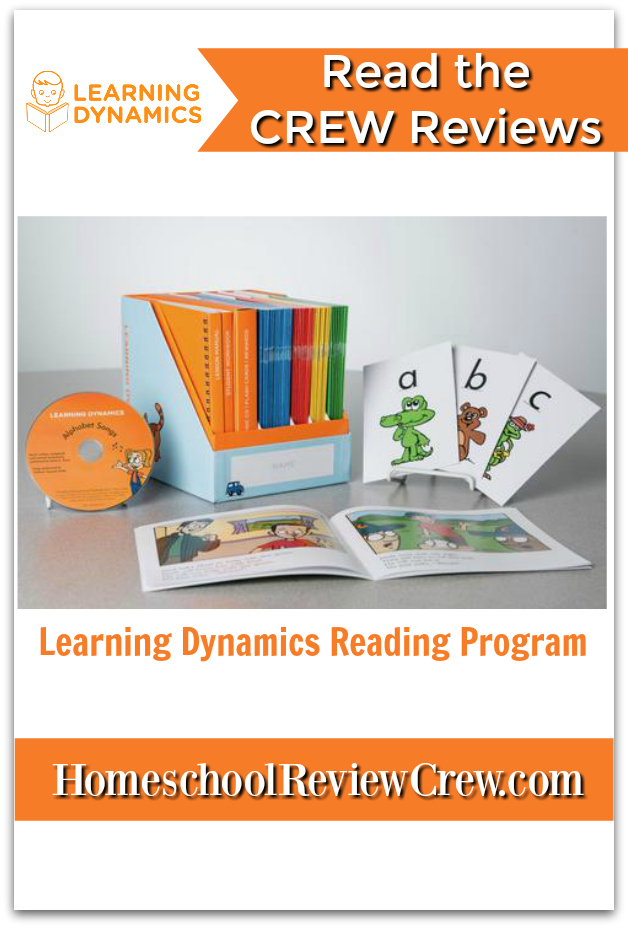
Whether you have a child who is ready to learn to read or one who is a struggling reader, the Learning Dynamics Reading Program by Learning Dynamics can help!


We received this structured, multisensory, phonics-based system for review, and since then, I have been using components of it successfully with my own children and with tutoring students.

In doing so, six things have really stood out to me about the Learning Dynamics Reading Program:


1. It comes in a sturdy little box that makes it easy to store, transport, and use.

Okay, I know packaging is not the first thing one usually thinks about when considering a new reading program, but, let me tell, you, the Learning Dynamics Reading Program package is such a well-designed one!

It immediately caught my kiddoes' eyes and made them want to dig right into the program, reading through the readers in the box during independent reading time and with me as a way to "fill in holes".  (My children are beyond the initial learning to read stage, but one likes "easy stuff" to read during solo reading times sometimes and another has dyslexia and appreciates decodable books that can help her fill in holes and gain confidence.)

The packaging also caught the attention of my tutoring students.

One saw the package on my table, and, although she was "beyond" the level of 
the Learning Dynamics Reading Program materials, she asked if she could read some of the readers.  So, of course, I let her, and she enjoyed them.  They are just so inviting with their four colors standing in the box.


Another tutoring student, who is older than the targeted age for the program, but has learning difficulties, liked the look of the box, too.

When that student saw it on my table, opened it with me, and dug into by request, he took to it right away, so I asked my own child if they'd mind if I used the Activity Book (which is something your child writes in) with him and they agreed.  So, he's become my primary user of the program while my own children - and other children who come to my house - enjoy the readers and other components.


There is something to be said about packaging that invites children to learn and acts as a handy way to store, transport, and grab-and-go with a program, and the Learning Dynamics Reading Program nailed it in designing theirs.

2. It has varied components to keep learners engaged (but not so many that Moms, Dads, and teachers go crazy!)


Learning Dynamics Reading System

Over the years, I have taught a lot of children in the United States and overseas, and one thing that I have come to recognize is that each student is truly different, so one size rarely fits all.

Thus, when I look at a new program, I appreciate something that can adapt to many types of learners - those who like repetition and those who like variety; those who tune into songs and silly stories and those who prefer visual stimulation; those who like things cutesy and catchy and those who like them straightforward and with plenty of white space... In other words, I like one program that can reach many students, even if it takes a little tweaking with some.

The 
Learning Dynamics Reading Program is such a program. 

In the weeks that I have been using it, I have found that it hits the mark for visual, auditory, and kinesthetic learners as well as interpersonal and independent ones. (Independent only for those who have already progressed with reading and are using program materials to "fill in" holes or practice skills.)

The bright, bold illustrations with expressive faces appeal to visual learners while the fact that the books are printed with a large, bold font and plenty of white space appeals to my child with dyslexia.

Auditory learners and those who like songs and ditties can appreciate the audio CD and also will benefit from the conversation and systematic teaching of sounds and blending that are a part of the lessons.


Kinesthetic learners get opportunities to write, color, match things, manipulate cards, and complete extra little fun activities as described in the concise, yet complete Lesson Manual

They can also play extra games with the flash cards if you know some, as I do.

Those who like cutesy things, stories, and rewards can have them.  Those that don't, can skip them.


The Learning Dynamics Reading Program offers enough materials to provide variety and to appeal to children with a range of learning styles, but not so many that it becomes tedious for moms, dads, tutors, or other teachers to keep track of them and use them.

Included in the program are:


  • a concise. spiral-bound Lesson Manual that allows you to open-and-go. 


  • 50+ full-color decodable Easy Reading Books that allow students to build a library while also developing stronger and stronger reading skills.


  • a CD with 34 learning songs.


  • an Activity Book/Workbook with simple activities to reinforce learning


  • cute little Letter Rewards.


  • a variety of Flashcards which can be used as directed in the Lesson Manual and can also be used for other games and activities.


These all fit neatly into the box the program comes in and can be tailored in use to your child's needs and likes.

3. The program can unlock reading within just four weeks.

The Learning Dynamics Reading Program was created to make teaching children to read easy and Learning Dynamics is so confident about the design and success of their program that they offer a 30-day money-back guarantee.

I don't think you'll need to use that guarantee, though, if you try the program, because it really is well designed so that you can bring a child in preschool through second grade from hearing sounds, to matching them to phonograms, to blending them to make words, to reading decodable books in just four weeks and, then, progress further with reading in subsequent weeks.

Enjoyable, 15-minute lessons work through a system of introducing an attainable challenge to your child, practicing it, having your child meet success and be rewarded, and, then, moving on with the traction gained from your child's growing confidence and skills.

In doing so, the program helps your child to: 


  • develop phonemic awareness (or, in layman's terms, the ability to hear, identify, and manipulate the sounds of language).
  • learn explicit letter-sound correspondence (which is essential for both reading and writing).
  • master frequent letter-sound relationships systematically (which is great for all children, but, especially for those with dyslexia like one of my own children, and, I believe, some of my tutoring students).
  • sound out words with letter-sound blending.
  • use decodable text to practice letter-sound relationships (and enjoy reading independently!).
  • read interesting stories to develop language comprehension (and chat about or narrate them with a parent, tutor, or teacher).

You can read more about how it works here and also in reviews from other Homeschool Review Crew Members who used the program with younger children.


I used components of it it with my eight (now nine) year old for review and fun and also with my eleven (now twelve - they both had birthdays during the review period) child with dyslexia so that she could fill in some holes and gain confidence. I also used it, primarily, with a nine-year-old delayed reader who I tutor and he is progressing nicely with it!

A friend of mine who just happened to have bought the program for her five year old around the time I began using it as a review, noted that we have the same program and said her five year old is enjoying and succeeding with it, too.

So, I truly believe t
he Learning Dynamics Reading Program works for young learners even if I am using it with older ones.  


4. It adapts well for struggling readers beyond the target age of pre-k-8 years.

As I have explained, I am using t
he Learning Dynamics Reading Program with older learners. 

With my own children, I pretty much let my eight- and twelve-year-olds read through all the readers on their own and occasionally read them to me. I also use specific lesson flashcards or books to highlight specific reading/spelling patterns as I note they need help/refreshers with them.

With my tutoring student, we do not use the music CD, but rather, I buzzed through the first lessons reviewing materials he had previously learned, and, then, slowed when we got to the first lessons that use the books.

Since then, I use the lessons pretty much as directed sans the CD and the rewards and picture flashcards.  Instead, I read the silly story that goes with each sound when the student is writing the phonogram for it.


We also use a notebook to play additional games with target words from the readers and tend to reread one or two books and tackle a new one each lesson.

We also use the flashcards to build words and play games.

It is working out quite well and we will stick with this program moving forward.

The readers engage and challenge my student and allow him to level up, gaining skill and confidence.


5. Anyone can teach it!

The Learning Dynamics Reading Program was created with parents in mind. It is designed in such a way that anyone can follow it with little to no preparation. Simply open the box, pull out the Lesson Manual, and follow the instructions in it using the included supplies and a writing utensil, and you're all set.

Each lesson is structured in an easy-to-follow manner with everything you need to teach a typical learner included.

You can see more about it here:


As for learners that need a bit of a different approach, the program is good for them, too. However, you might want to tailor and tweak it to meet a particular child's needs.

Being a long-time teacher (former classroom teacher, current homeschool parent, and long-time tutor), such tweaking comes naturally for me, and, I have found that I can do it very easily with almost no outside materials when using 
the Learning Dynamics Reading Program.  (Seriously, all I have used besides the lesson materials when teaching with the program are a small whiteboard, whiteboard markers, a notebook, and some gem stones.)

6. It is reusable!

Almost the entire program is reusable - the books, the flash cards, the letter rewards, and the manual.  The only piece that is not reusable is the consumable student workbook, but additional copies of that piece can be purchased separately for just $18.


That means you can teach many children to read with one program, or, like me, teach one and review skills with others.  

The lesson manual walks you through each step and the program has a 98% success rate and is backed by research from the Unviersity of Oregon and the International Education Institute.

It is simple, engaging, adaptable, multisensory, and great for more than one child!


We definitely recommend it!


It is obvious that we have liked Learning Dynamics here.  
My nine-year-old said:


I think this would be good for kids who are just learning sounds and reading. They are also good for older kids who have reading troubles. I liked reading the books. They are easy.

My twelve-year-old said: 


It is a good review of my skills. I read almost all of the books during my lesson times.


I don't really like the pictures, because they are so cartoony and I don't like cartoony, but they do have expression and tell the story, especially when the words in the early books are simple.

I would recommend this product to people who are just learning to read or who are having trouble reading. 
There is not much writing on a page, there is a lot of white space, and there are pictures. This can help kids with reading problems.

And, I've said a lot already in this review, but will sum it all up by saying the Learning Dynamics Reading Program is a well-designed, well-packaged program that can serve as an open-and-go way for any parent or teacher to help a young child learn to read or as a convenient and adaptable set of materials for a parent or teacher of a struggling reader to invite skill building and confidence.

I am glad to have been introduced to the Learning Dynamics Reading Program through the Homeschool Review Crew and have used the program regularly with kids since it arrived on my doorstep.  If you'd like to try it out, you can get 10% off by using the coupon code THAPPYHEARTS.


Connect with Learning Dynamics.


Crew Disclaimer

LinkWithin

Related Posts with Thumbnails