Thursday, March 5, 2020

Teach Children to Read with PRIDE Reading Program {A Review}

Disclaimer: I received a FREE copy of this product through the HOMESCHOOL REVIEW CREW in exchange for my honest review. I was not required to write a positive review nor was I compensated in any other way.
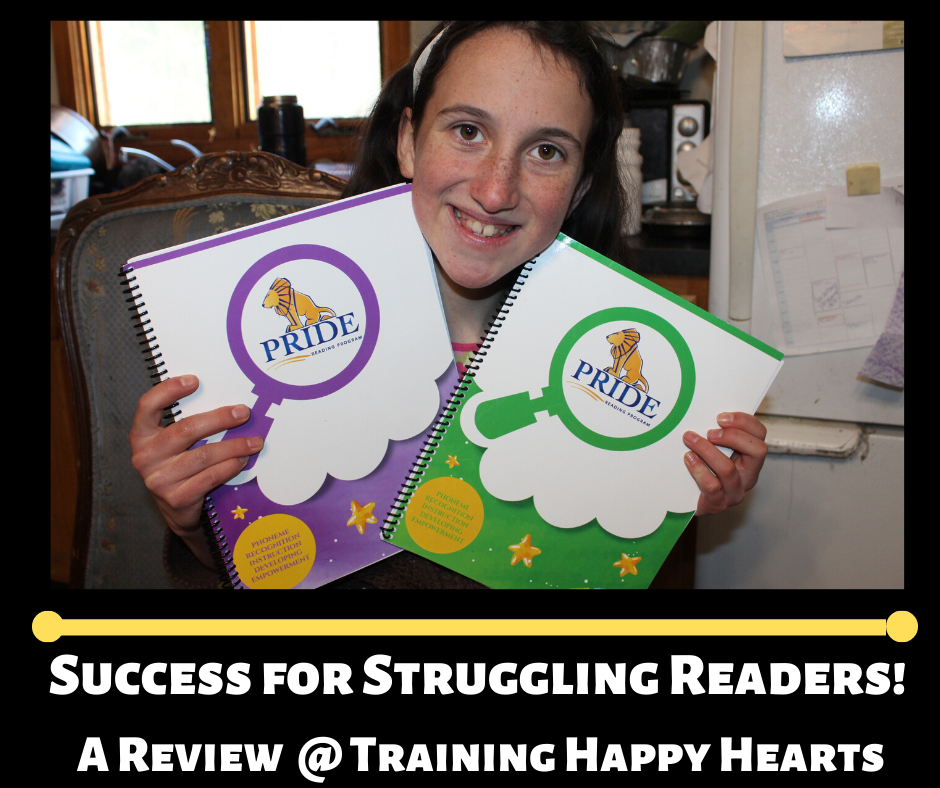

My daughter has been succeeding with the 
Primary Accelerated Review (PAR) book and purple PRIDE Reading Program Level 4 Kit!
{This post contains affiliate links.}

If you have a child just learning to read - or one who has struggled with decoding and encoding for some time, PRIDE Reading Program can help! 


My daughter and I have been using this effective structured literacy program regularly for over a month now and both agree that the program is exactly what its website claims it to be:

"an easy-to-use, structured literacy, Orton-Gillingham curriculum for children of all ages (that) uses engaging, multi-sensory methods to teach reading, writing, spelling, and comprehension."

Let me unpack that quote while explaining our experience thus far...


The PRIDE Reading Program is easy-to-use - and has GREAT Customer Service


Using the 
PRIDE Reading Program, takes only four easy steps.

1. Assess your child simply.

To begin the PRIDE Reading Program, you use a quick online or printed assessment in order to see where to place your child.  

For most children, placement will be at Levels 1-3. For my daughter, however, due prior experience with Orton-Gillingham programs, placement looked a bit higher.


Thus, I called customer service to ensure that I was about to place my daughter correctly. When I did so, a kind representative asked and answered questions about my daughter's prior experience, specific assessment test results, typical approach to learning, etc.

Together, we decided to start my daughter off with the green Primary Accelerated Review (PAR) book and, then, to move her to the purple PRIDE Reading Program Level 4 Kit. 

This has proven a wise decision, since the materials have worked well for my daughter, so I am grateful for the counsel of 
the PRIDE Reading Program's customer service!

2. Order your program kit.


Ordering is a snap online and, if our experience is anything to go by, your kit will come in quickly and will include everything that you need to teach, right down to a white board, markers, zippered pouch, and tote bag!

3. Complete the helpful PRIDE Reading Program training.

While you wait for your kit to come in the mail, you, as a parent/teacher, can take an easy-to-complete online training course that teaches you how to use 
the PRIDE Reading Program.

This training is FREE with your purchase of the program kit and ensures that you - or anyone who works with your child - can provide quality Orton-Gillingham reading instruction with no degree, certification, nor expensive training required!


The training course course is delivered as an 11 lesson, self-paced module that allows you to view video clips of live teaching sessions and asks you to take simple online quizzes to be sure that you understand the method and its use. 


4.  Start teaching with confidence and clarity!

Once you receive the physical program materials in the mail, you can easily access a scripted online teaching guide and begin to strengthen your child's literacy skills.

Step-by-step, 
the PRIDE Reading Program truly is easy to use.


But what is "structured literacy" and "Orton- Gillingham"?In a nutshell, Orton-Gillingham structured literacy is a method for teaching kids to read, write, spell, and comprehend that has proven especially effective with people with learning differences. To date, it is the best method we have found to teach my daughter with reading challenges how to read and spell.


In more detail, structured literacy  is an evidence-based, explicit, systematic, and cumulative approach to reading, writing, speaking, and listening which focuses on phonological awareness, word recognition, phonics, decoding, spelling, and syntax which you can read more about here.

Orton-Gillingham is one method of structured literacy that has been developed to teach non-readers and struggling readers how to read, write, spell, and comprehend using a multisensory approach.

The approach has been proven especially successful for children with dyslexia, auditory and visual processing disorder speech deficits, and other learning differences and is summed up well by this infographic:


You can learn more about the Orton-Gillingham method, get a picture of how a lesson works, and discover how the method is evidence-based at the PRIDE Reading Program website. 


Does the PRIDE Reading Program Work?


In my experience, the PRIDE Reading Program works just as it aims to - with ease of use, effective teaching techniques, at a self-set pace that works for you and your child! 

Does my daughter agree?


In a word, "Yes!", my daughter agrees that the PRIDE Reading Program works!

Over the past month or so, using sky writing, arm tapping, letter building, sound association, visualization, and more, she has been filling in gaps with short vowels, the FLOSS spelling rule, consonant digraphs, blends, long vowels, multisyllabic words, welded sounds (like "ang" and "ink") and sight words in regular 10'-60' 1:1's with me using the PAR book and has progressed on to learning and reviewing vowel dipthongs, 3+ syllable words, suffixes, and more using Book 4.

When I interviewed her for this review, this is what my daughter had to say:

I wanted (the PRIDE Reading Program) to help me read, because I am not very good at reading. I have tried many programs and wanted something easy to help me fill in gaps. 

We started with an assessment test online. It was okay, but my results were mixed because we have used other programs before. So, my mom called the company and we got a small book to use for review and another lesson book.
 

We got the green review book, the purple Level 4 book, a white board, a black and a red white board marker, a white board eraser, a cloth pouch, a reading tracker, a zippered pouch, letter tiles, a sound chart, letter cards with two cardboard packs, and a cloth tote bag to store it all.
 

My mom was able to access the Teaching Guide online.
 

When I saw all the materials, I thought, Wow. That's a lot of stuff and I had mixed feelings, because usually more stuff is more work and more brain hurt.
 

It actually didn't hurt that bad. 
 

We started off with the green book. What I liked about it is that there is a lot of white space per page. I also liked that the pages are not complicated. It is easy to follow and you got to the know the pattern of the lessons. 


I was able to complete the book with success. I may not know every word in the book, but I know a good proportion and filled in some gaps.


What I didn't like is the sentences that you read are just a bunch of random sentences that have nothing to do with one another. For example, one sentence was "Max can pat the cat," and the next was, "The bag has a tag." I think they do this so children cannot just guess what the next sentence will be about and so they can use target words, but I found it annoying.


The stories were better, and I understand the pattern they were trying to use with prediction in the beginning paragraph, visualization in the middle, and most important thoughts at the end, but there was a repeated grammar error that drove me insane. They used "did" plus a verb instead of the past tense.  I understand why they did that because they had not taught the past tense and past tense spelling can be difficult, but it made it sound like improper English. 


The word lists, though, I thought, were good. They had clean pages with white space so I could actually focus on decoding.


The Spelling Pages were good at the beginning, but, then, as the book went on, they were not as good because they always have the same amount of lines, but the number of sounds, words, and sentences fluctuates, so, sometimes there were not enough lines to write on.
  

We used the tiles at first, but, then, we transferred to just writing on the whiteboard, because the tiles take up so much more time, and I am capable of writing on the whiteboard, so I asked my mom if we could. I was successful, so she let me.
 

The cards are good. They are color coded and helped me review sounds quickly.

Overall, I am glad we used the green code. It gave me a more solid foundation to work on Book 4. 

I have used Book 4 a little but, too. It is a lot like the other book.

We can use it with flexible times and I think using it 15 minutes a day works great for me. I will probably finish Book 4.
I would recommend this to other people and these are the reasons why:
 

(1) I would recommend it to people who don't like busy pages, because, in other programs, they sometimes have the stuff you are trying to read and the parents guide on the same pages, and these are nice clean pages.
 

(2) I would recommend it to someone who does not have a certain amount of time they can spend on it a day - sometimes an hour, sometimes five minutes, because you can stop and start as you need.
 

(3) I would recommend it to parents who don't have a lot of background, because it is scripted.
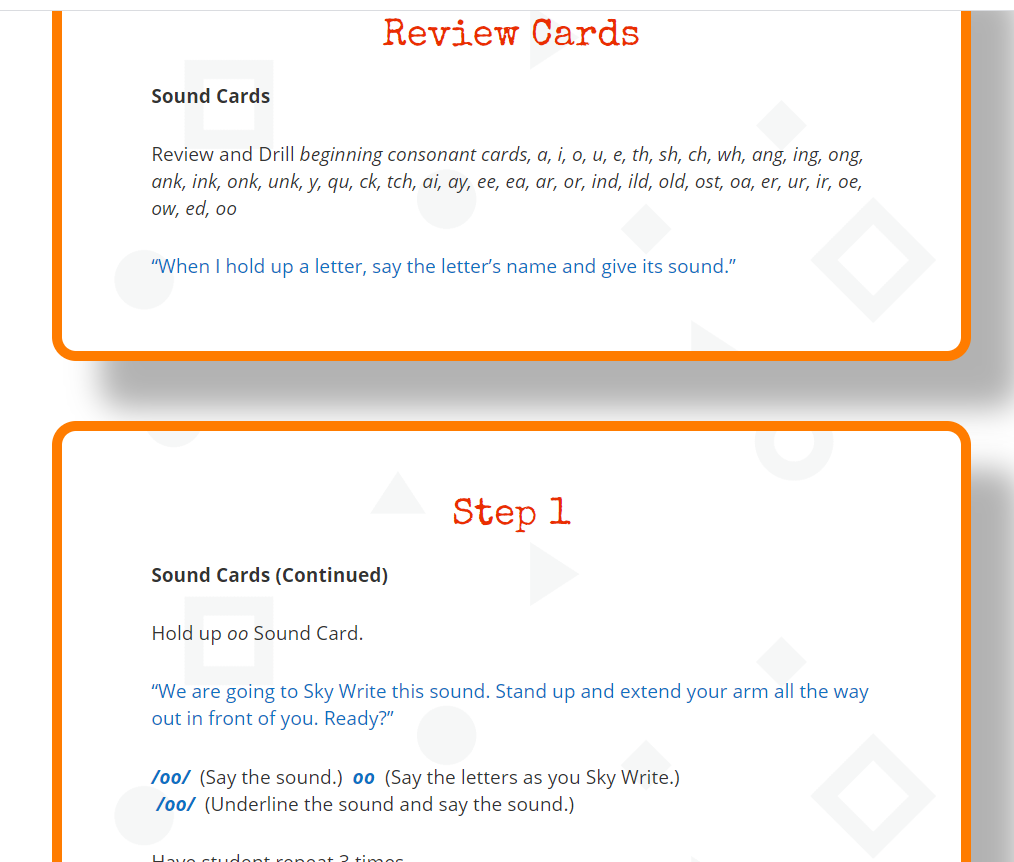


I would not recommend it to parents who do not want to be on a computer, because the lesson plan only comes online. My mom got frustrated with that sometimes, because she wanted to do our lessons outside, but could not seen her screen. (If she bought a fancy phone, everything would be fine, but she refuses...) 

Overall, I think it was a good program. Thank you very much.

As you can see, my daughter had a lot to say about the PRIDE Reading Program and most of it was good. For a kid that has tried many reading programs and not always found success, this is BIG!

The PRIDE Reading Program has successfully helped my daughter and I get back into a habit of regular 1:1 literacy time with ease and success! I am delighted by this and encourage anyone that seeks am easy, effective, evidence-based approach to teaching reading to try the PRIDE Reading Program out.

The program does not have bells and whistles - and for kids like mine who don't like busy pages and are active in many activities - meaning that at-home, 1:1 lessons need to happen in short, steady, effective snippets, the PRIDE Reading Program is ideal!


Learn more and see what others think about the PRIDE Reading Program. 


Multiple families with kids of all ages and reading abilities reviewed the PRIDE Reading Program as part of the Homeschool Review Crew. Click through to find their perspectives.


You can also find PRIDE Reading Program on social media!

Sunday, March 1, 2020

Get Inspired for a St. Joseph Table

Happy Month of St. Joseph!

One of our favorite ways to celebrate St. Joseph each March is with a simple St. Joseph's Table Potluck and Play with friends.


This year, we won't be able to enjoy this tradition on St. Joseph's Day itself, but I am hoping to do an early or late St. Joseph's Table, and, thus, have been looking back at photos from last year's table as well as from year's prior.

If you'd like a little inspiration for your own planning, enjoy the following snapshots from last year:


Image may contain: 1 person, table and indoor
Three tiers are traditional.

Image may contain: table and indoor
Lilies are traditional, too.
Image may contain: 1 person, food
Produce helped us remember the harvest that spurred the original St. Joseph's Table.


Image may contain: food
"Sawdust" Pasta reminds us of St. Joseph, a carpenter.
Image may contain: food
More pasta reminds us of the St. Joseph Tale originating in Italy.
Image may contain: food
Fish is traditional on a St. Joseph Table

Image may contain: food
Fish made by your son is even sweeter.


Image may contain: food
It is traditional not to serve meat, so we had beans. Fava beans would have been even more traditional.
Image may contain: food and indoor
Twisted and shaped breads, plus pastries are traditional, but we had few due to the number of gluten-free folk...

Image may contain: food
Fig pastries are traditional - and these are easy peasy!
Image may contain: food
We always make some sort of St. Joseph flowering staff.

Image may contain: fruit and food
An Italian fruit flag reminded us where St. Joseph's tables originated.
Image may contain: fruit, food and indoor
Since fruit flags are easy, more than one friend brought them to our potluck table.

Image may contain: drink
Fig preserve is yummy and figs are traditional to the table. We had grape juice instead of wine.


More inspiration from prior years:


Our 2nd and 3rd St. Joseph Tables


St Joseph, Pray for us!

Sunday, February 23, 2020

Enjoy Art, Music, and Poetry as You Prepare for Lent


It's easy to neglect the riches of art, music, and poetry as we move through the busyness of every day life and learning. Thus, I am always thankful when our AMP club gets together, since it encourages us to take some time for the arts.

I appreciate even more when a desire to live the 
liturgical year dovetails with our AMP plans. That is exactly what happened this week as we prepare for to enter into Lent.

If you'd like some ideas for sharing art, music, and poetry as you enter into Lent as well, perhaps the resources and ideas we used can help you.


Study The Fight Between Carnival and Lent

Begin by saying that you will be focusing on an artwork painted of a Dutch town. Ask if anyone knows where "Dutch" people and things come from ( the Netherlands). Then, find the Netherlands on a map or globe.

Pieter Bruegel d. Ä. 066.jpg
Source: Wikipedia

Invite children to share what they think they might see in a Dutch artwork. Then, without giving its title, study an image of Pieter Brueghel the Elder's The Fight Between Carnival and Lent from 1559 by having everyone examine it in silence for 30-60 seconds, looking at its details.

After 30-60 seconds have passed, remove the image and ask each child to narrate some of the details that they noticed.

Reveal the painting again, and a
sk if anyone has any idea what time period it comes from based on its characteristics.

Discuss the children's ideas, bearing in mind that the painting is from the Renaissance and some common characteristics of
Renaissance art are:


  • individualism: Artworks often highlighted individual people or the individuality in people. 
  • secularism - There were fewer church paintings. 
  • classicism - Some artworks showed classic Roman and Greek influence.
  • nature - Artworks often depicted the outdoors.
  • anatomy - Art focused on defined and precise human anatomy.
  • linear perspective - Art showed an appearance of things relative to one another as determined by their distance from the viewer
  • realism - Artistic representation aimed for visual accuracy.
  • depth - Light and shading were used to create a sense of depth.
  • symmetry - Balanced proportions were often included.


Include Some Music Appreciation


After chatting about the The Fight Between Carnival and Lent as an example of Renaissance art, suggest that everyone look at it closely once again, noticing more details and guessing at what the artwork's title might be. While doing so, as music appreciation, listen to a period composition or two.

One way to do this is with the following Youtube video. (Just preset the video to begin after the portion with the title showing so that you don't spoil the fun of having children come up with their own names for the painting.)


If using the Youtube video above, note that the music in it is composed by two composers, the first of which was a Dutch composer who was known for his church music and composed many Masses.

After the video concludes, chat about new details children noticed within the painting and what they thought of the music.


Connect to Faith


Ask if anyone might offer an idea for what the painting could be titled, then reveal it's true title
 and chat about Lent and Carnival / Shrove Tuesday / Fat Tuesday / Pancake Tuesday.

Watch the following 
Youtube video or look at the painting once more while reading this reflection from Loyola Press.


Pause for a moment to ask students to look inward and ask themselves what keeps them from following God? Invite them to think about this as they enter into Lent.


Transition to Poetry with the Symbol of Fish


Ask what the children know about Lent and how we observe Lent. Chat about ideas and, at some point, talk about the idea that a symbol often used in Lent is fish.

Chat about why we might be see the symbol of fish during Lent and at other times of the year. Children might point out that a fish is a symbol of Christ or that there are fish drawn on calendars to remind us to abstain. Let the conversation flow with their ideas.

Then, tell children that you will read some letter poems from a human to a fish and a fish to human which have little to do with Lent, but are interesting and fun poems.

Present "To a Fish" and "A Fish Answers" by Leigh Hunt.

Discuss any reactions the children have to each poem.

Wonder and Invite.


Wonder aloud about such things as:


  • How does the human feel about the fish?
  • How does the fish feel about the human?
  • What makes each poem a poem and not just a letter?
  • What poetic devices did you notice?
  • What imagery stood out to you?
  • What was humorous?
  • What did you like about each poem?
  • What do these poems speak to you about or make you think about?
  • What emotion do these poems show?

With older children, wonder how people may have looked upon Jesus during the time he was traveling and teaching and how he looked upon them... how each person at the for of the cross might have looked at Jesus and how he looked at them... how we look to God and how He looks upon us... 

If pairing your study of the painting and the poems as you think about Lent has made any connections for you, share them with the children.

Invite children to write their own perspective letter poems later about an animal, a symbol of Lent, Jesus' ministry and passion, etc.

Invite them to research more later about the Catholic rules of abstinence and why we can eat fish and reptiles during Lent, but not red meat or poultry.

If it did not come up during conversation, invite children to look into why a fish is a symbol for Christ later.  You might even point them to ideas from Catholic.com:


 "What did the fish represent? Above all, it was Jesus Christ. The dominant language of the early Church was Greek, and in Greek the phrase “Jesus Christ, Son of God, Savior” produced the acronym ICHTHYS, the Greek word for fish. A Christian poem of the second century spells the word with the first letters of each line. Thus, the fish is a simple creed: It professes belief in Jesus’ divinity and his identity as the Christ, the anointed Savior (see Matt. 16:16)." 


Create Fish Artworks


Finally create artwork of fish.

Like our AMP club did you might use a Creating a Masterpiece beginner drawing fish cartoon project. Or, you might choose an appropriate video from Youtube at the level of your children or simply create original artwork.


If, like us, you choose a happy-looking cartoon fish, ask children why we might have created such silly, smiling fish when discussing such a solemn time as Lent.


Tie into the idea that while we fast and sacrifice during Lent, we do so with a heart for Jesus. We do not moan, complain, and look glum. Rather, we sacrifice with inner joy and peace. Our fish artworks can remind us of this.

Finally, ask children to reflect on how we might wean ourselves from sin and selfishness throughout Lent through prayer, fasting, almsgiving... how we might better discern and live God's will for our lives... and how we might make His kingdom come first in our hearts.


I pray these ideas might help you and yours enjoy art, music, and poetry as you prepare and enter into a fruitful Lenten season.

Sunday, February 16, 2020

6 Lessons to Be Learned from St. Peter Damian

February 21 is the Optional Memorial of St. Peter Damian, bishop and doctor. 


As I read about the life of this saint, considering how I might best share about him to my children, several "lessons" stood out to me. I am sharing those lessons here in case they might inspire you as you seek to teach the children in your lives about saints.

My intent with my own children is not to share these specific lessons, but rather to simply have the lessons in mind as I tell my children each portion of St.Peter Damian's story and, then, chat about it, encouraging my children to voice their own "lessons".


What Lessons Can You Learn from St. Peter Damian's Life?


1. Do not fret. Provisions come and, with them, opportunities to express great gratitude.


Peter was born in 1007 in Ravenna Italy as the last of seven children. 

At a young age, Peter was orphaned and was taken into the shabby care one of his brothers who treated him poorly forced him to do menial tasks.

In time, however, Peter was entrusted to the care of his eldest brother Damiano who was an Archpriest in a parish near Ravenna and sent Peter off to good schools, which enabled Peter to become a professor.

In gratitude for his eldest brother's care, Peter added the name Damian to his own.


2. Seek lasting joy for yourself and for others.


Peter's first biographer St. John of Lodi recounts that when Peter was a boy, he found a coin, delighted over it, and thought he would buy a toy or a cake. Peter then suddenly realized that anything he bought would give him only momentary joy. Thus, he changed his mind, took the money to a priest, and had a Mass said for his deceased parents, aiming for their eternal joy.

3. Put others before yourself and listen for your personal calling.


St. Peter Damian's first biographer St. John of Lodi also recounts a pivotal luncheon that Peter had with a poor blind man.

He says that, during the lunch, Peter chose to serve himself fine white bread while offering the blind man a darker, lesser quality bread. At that moment, Peter felt like bone had gotten stuck in his throat. He chose to repent of his selfishness, exchanged his bread with that of the blind man, and discovered the feeling of the bone in his throat disappeared. As a result, Peter decided to consecrate himself to God alone and to embrace a monastic life.


3. Follow your calling and let the light of your heart illuminate another's, which, in turn, could illuminate another.

Driven by a need for solitude, meditation and prayer, Peter Damian gave up teaching in the year 1035 and became a priest at the Camaldolese monastery of Fonter Avallana. There, he quickly became a spiritual guide for the monks and, thus, was invited to teach at other monasteries, which he did. 

After returning to Fonte Avallena, he was elected Prior and reorganized 
the rules of the order to return to its original spirit and purpose. This drew men to the monastery, and inspired the establishment of new houses in neighboring regions.

4. Fight for truth.

Peter Damian's zealous activity drew the attention of the Bishop of Ravenna, and, although Peter Damian was a monk at heart, when he was asked for assistance by the bishop, he obliged and left the quiet and recollection of the monastery.

Then, by 1057, Pope Stephen IX called Peter Damian to Rome to help with clergy reform. For, at the time, the Church was afflicted by two evils: Simony, or the buying and selling of church offices, and Nicolaism, or the non-fulfillment of celibacy.

The Pope made Peter Damian Cardinal and Bishop of Ostia and, in this position, Peter Damian continued to work fervently for peace and reform. He was called to attend sy
nods, settle disputes, and fight abuses. In this capacity, Peter Damian was sent on missions to Milan to quell an uprising, to Cluny to defend the rights of Benedictine abbots against the Archbishop of Macon, and more.

5. Live here in a way that leads to eternal life and leaves a legacy for others to inspire them to do the same.

After years of work as a reformer and papal legate, or representative of the pope to foreign nations, Peter Damain returned to his hometown of Ravenna and was overtaken by fever while visiting the Benedictine monastery in Faenza, where he died on February 22 surrounded by monks who were praying the Divine Office.

Immediately after Peter Damian's death, he was acclaimed a saint by the people. Then, in 1828, he was proclaimed a Doctor of the Church by Pope Leo XII.

A scholar, 
a preacher, a monk, a cardinal, and a person who dedicated himself to fasting, penance, and long hours of prayer, St. Peter Damian greatly impacted those around him and left a legacy of letters, sermons, biographies, stories, and poems that encourage others to restore discipline to their lives.  


6. Let your hardship seed blessings for others.

Peter Damian undoubtedly had great impact on the church and the world - and much of his impact was made one person at a time.

Having experienced the burden of poverty in his childhood, Peter Damian was known to have a heart for the poor. It was said to be an ordinary thing for Peter Damian to have a poor person or two at his table and to minister personally to the needs of the poor.


Having lived with injustice in his youth, Peter became a staunch advocate for what is morally right. 

A strong figure and one of the greatest reformers of the Church in the Middle Ages, Peter Damian preached of penance and encouraged people to live Holy lives not only by his words, but by the examples of his life, asking others to do only what he himself would do.

Following in Peter Damian's footsteps, might we, too, seek reform, justice, prayer, fasting, and almsgiving? And might we always remember the wonderful words of St. Peter Damian that echo through the ages to speak to us today:


Do not let your weakness make you impatient. Instead, let the serenity of your spirit shine through your face. Let the joy of your mind burst forth.  
– St. Peter Damian

By the way, this quote - in whole or in part - would make a wonderful piece of copywork, studied dictation, or note in a commonplace book, I believe.


Additional Ideas for Celebrating St. Peter Damian with Children


Some other child-friendly ideas for remembering St. Peter Damian might be: 


  • Recalling how St. Peter Damian often taught principles through stories, write and illustrate a story that shows virtue in action.
  • Since St. Peter Damian lived an austere life, brainstorm ways to simplify your life and act on them. Perhaps make a list of 40 micro-steps towards simplification that you can make this Lent.
  • Share a meal with the poor - or the poor in spirit - in the spirit of St. Peter Damian who had a special heart for the poor.
  • Pray for the deceased, or better yet, have a Mass said for your beloved dead as St. Peter Damian was said to have done for his parents when he found a coin.
  • Since St. Peter Damian exemplified a life lived with prayer, fasting, and penance, begin to consider the specific ways you will pray, fast, give, and offer penance during Lent. 
  • Pray this prayer:
Grant, we pray, almighty God,
that we may so follow the teaching and example of the Bishop Saint Peter Damian, that, putting nothing before Christ and always ardent in the service of your Church, we may be led to the joys of eternal light. Through our Lord Jesus Christ, your Son, who lives and reigns with you in the unity of the Holy Spirit,
one God, for ever and ever.
-The Collect 


St. Peter Damian, pray for us. 

Sunday, February 9, 2020

8 Easy Steps for Hosting a Homeschool Project Fair

host a project fair
{This post initially was initially shared in 2014 at the now defunct Upsidedown Homeschooling Blog, which can only be found using the Wayback Machine. I am resharing it here since someone asked for tips on how to host a fair and I wanted to offer them these. I pray it benefits you as well should you wish to host a project fair.}

Much to my amusement, the other day, my children woke and began transforming our hallway into a project fair.


I smiled as I prepared breakfast, listening to my oldest son read information to his sister about hyacinth macaws, Japan, knights, tarsiers, Bunker Hill, Germany and more and, then, hearing my daughter, in turn, share recalled facts with my youngest child, whose little feet were pattering off to his bedroom to get a stuffed animal in order to complete a rabbits project set up.
It had been nearly a year since we’d participated in our first project fair, an Endangered Species one, seven months since a History one, six since a Geography one and five since a Nature Explorers one.  Yet, there all three of my children were gleefully hosting an eclectic “just us” fair in our hallway.  

Reading, public speaking and more unfolded at the children’s morning micro-fair, just as it had at the original fairs that we had prepared for and presented at throughout last academic year.
As each of my children enthusiastically shared their prior projects with one another, it struck me:  a seemingly “one time” event can – and often does – hold residual effects.  

Planning, preparing for and presenting at project fairs is well worth the effort, and, in our experience, a whole lot of fun, too!  I encourage you to participate in such a fair, and, if none exist in your area, to host one.
It is not difficult to host a project fair.  In fact, I have found that it’s fairly simple and well worth the effort!

In my tried-and-true experience, hosting a project fair can as easy as eight simple steps!


1.Choose a fair topic.  
Animals, History, Geography, Art, Nature, Science, Saints, Holidays around the World…  Ideas are endless.  Keeping the topic broad offers participants freedom while also providing a bit of direction.

2. Contact a host location to nail down a day and time. 
My family has participated at project fairs at a local library’s community meeting room and hosted one at a parish center.  At all of these locations, we have found a three-hour block works well.

3. Get word out.  
Use a local homeschool networking page to get word out.  Share the time, date and RSVP deadline for the fair.  Then, consider creating a special contact list for participants to share ideas, questions and concerns.  All communications or the fairs our family has participated in has been by word of mouth and private Facebook groups.  Other such social networking paths could work just as well!

4. Offer suggestions and ideas.  
Once you have a participants list, periodically remind folks of the date and time of the fair, offer tips for research and presentation and outline the agenda for the fair day. 

For the fairs we participated in, all this was done through brief posts on a private Facebook group.  For the one I put together and hosted, I created an information packet with research tips, presentation ideas, an agenda, FAQ’s, and more.

5. Ask for set up and break down volunteers.  
Many hands make light work; too many can result in chaos.  Thus, I have found that asking only a few families to help set up and break down tables and chairs works best.

6. Print participation certificates. 
Creating and printing personalized participation certificates to hand out at the fair adds a special touch and allows parents who need it “evidence” to put in children’s portfolios.

7. Prepare your family’s projects.
Leave plenty of time for your own children to research and prepare their projects.  Nothing is worse than putting your efforts into hosting a fair only to forget to work on your own family’s projects until the last-minute.  A little bit done over a number of weeks adds up to less stress and more fun!
8. Set an agenda and enjoy!  
For the fair I hosted,  which happened in a three-hour block, I found the following agenda worked well (and included 15 minutes of unscheduled “wiggle” room.)
Set Up
  • 30 min. -Event organizer and several volunteer families arrive and begin to set up tables and chairs.

  • 20 min. - Participants arrive and set up.

Fair Opens
  • 20 min. - Geography Fair Opens; parents or other non-participating family members or friends “man” students’ displays so children can circulate

  • 20 min. - Participating students return to their displays while parents and guests circulate

  • 30 min. - Oral Presentations begin; those who wish to may continue to quietly circulate among the display areas. 

  • 30 min. - Participation certificates distributed.

Fair Closes and Break Down Begins
  • 30 min.- Break down displays and clean up.
I hope these tips help you to plan and enjoy learning and sharing together with a fair!

LinkWithin

Related Posts with Thumbnails